

Gov’t Targets 1% of GDP Annual Investment to Drive Jobs
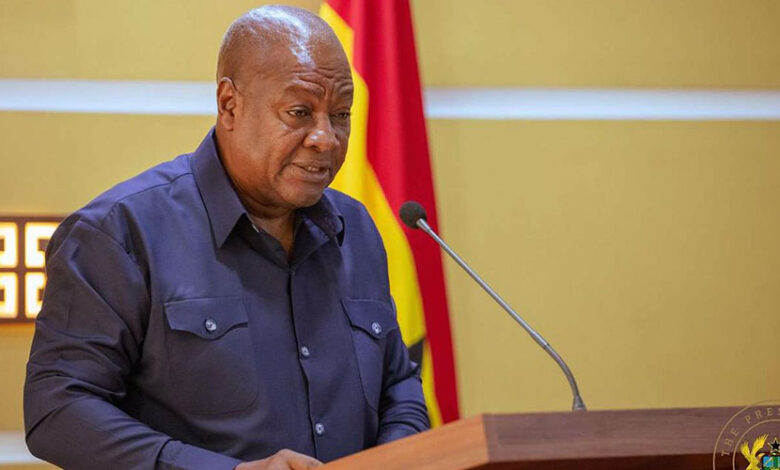
Ghana is preparing to roll out a new economic policy that will commit the equivalent of 1 percent of gross domestic product (GDP) annually to high-growth sectors, in a move aimed at accelerating job creation and reshaping the country’s development strategy.
President John Dramani Mahama announced the plan during the 2026 May Day celebrations held at Jackson Park in Koforidua, describing the initiative as a central pillar of his administration’s broader economic transformation agenda.
According to the President, the Minister for Finance, Cassiel Ato Forson, is expected to present the full policy framework to Cabinet and Parliament in the coming weeks.
Mahama explained that the policy would focus on directing sustained, targeted investment into sectors with strong potential for growth, industrial expansion, and large-scale employment generation. The approach marks a shift away from broad-based public spending toward a more deliberate strategy of channeling resources into areas considered capable of driving structural transformation.
“This is about prioritising sectors that can deliver jobs at scale and support long-term productivity,” the President indicated, underscoring the need to align public investment with measurable economic outcomes.
While specific sectors have not yet been formally outlined, analysts suggest the initiative could target industries such as manufacturing, agriculture, agro-processing, digital services, and infrastructure areas widely seen as critical to Ghana’s economic diversification.
The scale of the proposed investment is significant. With Ghana’s GDP estimated at over $100 billion, allocating 1 percent annually implies a multi-billion cedi commitment each year, potentially making it one of the most structured state-led investment programmes in recent years.
The policy comes at a time when Ghana is attempting to consolidate macroeconomic stabilisation gains while addressing persistent unemployment pressures, particularly among the youth. It also reflects growing recognition that economic recovery must be matched with job-intensive growth.
Mahama linked the initiative to the government’s broader “Resetting Ghana” agenda, which seeks to expand economic opportunity, modernise production systems, and build a more inclusive growth model.
He further connected the investment strategy to the government’s flagship 24-hour economy programme, which aims to boost productivity by encouraging businesses to operate in multiple shifts. The programme is expected to include incentives such as tax reliefs and reduced electricity tariffs for participating industries.
“We are moving beyond the eight-hour workday,” the President stated, framing the policy as part of a wider push to maximise infrastructure use and increase output across sectors.
In addition to investment and industrial policy, Mahama announced that government is finalising a new Labour Bill to modernise Ghana’s labour framework. The proposed legislation is expected to extend protections to gig workers, remote employees, and individuals engaged in digital platform-based jobs, an acknowledgment of shifting global employment patterns.
Together, the proposed annual investment, the 24-hour economy initiative, and planned labour reforms point to a coordinated strategy that blends fiscal policy, industrial development, and workforce modernisation.
Observers say the success of the policy will ultimately depend on execution, sector selection, and the ability to crowd in private sector participation. With further details expected when the Finance Minister presents the framework, attention will turn to how the government translates this ambition into measurable economic impact.



