Middle East Tensions Drag Down Sub-Saharan Africa Growth Outlook
By Zednewsroom
Economic prospects for Sub-Saharan Africa have taken a hit, with the World Bank trimming its 2026 growth projection as global tensions linked to the United States-Iran conflict continue to ripple through developing markets.
In its latest assessment released Wednesday, the Bank now expects the region’s economy to expand by 4.1% in 2026, a figure unchanged from 2025 but lower than the 4.4% forecast issued late last year. The revision reflects worsening external conditions since the escalation of hostilities in the Middle East earlier this year.
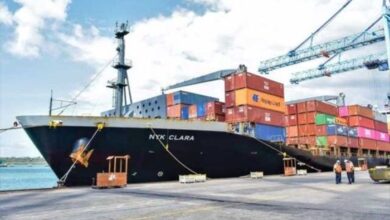
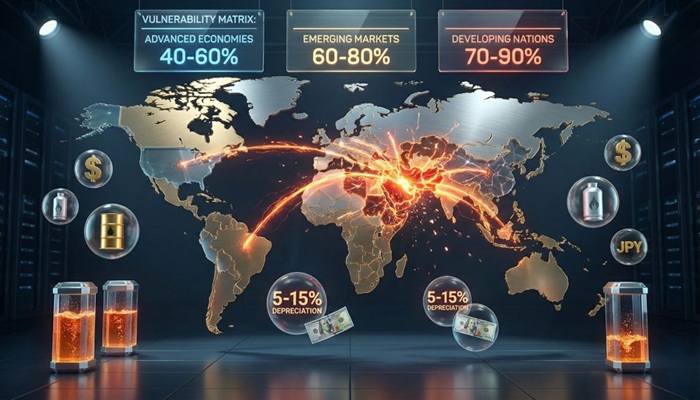
A key concern is the surge in global energy and fertiliser prices, both of which are critical to African economies. The conflict has disrupted supply chains and heightened uncertainty, making it more expensive for countries to sustain production and growth. These pressures are landing at a time when many economies are already weighed down by rising debt obligations.
Even with a temporary two-week ceasefire agreed between Washington and Tehran, risks remain elevated. Analysts warn that energy markets may not stabilise quickly. The U.S. Energy Information Administration has indicated that oil prices could remain high for months, regardless of whether the Strait of Hormuz, a vital global oil route, fully reopens.
Speaking during a media engagement, World Bank Chief Economist for Africa, Andrew Dabalen, said the downgrade highlights how quickly global conditions have shifted.
He explained that policymakers had entered the year expecting a more stable outlook, but the conflict has since driven up costs and created fresh uncertainty around how long disruptions will persist.
Beyond trade and commodity prices, investment flows are also under threat. Gulf countries, which have become increasingly active investors across Africa, particularly in infrastructure, mining, and technology, may scale back commitments if the crisis deepens. At the same time, remittances from Africans working in the Middle East could decline should labour markets in the region weaken.
Fiscal constraints are further limiting the ability of governments to respond. Debt servicing is consuming a growing share of revenues, now estimated at about 18%, roughly double the level recorded in 2017. As a result, many countries have little room to implement measures to cushion their economies. About half of the region is already considered to be at high risk of debt distress.
The impact is expected to be uneven across the continent. In eastern and southern Africa, oil-importing nations with weaker financial buffers, such as Burundi, Malawi, Ethiopia, Kenya and Mozambique, are particularly exposed. Kenya, for instance, could face rising inflation if global prices remain elevated, while Ethiopia’s large migrant workforce in Saudi Arabia leaves it vulnerable to external shocks.
For West Africa, the outlook is less clear. According to Dabalen, incomplete data, particularly around fertiliser use, makes it difficult to draw firm conclusions. He cautioned that the sub-region should not assume it will escape the broader effects of the crisis, as further revisions may follow when more data becomes available.