

Ghana Will Not Host Foreign Military Bases – Foreign Affairs Minister
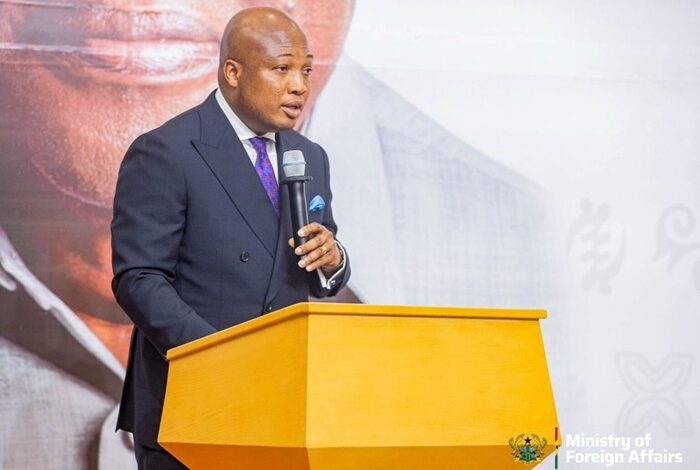
Minister for Foreign Affairs, Samuel Okudzeto Ablakwa has defended Ghana’s longstanding policy against hosting foreign military bases, stating that the country will not allow its territory to be used for the permanent stationing of foreign troops.
Speaking at the Chatham House think tank in London, the minister addressed concerns surrounding international defence agreements, including the pending security cooperation pact between Ghana and the European Union. He clarified that although Ghana remains open to strategic partnerships with other countries, it will not compromise its sovereignty by permitting permanent foreign military installations.
Mr. Ablakwa’s remarks come at a time of heightened geopolitical tension, particularly in the Middle East, where the ongoing conflict involving the United States, Israel and Iran has expanded into neighbouring Gulf states. Recent retaliatory strikes by Iran against regional locations hosting American military assets have raised fears about the risks faced by countries that host foreign military bases.
According to the minister, Ghana’s policy is a deliberate strategy aimed at protecting the country from being drawn into global military conflicts or becoming a proxy battleground for major powers.
He explained that the government has established clear limits regarding defence cooperation agreements, noting that Ghana’s national interest remains the guiding principle in all international security partnerships.
“We do these things in our strategic national interest, and we are careful to draw the lines. There is a red line, and that red line is that we do not accept military bases in our country,” Mr. Ablakwa stated.
He added that the developments in the Middle East demonstrate the wisdom of Ghana’s long-standing position, arguing that countries hosting foreign military installations often become targets during international conflicts.
While reaffirming Ghana’s openness to defence partnerships, the minister distinguished between logistical cooperation and the establishment of permanent foreign military bases. He cited the Defence Cooperation Agreement with the United States, which was approved by Parliament, as an example of collaboration that does not involve a permanent foreign military presence.
Mr. Ablakwa explained that Ghana maintains similar strategic security arrangements with the United Kingdom and several Gulf states. However, he stressed that these partnerships operate strictly within the framework of Ghana’s domestic laws and require specific approval from the government before any joint military activity takes place.
According to him, every military intervention or collaboration involving Ghana must be negotiated individually and authorised at the highest levels of government.
He noted that this approach ensures Ghana retains full control over its territory while still benefiting from international security cooperation.
The minister also referred to the Christmas Day 2025 military operation against ISIS targets in Sokoto State, Nigeria, as an example of how Ghana prefers to engage in international security efforts.
In that operation, Ghana worked alongside the United States and Nigeria only after a formal invitation and a clearly defined scope of engagement had been agreed upon.
Mr. Ablakwa said this model allows Ghana to contribute to regional counter-terrorism efforts without exposing the country to the long-term risks associated with hosting permanent foreign military bases.
His remarks come as the European Union prepares to sign what is expected to be its first African defence pact with Ghana. The minister emphasised that while Ghana values cooperation with international partners, such agreements must be based on mutual respect and must not compromise the country’s sovereignty.



