Look Beyond the Degree, Embrace Volunteerism – Baraka Director to Youth
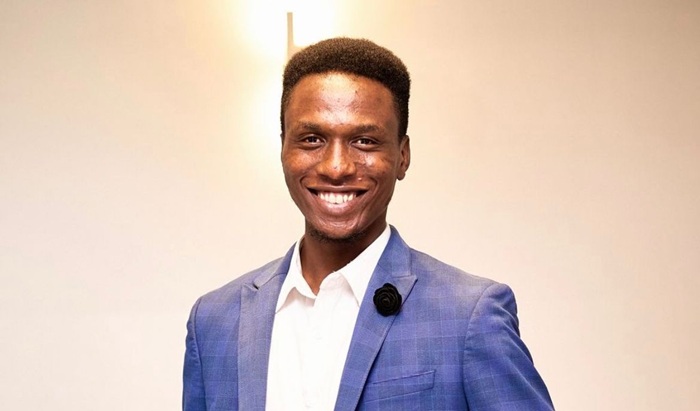
The Executive Director of Baraka Outreach LBG, Sam Baraka, has underscored the importance of training and mentorship in transforming young professionals from academically qualified graduates into confident, industry-ready practitioners.
Speaking on Business Breakfast on Zed 101.9FM, Mr. Baraka explained that building his organization from scratch required a deliberate decision to recruit and train individuals on the job.
“Because I started the organization from scratch, at many points I recruited people to train them,” he said.
According to him, employment can be approached in two distinct ways: hiring already qualified individuals or qualifying those who are employed.
“There are two types of employment, employing the qualified and qualifying the employed,” he noted.
Mr. Baraka stressed that technical knowledge alone is insufficient for success in today’s workplace. While academic training provides foundational expertise, workplace effectiveness depends heavily on attitude, interpersonal skills, and professional conduct.
“You can have the technical know-how, but issues of attitude towards work and human relations are a whole different thing,” he explained.
To bridge this gap, Mr. Baraka said he opted to recruit individuals and groom them through practical exposure, mentorship, and hands-on experience. Over the years, he has witnessed significant transformation among young volunteers and staff.
“I’ve seen people who were scared to talk, who were not bold about their opinions, become very confident in what they wanted to do,” he recounted.
He cited the example of a graduate from the University of Ghana who had studied social work but lacked practical understanding of the scope and demands of the profession in the job market. Within two years of structured mentoring and operational exposure at the NGO, she transitioned into a key role within the organization’s operations department.
Mr. Baraka also highlighted the journey of the organization’s Creative Director, a talented graphic designer who initially worked at a casual level. Through mentorship and professional grooming, he successfully transitioned into a fully-fledged professional designer.
“Putting the job out there as a professional designer required going through a whole lot of processes,” he noted.
Beyond technical roles, Mr. Baraka emphasized that volunteerism and on-the-job training expose young people to real-world responsibilities they may never encounter in the classroom, including community outreach and stakeholder engagement.
“Some have never seen what it means to go on a community outreach. They don’t even know how to engage the community,” he observed.
However, through mentorship and consistent practice, volunteers gradually build competence and confidence, eventually performing at professional standards.
“Within the period of volunteerism, they get mentored, they practice, and then they do it just the way you want them to,” he said.
He noted that structured mentorship and experiential learning remain critical tools in preparing young people not just to hold degrees, but to excel in the workplace and contribute meaningfully to national development.
Mr. Baraka also urged young people to look beyond academic qualifications and embrace volunteering as a pathway to practical growth, professional networks, and career opportunities.
The Executive Director emphasized that success in life requires more than just a university degree.
“In this life, you need three people to train you, a coach, a mentor, and a sponsor,” he stated.
“Coaches and mentors don’t have the time to come and select people they want to groom. You must go searching for someone you want to be groomed by,” he said.
According to him, while obtaining a degree is important, it represents only the acquisition of knowledge. What truly sets individuals apart is the practical application of that knowledge in meaningful and productive ways.
“The degree you get is good. It is knowledge. But the application of knowledge in a positive way to gain something substantial is the most important thing,” he stressed.
He explained that volunteering offers young people an opportunity to build practical knowledge that goes beyond classroom theory. Through volunteerism, individuals gain hands-on experience, develop critical skills, expand professional networks, and build credible associations that strengthen their CVs.