

95% of Family Businesses Fail Before the Third Generation – IFC
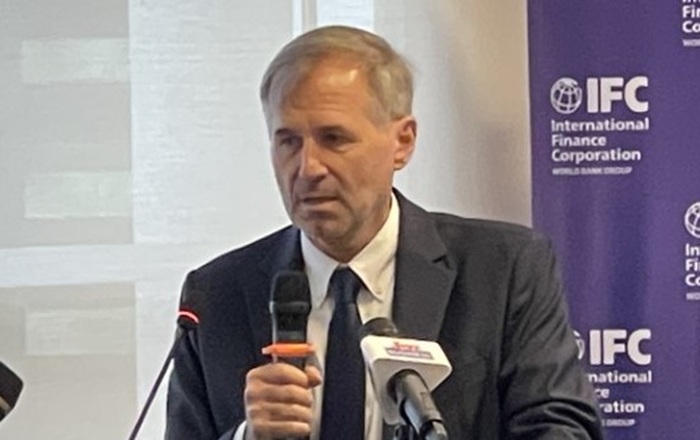
The International Finance Corporation (IFC) has called for stronger governance structures in Ghana’s family-owned enterprises, describing them as vital to job creation, private sector expansion and long-term economic resilience.
Speaking at the third IFC Family Governance Workshop in Accra, Mr Kyle Kelhofer, Senior Country Manager for Ghana and Liberia at the World Bank Group’s private sector arm, underscored the strategic importance of succession planning and structured leadership transitions in sustaining family businesses.
The workshop, held under the theme “Passing the Baton, Preserving Purpose: Managing Generational Transitions,” forms part of an ongoing IFC initiative aimed at strengthening the continuity and competitiveness of family-owned firms. The sessions focused on preparing next-generation leaders, supporting founders as they transition from operational roles, preserving family wealth, and clarifying the boundaries between ownership, control and management.
Mr Kelhofer noted that family enterprises remain central to economic growth across global markets, from Western Europe and Africa to South and East Asia, and require deliberate governance reforms to transition successfully across generations.
He emphasised the scale of their impact, particularly in employment creation.
“Family-owned businesses are a critical engine for job creation, private sector growth and long-term economic sustainability,” he said.
According to him, the private sector accounts for about 90 per cent of job creation, making the strengthening of family businesses essential to improving livelihoods and expanding opportunities.
He further observed that many of the world’s largest domestic corporations began as family enterprises and were able to expand regionally and globally by adopting transparent and structured governance systems.
“Family businesses whether in their first and second generation or even beyond the fourth and fifth were often the foundation of large local corporations in many countries, and could expand into regional and global players when they adopt sound and transparent governance systems,” he said.
Mr Kelhofer explained that establishing solid governance frameworks enhances operational stability and continuity, while also improving credibility with financial institutions and investors.
“The private sector accounted for about 90 per cent of job creation, making the strengthening of family businesses essential to improving livelihoods and expanding opportunities,” he said.
He added that international best practices differ depending on whether families remain directly involved in management or assume more strategic oversight roles.
“International best practices in family business governance vary widely, depending on whether families remain actively involved in management or step back into more strategic roles,” he said.
Nonetheless, he encouraged Ghanaian firms to draw lessons from global models as they navigate generational shifts.
However, he clarified that the IFC’s engagement is designed to strengthen, not supplant, family enterprises.
“Our mission overall is not just to help businesses, but to help create more and better jobs to help improve people’s lives in Ghana. That starts with the private sector, which starts with businesses,” he stressed.
The IFC has intensified its support for local corporates, particularly family-owned firms with strong growth potential. Mr Kelhofer said Ghana is home to several impressive family businesses capable of becoming regional and cross-sector players if equipped with the right governance systems.
By embedding structured succession plans, clarifying leadership roles and strengthening oversight mechanisms, such firms can enhance their market presence, diversify operations and improve access to finance for expansion.
As generational transitions increasingly shape the future of Ghana’s private sector, the IFC maintains that governance reform will be central to ensuring that family enterprises not only endure, but scale sustainably across markets.



