

Ethiopia Denies Trump Claim That US Funded Nile Mega-Dam
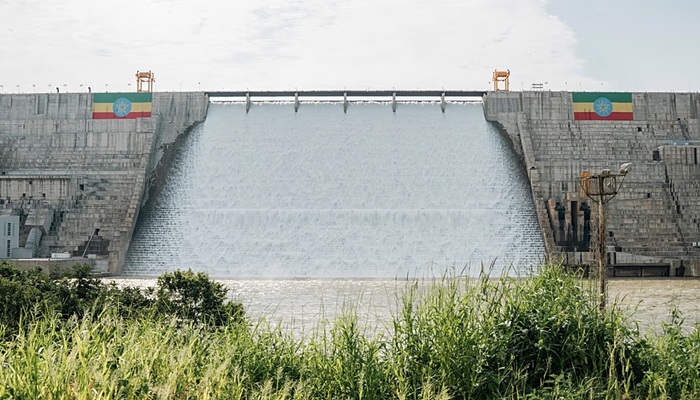
Ethiopian Prime Minister Abiy Ahmed has dismissed claims by US President Donald Trump that America financed Ethiopia’s new mega-dam on the River Nile.
The $4 billion Grand Ethiopian Renaissance Dam (GERD), built on a tributary of the Nile, is set to generate 5,150 megawatts of electricity, making it the largest hydropower project in Africa. Construction began in 2011 and has been a source of tension between Ethiopia and Egypt.
Egypt, which relies on the Nile for 97 percent of its water supply, has long described the dam as an “existential threat.” In Davos last month, during the World Economic Forum, President Trump backed Egypt’s concerns, claiming the dam was financed by the United States and “basically blocks the Nile.”
On Tuesday, Prime Minister Abiy rejected that statement in a speech to parliament. “We did not receive a single birr in loans or financial aid from any foreign sources for the construction of the mega-dam. We achieved this through the strong commitment of Ethiopians living in the country and in the diaspora,” he said.
According to Ethiopian officials, the GERD was funded entirely through domestic resources, including taxes and loans from citizens. The project’s prime contractor, Italian firm Webuild, confirmed that no international lenders were involved. “Not one international lender was willing to put money in this project,” CEO Pietro Salini told AFP. He explained that the dam is designed to release water for energy production, not to divert or consume water needed by Egypt.
Despite Ethiopia’s assurances, Egypt continues to view the dam as a major threat to its water security. Trump, who has long supported Egyptian President Abdel Fattah el-Sisi, pledged to help restart stalled negotiations between Cairo and Addis Ababa. Egypt has said it is ready to relaunch mediation efforts, but Ethiopian authorities have not yet responded.
The GERD remains one of Africa’s most ambitious infrastructure projects and a symbol of Ethiopia’s determination to harness its resources for development. However, the dispute highlights the broader challenge of balancing national ambitions with regional cooperation over shared water resources.
Observers say the future of the dam will depend not only on Ethiopia’s ability to operate it successfully, but also on whether dialogue between the two countries can prevent the project from deepening regional divisions.



