Cedi Likely to Remain Stable in 2026 – Courage Boti
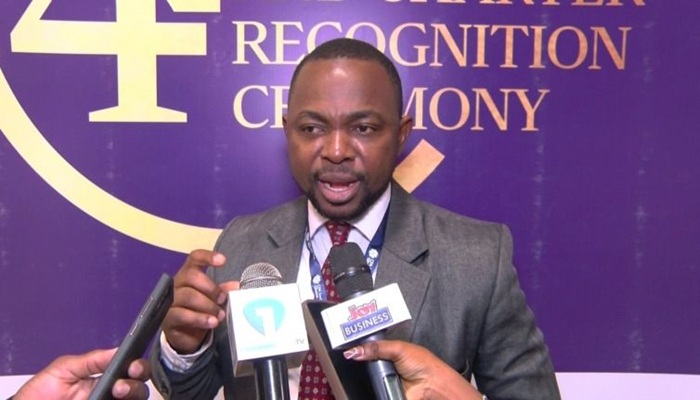
By Praisebell Rosemond Larbi
The Ghana cedi is expected to remain broadly stable in 2026, with only marginal movements anticipated, as macroeconomic conditions improve and recent policy interventions continue to take effect, according to the Manager of Macroeconomic Research at GCB Bank PLC, Courage Boti.
Speaking to the media at the Fourth Annual Forecast Dinner and Charter Recognition Ceremony organised by the Chartered Financial Analyst (CFA) Society Ghana, Mr. Boti said he does not foresee any significant appreciation of the local currency in the near term, noting that the sharp gains recorded in 2025 were largely corrective and driven by extraordinary policy measures.
According to him, key economic indicators now point to a more balanced exchange rate environment, suggesting that the cedi has largely adjusted to levels consistent with underlying fundamentals.
“I do not expect further strong appreciation like we have seen in 2025. Moreover, the reason largely is that the interventions worked out. What we have today looks like the fair value of the cedi,” Mr. Boti said.
He explained that the stability seen in recent months reflects a combination of easing inflationary pressures, improved foreign exchange inflows and greater policy credibility, rather than speculative forces. As a result, he said future movements in the exchange rate are likely to be modest.
“You could expect some marginal depreciation this year if the fundamentals that drove this kind of appreciation or correction are sustained, stressing that such movements would be within a relatively narrow band and should not be interpreted as renewed instability,” he added.
Mr. Boti’s comments come amid heightened public attention on exchange rate dynamics, following the strong performance of the cedi in 2025 and its importance for inflation, import costs and overall economic confidence. Analysts say sustained stability, rather than rapid appreciation, is critical for planning, investment and export competitiveness.
Capital Market Development
Also speaking at the event, the Managing Director of the Ghana Stock Exchange (GSE), Abena Amoah, reaffirmed the Exchange’s commitment to deepening Ghana’s capital market by supporting businesses willing to list and access long-term financing.
She noted that despite the important role of the equities market, the number of listed companies remains relatively small compared to the size of the Ghanaian economy.
“On the equities market, we have 35, 36 companies listed. There are thousands of companies registered in Ghana. Let me and my team know what products you want to bring. We will facilitate from the policy makers, from the infrastructure perspective, from the rules perspective. We will create that enabling environment,” she said.
Ms. Amoah emphasised that the GSE is actively engaging policymakers, regulators and market participants to improve listing conditions, strengthen investor confidence and broaden the range of financial instruments available on the market.
She added that expanding the capital market is critical for reducing overreliance on bank financing and providing businesses with patient capital to support growth and innovation.
The Fourth Annual Forecast Dinner and Charter Recognition Ceremony, held ahead of the 2026 financial year, forms part of CFA Society Ghana’s annual programmes aimed at providing forward-looking insights into economic trends, market performance and investment prospects, while recognising newly chartered financial analysts.
The event brought together senior executives from the banking and capital markets sectors, policymakers, academics and industry analysts to deliberate on Ghana’s macroeconomic outlook, financial market developments and expectations for the year ahead.