

Sekou Nkrumah defends critique of Kwame Nkrumah, accuses NDC of hypocrisy over legacy
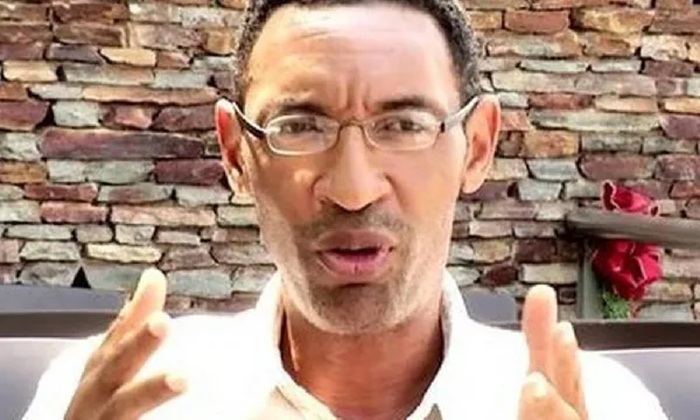
Pan-African analyst and broadcaster Sekou Nkrumah has defended his public critique of Ghana’s first president, Dr Kwame Nkrumah, insisting that acknowledging historical facts does not amount to disrespecting his father’s legacy.
Speaking on his programme The Last Word on Tuesday (27 January), Nkrumah said recent accusations that he undermines or disrespects Kwame Nkrumah’s legacy are misplaced and politically dishonest, particularly coming from the leadership of the National Democratic Congress (NDC).
Nkrumah said he was responding to criticisms stemming from two issues: his analysis of the Bawku conflict and his description of Kwame Nkrumah’s later rule as dictatorial.
On the Bawku conflict, he said his comments were based strictly on historical research, tracing political manipulation of chieftaincy arrangements back to the First Republic.
According to him, the Mamprusi traditionally held the Bawku skin, but during the 1950s elections, their support for opposition parties prompted Kwame Nkrumah’s Convention People’s Party (CPP) to shift recognition to the Kusasi, who backed the CPP.
“When Nkrumah captured power, he worked with those who supported him and rewarded them. That is politics,” Nkrumah said, adding that subsequent regimes reversed or reinforced those decisions, entrenching the conflict over time.
He stressed that recounting this history was not a personal attack on his father.
“I was stating facts, not emotions,” he said.
On the question of dictatorship, Nkrumah said Kwame Nkrumah did not begin his political career as a dictator, having won successive elections in 1951, 1954, 1956, and the 1960 presidential poll.
However, he argued that the introduction of a one-party state and life presidency amounted to dictatorship.
“If a one-party state and president-for-life is not dictatorship, then I don’t know what is,” he said, adding that such assessments should be guided by constitutional principles rather than hero worship.
Nkrumah criticised what he described as selective reverence for Kwame Nkrumah, saying genuine respect for his legacy should involve continuing his political and economic vision, not merely celebrating his image.
He accused the NDC leadership of hypocrisy, arguing that the party emerged from the Provisional National Defence Council (PNDC), which overthrew the People’s National Party (PNP)—a political successor to the CPP.
“The same people who dismantled Nkrumah’s political vehicle now accuse his son of not respecting his legacy,” he said.
Nkrumah further alleged that the PNDC era fragmented the Nkrumahist political tradition, weakening parties aligned with his father’s ideology and leaving him with limited political options in Ghana’s Fourth Republic.
He also questioned reports that the Ghanaian government was seeking involvement in the property in Guinea where Kwame Nkrumah lived during exile, saying the villa was a Guinean state property provided by former President Ahmed Sékou Touré.
“I don’t understand what business the Ghana government has laying claim to that house,” he said, calling for clarity on the matter.
Nkrumah said his loyalty lies first with Ghana, not with individuals, including his father.
“Ghana is bigger than every individual,” he said, adding that acknowledging Kwame Nkrumah’s achievements should not prevent honest discussion of his shortcomings, including political detentions under the Preventive Detention Act.
He concluded by calling for leadership focused on infrastructure, industrialisation, and job creation, saying Ghana needs visionary leadership capable of adapting Nkrumah’s development ideals to contemporary realities.
“Respecting Nkrumah’s legacy is about continuing his work, not putting on a show,” he said.



