Africa’s Digital Economy Faces $720 Billion Test
By Praisebell Rosemond Larbi
Africa’s digital economy could grow into a $720 billion powerhouse by 2050, offering a critical engine for economic growth, job creation and inclusion, as the African Continental Free Trade Area (AfCFTA) shifts decisively from policy design to full-scale execution.
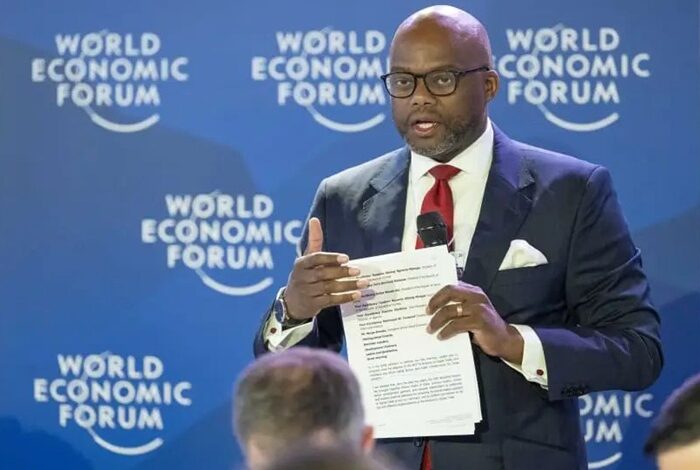
This was the central message delivered by AfCFTA Secretary-General, Mr Wamkele Mene, at the Friends of the AfCFTA Breakfast Meeting held on the margins of the World Economic Forum, where leaders and stakeholders reflected on the next phase of Africa’s integration journey.
According to Mr Mene, the AfCFTA has now crossed a major institutional milestone, with 50 out of the 55 African Union member states having ratified the agreement, alongside the conclusion of all associated legal protocols. This development, he said, means the legal and regulatory architecture underpinning the world’s largest free trade area by number of participating countries is firmly in place.
“The focus now is no longer on negotiations, but on delivery,” Mr Mene said, noting that implementation will determine whether the AfCFTA lives up to its promise of transforming Africa’s economies.
A central pillar of this execution phase is digital trade, following the adoption of the Protocol on Digital Trade. The protocol signals a shift from rule-making to practical integration, placing digital infrastructure, data governance and digital payments at the heart of Africa’s single market agenda.
Mr Mene explained that the success of the protocol will depend on the ability of African countries to enable seamless cross-border data flows, build interoperable and affordable digital payment systems, and establish trusted data-protection and cybersecurity frameworks. These elements, he said, are essential for scaling trade across borders, particularly for small and medium-sized enterprises and young digital entrepreneurs.
“Payments remain a critical enabler of trade at scale,” he noted, stressing that without efficient, low-cost digital payment systems, the benefits of digital trade would remain limited.
The economic stakes are significant. With Africa home to the world’s youngest population, the digital economy presents a unique opportunity to generate millions of jobs, expand access to markets and unlock productivity gains across sectors. Projections suggest the continent’s digital economy could be worth as much as $720 billion by 2050 if the right foundations are laid.
However, Mr Mene cautioned that the opportunity also carries risks. Without deliberate alignment between digital trade expansion, skills development and job creation, Africa’s demographic dividend could turn into a social and economic liability rather than a growth advantage.
“To harness this opportunity, we must ensure that young people have the skills, access and platforms to participate meaningfully in the digital economy,” he said.
To support implementation, Mr Mene highlighted the launch of the ADAPT project in 2025, a joint initiative involving the AfCFTA Secretariat, the World Economic Forum, the Tony Blair Institute and IOTA. The programme is aimed at accelerating digital trade readiness across member states by helping governments translate policy commitments into operational digital systems and infrastructure.
Private sector participation, he stressed, will be critical to success. Opportunities span a wide range of sectors, including agritech, healthtech, fintech and logistics, with digital platforms expected to play a central role in connecting producers and consumers across borders.
Collaboration with global and regional partners, including technology firms such as Google, is also expected to support skills development, innovation and youth participation in cross-border digital trade.
With the rules largely agreed and institutions in place, the AfCFTA’s success will increasingly be judged by outcomes rather than intentions. As Mr Mene concluded, the true test of Africa’s single market will be whether digital trade, payments and data systems can function seamlessly across borders and deliver inclusive, broad-based growth for businesses and workers across the continent.