Some best leadership practices in Africa
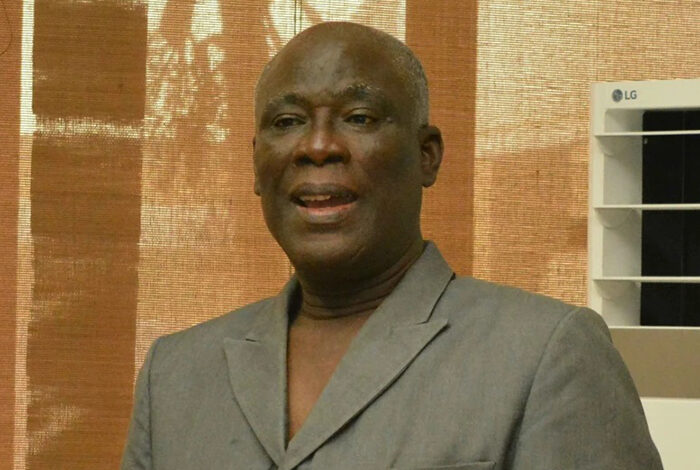
By Enimil Ashon
Trending on social media is a Nigerian television programme in which the presenter eulogizes one of, if not the newest, African Head of State, Tanzania’s John Magufuli. Your jaw would drop. Mine did. Honestly I thought the lady presenter was making it up (Of course, there are sites like that on the net where fiction, nothing more than the product of someone’s imagination, is presented, mostly text, so far, are presented in a way that could fool the smartest wiz. One of them is a “news” items about the Pope and sin).
But “picture no lie”, as we say hereabouts. There, accompanying the audio were videos backing up the claims.
Fact: On his FIRST DAY in office in November 2015, Magufuli made a surprise visit to the Finance Ministry, where he castigated civil servants who were not at their desks. Other surprise visits have followed, to other government institutions.
On one such visit, to the main state hospital, Magufuli found patients sleeping on the floor – and promptly sacked the hospital chief and dissolved its governing board.
Magufuli banned foreign travels for most government officials. He cut a bloated delegation for the Commonwealth Heads of Government meeting in Malta FROM 50 TO JUST FOUR (4), insisting that most of what government officials travel to do can be done by embassy officials in their countries of accreditation.
Magufuli cancelled the year’s independence day celebrations to free up funds to fight a cholera outbreak, stating that saying it would be shameful to spend millions of dollars on fancy parties and military parades in a country battling cholera.
He slashed the budget for a state dinner to celebrate the opening of Parliament. The money saved was used to buy hospital beds.
He has decreed: “All officials, except the President, Vice-President and Prime Minister, will travel ECONOMY”.
Magufuli’s new broom has been welcomed by citizens, who are tired of the endemic corruption that has stunted the country’s progress for decades. His dramatic measures have even won over some opposition politicians.
“We have built strong opposition based on [a] grand corruption agenda. Now we have a president who has decided to join us in this crusade. Why should we oppose him?” said Zitto Kabwe, head of the Alliance for Change and Transparency-Wazalendo, a minor political party.
But his go-go actions and surprise visits seem to be in his blood. He earned the nicknamed, “Bulldozer”, when, as Minister of Public Works, he was noted for his impressive track record making surprise visits to road construction sites to uncover corrupt activity.
Rolf Paasch, Tanzania country director for the Friedrich-Ebert-Stiftung political foundation, said Magufuli’s personal interventions are an encouraging sign, but they won’t solve the problem of corruption on their own.
“In Swahili there is a saying, ‘If you want to sweep the stairs, you have to start from the top’, and I think that was missing before,” he said. “There was impunity at all levels. Now it’s different. But the president can’t keep going personally to the main hospital to clean it up. He and his new cabinet will need to complement these laudable actions [with] a more systematic approach.”
Donald Mmari, research director for Research on Poverty Alleviation, a local thinktank, said Magufuli was serious about tackling corruption. “He is cutting unnecessary spending, focusing on delivering essential public services, and has issued a directive to enhance revenue collection,” he said. “Now he will have to make sure that he appoints individuals who have the competence and credibility to help him achieve his aims.”
It is on the lips of Tanzanians that “it’s a hard life for public officials these days.” For example:
- No more driving your limousine to villages;
- No more flying first class to meetings in Europe;
- You can’t send Christmas cards on the taxpayer’s money.
President John Magufuli banned these things.
Not only has he ordered that government meetings and workshops be held in government buildings rather than expensive hotels, he has also restricted the amount of refreshments allowed at official meetings to only juices and water, saying, “You can take your breakfast at home!”
He has turned up in person — and on foot — at government ministries and demanded to know why civil servants were not at their desks.
Some officials have been jailed for lateness
The former teacher and chemist is also battling corruption and trying to improve services in Tanzania. Take health care, for example. Magufuli made a surprise visit to the 1,000-bed Muhimbili National Hospital and found patients sleeping on the floor. The hospital director was fired. Now doctors are noticeably more attentive.
He ordered the arrest of 20 officials who showed up late to a meeting.
But Tanzanians, used to corruption in high places, are sceptical. They say that reformers have come and gone in Tanzania. Critics are betting that Magufuli’s reforming spirit will fizzle out “like an open bottle of soda in the hot African sun.” As they say in the Swahili language, “Nguvu ya soda.” That means “the power of soda.”
Turn to central Africa and to Rwanda’s PAUL KAGAME.
Among notable acts with which Kegame is credited is the fact that he has given members of the opposition parties seats in his Cabinet, hardly the actions of a tyrant.
In his TIME 100 Tribute Rick Warren, Rick Warren, founder of ‘Saddleback Church in California’, singled Kegame out for his zero tolerance for corruption, saying: “Rwanda is one of the few countries where I’ve never been asked for a bribe. Any government worker caught engaging in corruption is publicly exposed and dealt with. That is a model for the entire country — and the rest of the world too.
Since the end of the genocide that took 800,000 lives, Rwanda’s economy, under Kagame. has grown an average of 6.4% since 2001, Indeed, the World Bank named Rwanda its “most improved country”, a status which U.N. Secretary-General Ban Ki-moon cemented when he named Kagame co-chair of a new panel on ending world poverty.