

Ghana Pushes for Stronger Economic Partnership with Germany Under New Industrial Vision
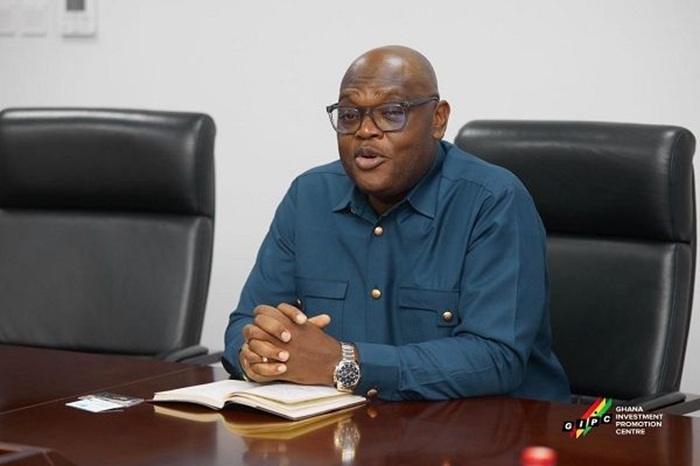
Ghana has renewed its drive to attract German investment as part of a broader industrial transformation agenda, highlighting new reforms and emerging opportunities across key sectors of the economy.
The commitment was underscored at the maiden German–Ghana Business Dialogue held in Accra, where the Ghana Investment Promotion Centre (GIPC) outlined government-led initiatives designed to modernise production, stimulate exports and deepen industrial capability.
Addressing participants, the Chief Executive Officer of GIPC, Simon Madjie, pointed to flagship programs including the 24-Hour Economy, the Accelerated Export Development Program and the Big Push Agenda. He described these interventions as pillars of the country’s ambition to scale productivity and create a more competitive export-driven economy.
Madjie also revealed that reforms are underway to enhance investor confidence and streamline Ghana’s business environment. These include a review of the GIPC Act, adjustments to minimum capital thresholds and reinforced investor-protection measures. To further improve investor experience, GIPC has upgraded its aftercare and grievance-resolution systems to ensure more efficient support services.
Encouraging German companies to expand their footprint in Ghana, he highlighted opportunities in manufacturing, digital trade, pharmaceuticals, textiles and other areas aligned with the government’s industrialisation strategy.
On the German side, Ambassador Frederik Landshoeft expressed optimism about Ghana’s evolving economic landscape, noting progress in macroeconomic stability and the strengthening of business predictability. He observed that German companies already operating in the country, spanning fintech, machinery, energy and agriculture are demonstrating a stronger commitment to long-term operations rather than merely testing the market.
Landshoeft identified energy and infrastructure, manufacturing, digital technology, the circular economy, and agriculture and food processing as sectors with immediate potential for enhanced cooperation. He added that Ghana’s strategic location and policy direction position it as a promising gateway for German businesses seeking access to the wider West African region.
As both nations explore new frontiers of collaboration, officials emphasise that deepened economic ties could support Ghana’s industrial ambitions while opening up new avenues for German expertise, technology and investment.



