

US Cuts Off Foreign Aid to Ghana Over Unresolved Debt Ahead of 2026 Fiscal Year
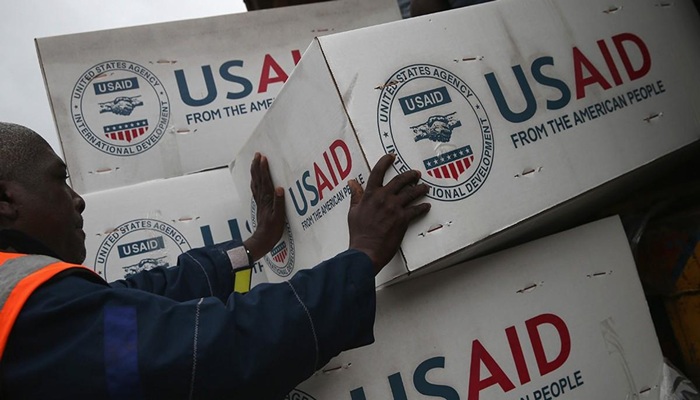
The United States government has moved to block Ghana’s access to a range of foreign assistance program, including development loans and the flagship Millennium Challenge Corporation (MCC) compact after determining that the country has failed to honour key debt commitments owed to American entities.
The restrictions, which take effect from the 2026 US financial year, stem from the “debt default restriction” in Section 7012 of the FY 2025 State, Foreign Operations, and Related Programs Appropriations Act.
According to an Economic Intelligence Report cited by US officials, the provision bars foreign aid to any country that has defaulted on sovereign debt owed to, or guaranteed by, a US person or designated official creditor, unless a restructuring agreement is in place.
Two separate default events are believed to have triggered the application of Section 7012 to Ghana.
The first dates back to 19 December 2022, when Ghana announced the suspension of payments on most of its external public debt, covering Eurobonds, commercial loans and much of its bilateral obligations. These financial instruments are held by a diverse group of global investors, including US-based banks and investment funds.
The second involves outstanding arrears estimated at US$251 million, owed to several American companies, including Twin City Energy, American Tower Company, GSM, Chubb, Kosmos Energy and Zipline. Some of these debts are backed by the US International Development Finance Corporation (DFC), prompting concerns in Washington about potential exposure to US taxpayers.
US Senate Foreign Relations Committee Chairman James Risch (R-Idaho) has long criticised Ghana’s handling of the arrears, arguing that the government has prioritised payments to Chinese creditors while neglecting obligations to American firms. He has repeatedly urged US authorities to press the IMF to restrict further support to Ghana.
The obligations in question are tied to the Government of Ghana or state-controlled agencies, most notably the Electricity Company of Ghana (ECG). Analysts say the situation reflects broader governance and institutional lapses in meeting public commitments, rather than failures by private companies. Ghanaian authorities reportedly classify these arrears as part of the country’s US$2.6 billion “energy-sector legacy debt.”
Confirmation from both the MCC and the US State Department on 6 August 2025 indicates that Washington will fully enforce the restrictions unless Ghana reaches a restructuring agreement or settles the outstanding debts.
The development adds further pressure on the government as it works to stabilise the economy under an IMF-supported program while seeking to rebuild confidence among international creditors.



