

Fintech forum pushes for common open banking API to boost Ghana’s digital finance
A strong case is emerging for Ghana to adopt common open banking Application Programming Interface (API) standards to accelerate financial inclusion, foster innovation, and enhance digital service delivery across the country’s financial ecosystem.
An open banking API is a secure interface that allows banks and other financial institutions to share financial data with authorised third-party providers (TPPs), enabling greater transparency, interoperability, and collaboration in the financial sector.
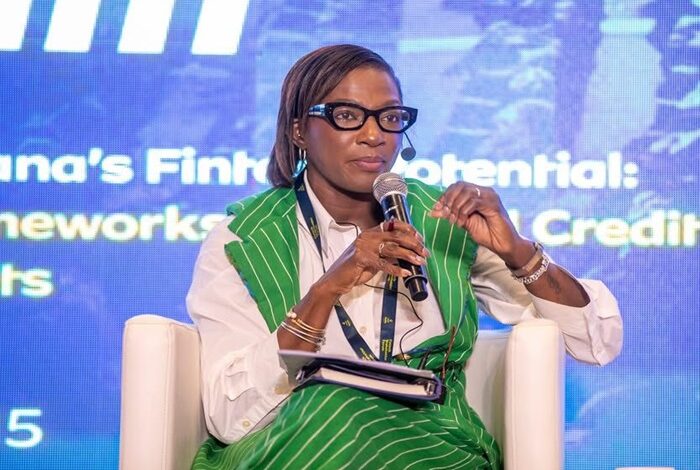
At the 2025 Fintech Stakeholder Forum held in Accra, key industry figures from the Ghana Interbank Payment and Settlement Systems (GhIPSS), MobileMoney Limited (MML), and the IMANI Centre for Policy and Education called for urgent collaboration among banks, fintechs, and regulators to establish a unified national framework for open banking and interoperability.
The event, organised by MobileMoney Limited under the theme “Harnessing Ghana’s Fintech Potential: Regulatory Frameworks for Digital Credit and Digital Assets,” brought together regulators, financial institutions, fintech firms, policy experts, and academics to deliberate on how Ghana could strengthen its digital payments infrastructure and promote responsible innovation within the fintech space.
Chief Executive Officer of GhIPSS, Clara B. Arthur, noted that interoperability already provided a pathway to open banking and API standardisation in Ghana’s payments landscape. She emphasised that adopting common API standards would simplify integration with the national payment infrastructure and enhance efficiency across the financial system.
“Interoperability affords answers to API and open banking. These can be achieved if all players have common API standards, which will make it easier for fintechs to connect to the national payment infrastructure and for banks to integrate more seamlessly,” Ms Arthur said.
She noted that GhIPSS would take the lead in driving collaboration between banks and fintechs to address challenges relating to connectivity, integration, and governance. The goal, she explained, is to develop nationally accepted technical and governance standards that would enable the Bank of Ghana (BoG) to implement progressive policies in support of digital financial transformation.
“Having common API standards in payments is key. GhIPSS will champion work with banks and fintechs to address issues around governance and integration. Once we have national standards, the Bank of Ghana can roll out the right policies,” Ms Arthur reiterated.
She also underscored the importance of a shared digital identity layer that would enable authentication and secure access across platforms within Ghana’s payment ecosystem.
“A shared digital ID layer on top of everything would allow us to achieve all that has been mentioned. We must also have real-time settlements for real-time payments. The technology exists; what is required is collective effort to use it effectively to solve problems and give value to citizens,” Ms Arthur stated.
Chief Product and Services Officer at MML, Sylvia Otuo-Acheampong, echoed the call for open banking standards, describing open APIs as the future of financial technology collaboration.
“MobileMoney has an open API where partners can integrate immediately. It took a while for partners to trust MobileMoney’s open API, but once they did, it created new opportunities for innovation and access,” she stated.
Ms Otuo-Acheampong revealed that MTN MobileMoney had engaged multiple fintech partners this year, aiming to expand financial access through applications built on API integration.
However, she cautioned that not all fintechs were adequately prepared to adopt API-based service delivery, which she identified as a challenge to scaling digital financial products.
“To grow access through apps, the API must be the central integration point. Open API is the way into the future for aggregation to move the industry forward,” she stressed.
Ms Otuo-Acheampong urged regulators and ecosystem players to intensify efforts in trust-building, capacity development, and establishing interoperability standards to enable fintechs to seamlessly connect to platforms such as MobileMoney, GhIPSS, and the banking system.
Adding a policy perspective, Selorm Branttie, Technology Policy Analyst and Vice-President of the IMANI Centre for Policy and Education, argued that open banking APIs could address long-standing structural and operational challenges in Ghana’s financial services sector.
“Open banking API solves a lot of issues for service providers. It ensures trust and better responsiveness to the market,” Mr Branttie noted.
He cautioned, however, that Ghana’s open banking initiatives must not operate in isolation. Instead, he called for harmonisation between the Open Banking Initiative and the National Data Harmonisation Framework, which is currently being developed to streamline digital identity, data governance, and access management across sectors.
“We must harmonise the Open Banking Initiative with the National Data Harmonisation Framework. Doing so will consolidate Ghana’s position as Africa’s fintech leader ahead of Nigeria and on par with Kenya, with the most robust regulatory ecosystem in West Africa,” he indicated.
Mr Branttie further noted that such harmonisation would strengthen consumer protection, data privacy, and cybersecurity oversight while positioning Ghana as a trusted digital finance hub capable of attracting investment, scaling fintech exports, and enabling regional payment interoperability within ECOWAS.
The forum concluded with a consensus that Ghana’s fintech growth and competitiveness depend on the adoption of a unified open banking API framework, supported by national standards, regulatory coordination, and real-time settlements, to drive inclusive and sustainable digital financial transformation.



