Ghana’s true economic independence lies in local production, consumption – Economist

By Praisebell Rosemond Larbi
A Development Economist, Dr Felix Larry Essiflie, has stated that Ghana will only attain true economic independence when it begins to produce and consume locally manufactured finished goods, rather than relying heavily on imported products from China.
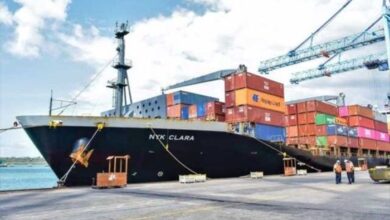
Speaking in an interview on ZED News on ZED 101.9 FM, Dr Essiflie argued that Ghana’s overdependence on Chinese imports is undermining local industry, eroding competitiveness and weakening the country’s economic sovereignty.
“China does not have the kind of natural resources Ghana possesses, yet they produce and export finished goods to us. That means we have the raw advantage. What we lack is the industrial base and the political will to transform these raw materials into value-added products,” he noted.
Dr Essiflie emphasised that the influx of cheap Chinese products on the Ghanaian market poses a serious challenge to domestic industries. He acknowledged, however, that affordability is a key reason many consumers prefer Chinese-made goods.
“People naturally go for what they can afford. If we can produce locally at competitive prices, Ghanaians will choose homegrown products over imports,” the economist explained.
He urged government to prioritise investment in manufacturing and industrialisation, stressing that this would not only reduce import dependence but also stimulate job creation, enhance export capacity and stabilise the cedi.
“Manufacturing has the power to transform economies. It absorbs labour, drives innovation and builds resilience. If government channels resources into industrial development, we can match China’s efficiency and price competitiveness,” he said.
Dr Essiflie’s comments follow recent warnings by the Chief Executive Officer of the Ghana National Chamber of Commerce and Industry (GNCCI) that Ghana’s domestic market risks being overwhelmed by an influx of Chinese goods, threatening local enterprises.
His remarks also come in the wake of President John Dramani Mahama’s announcement during the Presidential Investment Forum in Beijing, China, that Ghana and China are set to sign a zero per cent tariff agreement by the end of October 2025, a move expected to expand trade between the two nations.
While acknowledging the potential benefits of stronger Ghana–China trade ties, Dr Essiflie cautioned that without a strong local production base, such agreements could further disadvantage Ghanaian producers.
“Trade liberalisation is good, but only when you have something to trade. Our independence will remain symbolic if we keep importing what we can produce ourselves,” he added.