Petroleum revenue drops 56% first half 2025
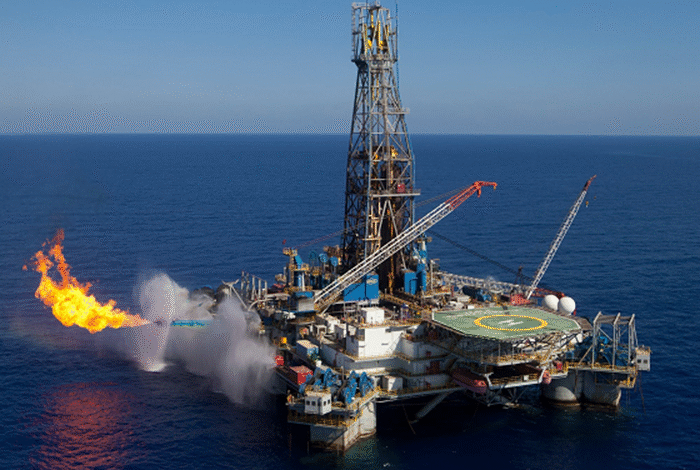
Ghana’s petroleum revenue dropped sharply by 56 per cent year-on-year in the first half of 2025, underscoring growing concerns about declining oil production and falling global prices.
This was contained in the Public Interest and Accountability Committee’s (PIAC) latest 2025 Semi-Annual Report on petroleum revenue utilisation and management.
According to the report, a total of USD370.34 million was deposited into the Petroleum Holding Fund (PHF) between January and June 2025, compared to USD840.77 million recorded during the same period in 2024.
The steep fall, PIAC explained, was largely due to reduced crude oil liftings from Ghana’s three main producing fields: Jubilee, Tweneboa-Enyenra-Ntomme (TEN), and Sankofa-Gye Nyame (SGN), coupled with a decline in international crude oil prices.
Breakdown of Revenue Components
The inflows into the PHF for the first half of 2025 were derived from Corporate Income Taxes (CIT), Carried and Additional Participating Interest (CAPI), Royalties, Surface Rentals, and interest earned on the Fund.
The breakdown is as follows: CAPI contributed USD178.48 million, representing 48 per cent of total inflows; CIT generated USD148.75 million or 40 per cent and Royalties yielded USD40.15 million, accounting for 10.8 per cent.
Also interest on the PHF amounted to USD2.10 million
Surface Rentals brought in USD0.86 million, contributing less than 1 per cent of total petroleum receipts
The Committee noted that this marks one of the lowest half-year petroleum revenue performances since oil production began in Ghana in 2011.
Cumulative Petroleum Earnings and Outlook
Despite the setback, Ghana’s cumulative petroleum revenue since the commencement of commercial oil production has now reached USD11.58 billion, underscoring the sector’s continuing role as a major contributor to public finances.
However, PIAC warned that the recent trend of declining production and falling prices could undermine future government revenues if urgent measures are not taken.
The Committee observed that the decline reflects not only global price volatility, but also the lack of new investments in Ghana’s upstream petroleum industry, an issue highlighted in several previous reports.
It said that no new Petroleum Agreement has been signed since 2018, while production from existing fields is gradually depleting.
“Without fresh exploration and development activities, Ghana’s crude oil output will continue to decline, and so will revenues to the state,” the report cautioned.
Fiscal Implications
PIAC warned that the 56 per cent drop in petroleum receipts could have serious fiscal consequences, given the heavy reliance of the national budget on oil proceeds.
Petroleum revenues are used to support the Annual Budget Funding Amount (ABFA), as well as the Ghana Stabilisation Fund (GSF) and the Ghana Heritage Fund (GHF).
A significant fall in inflows, therefore, means reduced allocations to these funds and potential financing gaps for priority government projects. PIAC stressed that any prolonged revenue shortfall could affect budget execution and slow infrastructure and social development spending.
Call for Investment and Transparency
The Committee urged government to intensify efforts to attract new investors into the upstream oil and gas sector, revive stalled exploration projects, and create a more enabling environment to stabilise production.
It also called for enhanced transparency and accountability in the management of petroleum revenues, including better oversight of state-owned enterprises operating in the sector.
According to PIAC, improving governance and fiscal discipline in petroleum revenue management remains critical to ensuring that the country derives maximum benefit from its natural resources.
“Ghana must not only focus on collecting revenues but also on ensuring that these resources are used efficiently and transparently for national development,” the report stated.
The Committee reiterated that prudent management of petroleum receipts, alongside efforts to diversify the economy, will be vital in cushioning the country against external shocks and maintaining macroeconomic stability.