Economist urges agricultural investment to contain inflation

Economist and Director of the Legon Centre for International Affairs and Diplomacy (LECIAD), Professor Peter Quartey, has called for urgent and sustained investment in Ghana’s agricultural sector, arguing that enhanced food production holds the key to taming inflation and safeguarding livelihoods.
Speaking to the media on Thursday, 2 October, Prof Quartey underscored that food remains central to inflationary pressures, describing the phenomenon as “more money chasing fewer goods.”
He explained that stabilising prices requires either controlling money supply, boosting goods and services production, or pursuing a combination of both.
“If you want to address inflation, it’s either you control the amount of money in circulation or you enhance the production of goods and services, or do both, depending on the approach. Therefore, we have to enhance food production in the areas where we are recording very high rates of inflation,” Prof Quartey stated.
The economist highlighted Ghana’s overdependence on rain-fed agriculture as a major weakness, noting that irrigated land constitutes less than five per cent of the country’s total farmland. This, he argued, is unsustainable in the face of climate change and erratic rainfall patterns.
“If we continue to rely on rain-fed agriculture, it’s not sustainable, and we will keep witnessing high rates of inflation in certain parts of the country. That, for me, is a worry because our livelihoods are threatened,” the economist warned.
Beyond climate-related concerns, Prof Quartey pointed to the growing menace of illegal mining, or galamsey, as a serious threat to agricultural productivity.
He lamented the destruction of farmlands and poisoning of water bodies, stressing that such practices are undermining food security.
“Already, we are faced with illegal mining where agricultural lands are being converted, our water bodies are being poisoned, and therefore our food basket is threatened. If we don’t do something now, we will get to a point where we have to import our food,” Prof Quartey cautioned.
To reinforce his point, the LECIAD Director drew comparisons between inflation rates for imported and domestically produced food items.
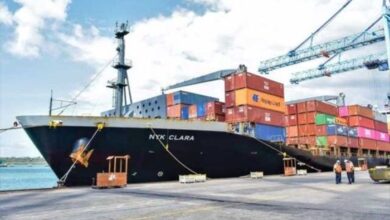
While imported food inflation currently stands at 8.7 per cent, locally produced food has surged to 12.2 per cent.
“This tells you there is inefficiency in our production system. It shows that the cost of producing local goods is higher than importing them. No wonder we are always importing, and our exchange rate is challenged,” he noted.
Prof Quartey urged policymakers to prioritise investment in irrigation, mechanisation and extension services, while curbing practices that compromise agricultural lands.
He also argued that only a deliberate effort to strengthen domestic food production would not only ease inflationary pressures but also enhance Ghana’s economic resilience.