

Speak against term limit extensions
-Akufo-Addo demands from ECOWAS leaders
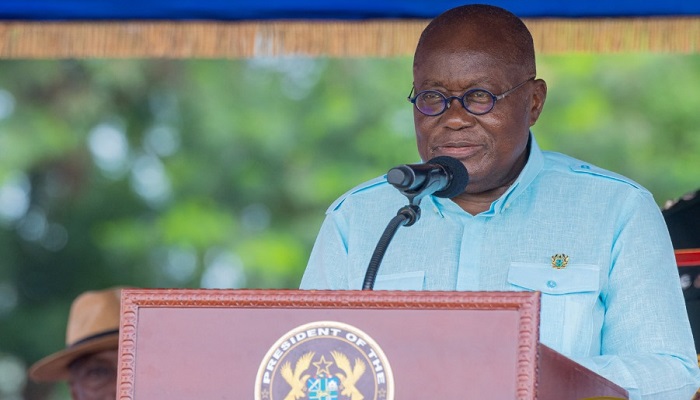
President Nana Addo Dankwa Akufo-Addo has called on the Economic Community of West African States (ECOWAS) Parliament to speak against the extension of presidential term limits by some leaders to strengthen their grip on power.
He explained that “These actions tend to result in discontent amongst the populace, which creates fertile grounds on which military interventions disingenuously feed.”
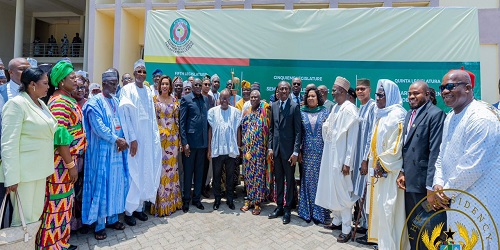
President Akufo-Addo made the call when he addressed the Second Session of the ECOWAS Parliament underway in Winneba.
The session, which began on Friday September 29 to Saturday October 7, 2023, is under the theme: “Challenges Relating to Unconstitutional Changes of Government and Presidential Term Limits in West Africa – Role of the ECOWAS Parliament.”
This is the second time Ghana has hosted the ECOWAS Parliament which convenes twice a year.
The ECOWAS Parliament, also known as the Community Parliament, is one of the Institutions of ECOWAS.
It is the Assembly of Peoples of the Community serving as a forum for dialogue, consultation, and consensus for Representatives of the people of West Africa with the aim of promoting integration.
According to the President, Africans being able to adhere to call, would ensure that they don’t “give up when it comes to guaranteeing the democratic integrity of their respective countries, where they should have governance systems based on the separation of powers, which are free from corruption and are respectful of the rule of law, individual liberties, human rights, the principles of democratic accountability and social justice,” he said.
President Akufo-Addo charged the Members to “propose measures to ensure the anchoring of democratic and republican values, both at the level of political elites and citizens of the Community. This would help to preserve the peace and stability of the region,” he explained.
He implied that, “any attempt at the manipulation of opinion and of the rules of the democratic game for partisan political ends, always leads to a loss of legitimacy, which is reflected in the social tensions it creates.”
He stated that, “the attempted confiscation of democracy by elites, who engage, through legal antics, in the manipulation of constitutional rules and the subjugation of the institutions of the Republic with the sole aim of remaining in power.”
“It is also important to remind us that democracy is not, as some would have us believe, a western concept, but, rather, a universal concept of general application,” President Akufo-Addo said.
He implored the ECOWAS Parliament to ensure there was no backsliding in support for democratic values anchored on the promotion of the rule of law and respect for human rights.
According to the President, the history of the world, including that of Africa, testifies that the process of electing and installing leaders in democratic circumstances provided the best form of governance.
“The great British wartime leader, Winston Spencer Churchill, it was who said “democracy is the worst form of governance, except for all the others.
“Modern history has taught us that tyranny, oppression, and totalitarian government do not last long. No matter how a people reject democracy and civil liberty, circumstances will always force them back to embrace them,” he said.
“Out of duty towards our children and grandchildren, we must not give up when it comes to guaranteeing the democratic integrity of our respective countries, where we should have governance systems based on the separation of powers, which are free from corruption and are respectful of the rule of law, individual liberties, human rights, the principles of democratic accountability and social justice,” he added.
He tasked members of the Parliament of ECOWAS to find solutions to the emerging re-militarisation of governance, the attempted confiscation of democracy by elites and the wanton desire to destroy democracy by terrorist groups and armed criminal gangs in the region.
Stating what he described as three serious threats to democracy in the region, President Akufo-Addo said, “democracy in West Africa is in danger”, thus the regional fraternity “must work even harder to entrench the principles of democratic accountability in the citizenry.”
According to President Akufo-Addo, democracy in the region has been seriously subverted by “the attempted confiscation of democracy by elites, who engage, through legal antics, in the manipulation of constitutional rules and the subjugation of the institutions of the Republic with the sole aim of remaining in power.”
He added that another key threat is “the emerging re-militarisation of governance with the intrusion, once again, of the military on the political scene, who have neither consulted, nor received any mandate from, the people on whose behalf they purport to act.”
The President did not hesitate to also mention “the wanton desire to destroy democracy by terrorist groups and armed criminal gangs, who seek to establish zones of lawlessness and the absence of freedom” as another deliberate threat to the democratic stability of the region.
Referring to the great British wartime leader, Winston Spencer Churchill’s statement that “democracy is the worst form of governance, except for all the others”, he stated that “modern history has taught us that tyranny, oppression, and totalitarian government do not last long. No matter how a people apparently reject democracy and civil liberty, circumstances would always force them back to embrace them.”
President Akufo-Addo told the gathering that “we cannot run away from the fact that our Region is confronted with a difficult economic, political, social and security situation. As all of us know, despite the considerable progress made by the Community, in the areas of democracy, good governance and the rule of law since the early 1990s, which meant that, four years ago, all 15 leaders of ECOWAS States were democratically elected, we are, at the moment, witnessing a decline in our democratic credentials.”
Describing the prevalent situation as bitter and implacable, he said, “today, four ECOWAS Member States are led by military governments as a result of coups d’états. This sad and unfortunate development has created a state of palpable anxiety and tension in every corner of the region, raising the spectre of regional instability, which we thought had been banished forever. Equally abhorrent is the culture of violence and disputes that characterise the periods of electing some of our leaders.
Mentioning the election of Mohammed Bazoum in Niger as a recognition of the common will of the people, he said “that is why the coup against him is particularly tragic for the consolidation of democracy in our region” and added that, “the only legitimacy for any leader is through a mandate that is given freely by the people in a fair, peaceful and transparent election. This is the most tangible and objective way to know and recognize the common will, which is the will of the people.”
That is why, he continued, “any attempt at the manipulation of opinion and of the rules of the democratic game for partisan political ends always leads to a loss of legitimacy, which is reflected in the social tensions it creates. We must distinguish between legality and legitimacy, because our region will only experience genuine stability if our powers are imbued with both legality and legitimacy.”
“The true purpose of democratic governance is to obtain the objective of free government, shared prosperity and progress, equitable and accessible justice and lasting peace for the wellbeing of the citizenry, he added.
He called on the ECOWAS legislators to ensure that one of the expected outcomes is to help “us understand even better the root causes of democratic regression and political instability in the region in order the better to address them, and speak against the extension of presidential term limits by some leaders to strengthen their grip on power.
“These actions tend to result in discontent amongst the populace, which create fertile grounds on which military interventions disingenuously feed,” he observed.
Established under Articles 6 and 13 of the ECOWAS Revised Treaty of 1993, the initial Protocol establishing the Parliament was signed in Abuja on August 6, 1994. It provided for the Structure, Composition, Competence, and other matters relating to Parliament.
The Parliament is composed of 115 seats, with each Member State having a guaranteed minimum of five seats while the remaining 40 seats shall be shared on the basis of population.
With the need for a community mechanism to forge greater ties with the citizens of the West African Community serving as momentum towards the creation of the Community Parliament, it strengthens representative democracy in the Community.
It contributes to the promotion of peace, security, and stability on the West African Region by informing and sensitising the population on issues of integration, promotion and defending principles of human rights, democracy, the rule of law, transparency, accountability, and good governance through the practices of accountability.
As provided for in Article 32 of the supplementary Act, the Session also provides the President of the ECOWAS Commission the opportunity to present a general report on the implementation of the Community Work Program to the Plenary where the House would be updated with developments in the Community, and usually followed by debates, expressed opinions as well as recommendations.
The National Delegates also give the opportunity to present their country’s reports to inform the Body on unfolding developments in their respective Member States and the status of implementation of their community’s texts.



