Education Ministry tasks GALOP committee to deliver quality learning for all

The Ministry of Education has charged the Ghana Accountability for Learning Outcomes Project Additional Financing Two (GALOP AF2) Oversight Committee to reinforce its commitment to providing quality learning opportunities for all children across Ghana.
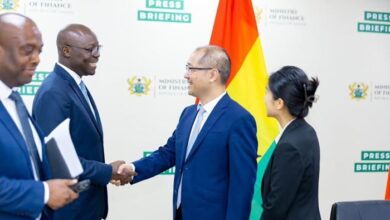
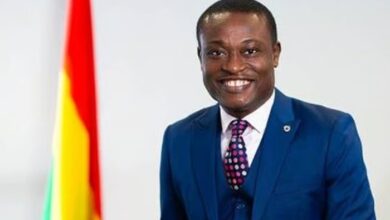
Minister for Education, Haruna Iddrisu, in a message delivered on his behalf by Deputy Minister Dr Clement Apaak, acknowledged the continued support of the System Change Architecture for Learning Excellence (SCALE), the Global Partnership for Education (GPE) and the World Bank in sustaining the GALOP initiative.
At the committee’s inaugural meeting, Dr Apaak emphasised the need for strong oversight, clear direction and effective collaboration to drive meaningful outcomes in the education sector.
“Our effectiveness will be measured by the clarity of our direction, the quality of our oversight and the responsiveness of our system to on-the-ground realities. Together, let us show that when oversight is rigorous and collaboration is genuine, transformative learning outcomes are not just possible, they are inevitable,” he said.
GALOP AF2 is anchored on four priority areas: enhancing teaching with adequate resources, improving school management and resourcing, strengthening learning accountability systems and providing technical assistance, institutional support, monitoring and research.
As the grant agent, the World Bank will apply a results-based financing approach, disbursing funds to the Ministry in line with predefined performance benchmarks.
Explaining the committee’s mandate, Dr Apaak said the group would develop strategies and provide high-level monitoring to ensure that interventions remain aligned with the Ministry’s vision.
GALOP, he noted, seeks to improve basic education outcomes through equity, accountability and systemic reforms.
The interventions, Dr Apaak explained, are designed to tackle root causes of poor learning, particularly in underserved schools.
These include enhancing literacy and numeracy in the early grades through structured pedagogy, curriculum alignment and tools such as the National Standardised Test.
On teacher support, Dr Apaak highlighted plans for continuous professional development through in-service training, coaching and digital resources to boost classroom delivery.
Priority will be given to 10,000 of the lowest-performing basic schools, particularly in disadvantaged rural areas.
He further underscored the need for inclusivity, ensuring that vulnerable groups such as girls, children with disabilities and learners from marginalised communities benefit equitably.
Resources including school grants, textbooks and digital tools will therefore be distributed in a targeted and transparent manner.
Dr Apaak also revealed that GALOP AF2 has secured an additional USD117.1 million to expand interventions nationwide.
He expressed appreciation to SCALE funders, the GPE, the World Bank and other partners for their consistent support.
Representing the philanthropic partners of the SCALE Consortium, Dr Samuel Kembou, Global Lead for Learning and Evidence at the Jacobs Foundation, described the initiative as a model partnership.
“It is an honour to participate in this collaborative effort aimed at improving educational outcomes for children in Ghana,” he stated.