

Quake triggers tsunami waves, millions evacuated across Pacific
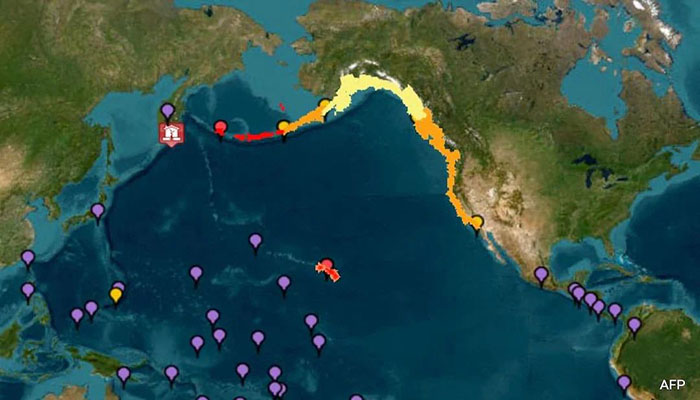
An earthquake struck eastern Russia early Wednesday morning, triggering tsunami waves that reached Japan, Hawaii, parts of the U.S. West Coast, and South America.
Authorities in Russia, Japan, and the United States ordered mass evacuations, with millions told to move inland. Several hours later, Russia, Japan, and Hawaii downgraded tsunami warnings to advisories, meaning dangerous waves and floods remain a threat.
So far, several people have sustained minimal injuries, and no major damage has been reported.
Wednesday’s quake is the strongest since the 2011 disaster in Japan, which unleashed a 50-foot tsunami and caused the Fukushima nuclear meltdown. That 9.0 magnitude earthquake remains one of the most powerful ever recorded, with a final death toll of approximately 18,500.
Following Wednesday’s 8.8 magnitude earthquake, Russian authorities evacuated Severo-Kurilsk after four-meter waves flooded the major port. Tsunami heights were recorded at three to four meters in Japan, less than half a meter in Alaska, and up to 1.8 meters in Hawaii.
On Wednesday morning, U.S. Homeland Security Secretary Kristi Noem said the country is no longer at risk of a major tsunami.
However, alerts remain active along parts of the West Coast as the National Weather Service continues to advise coastal residents to stay away from shorelines.
Authorities have warned about the unpredictable nature of tsunamis. Dave Snider, tsunami warning coordinator at the National Tsunami Warning Center in the U.S., said the impacts of a tsunami could last for an entire day.
“A tsunami is not just one wave. It’s a series of powerful waves over a long period of time. Tsunamis cross the ocean at hundreds of miles an hour, as fast as a jet airplane, in deep water. But when they get close to the shore, they slow down and start to pile up. And that’s where that inundation problem becomes a little bit more possible,” he said.
New warnings issued Wednesday prompted evacuations in Chile and Colombia. Chile remains highly vulnerable to seismic events, having experienced two of the largest earthquakes ever recorded.
Chilean President Gabriel Boric urged citizens to remain calm as hundreds fled coastal areas. Colombian officials also closed and evacuated beaches and low-lying zones.



