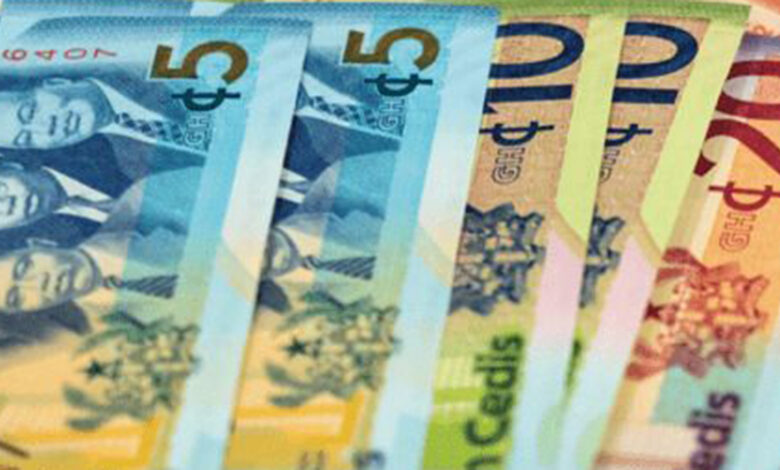
Cedi world’s best performing currency in 2025
The Bank of Ghana (BoG) sold a total of USD1.4 billion in foreign exchange during the first quarter of 2025 alone, surpassing the full-year intervention total for 2023, according to the latest review from the International Monetary Fund (IMF).
“The Bank of Ghana’s footprint in the foreign exchange market continued to increase. Large scale foreign exchange intervention continued in 2025, reaching USD1.4 billion in the first quarter,” the Fund noted in its program report.
This level of intervention is unprecedented in recent years. It outstrips the USD1 billion spent by the central bank throughout 2023 and follows a record USD2 billion injection in the last quarter of 2024, widely attributed to election year pressures. For the entirety of 2024, BoG’s forex intervention reached USD3 billion.
In response, the IMF has cautioned the Bank of Ghana to scale back its heavy involvement in the forex market. It has urged the central bank to allow for greater exchange rate flexibility and called for “a formal internal intervention framework to improve transparency and predictability.”
Officials at the central bank, however, have attributed the large scale interventions to persistent dollar denominated obligations in the energy sector. These include monthly payments to Independent Power Producers (IPPs), the West African Gas Pipeline Company, and importers of refined petroleum products. Fuel imports alone are estimated at USD400 million monthly, resulting in a quarterly demand of roughly USD1.2 billion.
Despite the high outflows, Ghana’s foreign reserves have remained strong. Improved earnings from cocoa exports, higher gold prices, and rising remittance inflows have contributed to pushing the country’s gross international reserves to USD10.6 billion, equivalent to 4.7 months of import cover.
The local currency, the Ghana cedi, has been a major beneficiary of these trends. It began the year at GHS14.70 to the US dollar and has since appreciated to GHS10.37, making it the world’s best performing currency so far in 2025.
While some analysts link the cedi’s rally to broader trends, including the weakening of the US dollar under the Trump administration, others point to improved fiscal management in Ghana and enhanced gold revenues.
However, they also acknowledge the role of the central bank’s aggressive forex interventions.
At the current pace, forex sales by the BoG could reach USD5.6 billion by year end, nearly double the total for 2024. This assumes, however, that inflows, particularly from gold and cocoa, remain strong.
The IMF, nonetheless, has raised concerns about over reliance on commodity windfalls. “Relying heavily on commodity windfalls is risky. If reserves begin to falter or external shocks emerge, the risk of renewed depreciation rises,” it warned.
Analysts also caution that while the cedi’s appreciation is positive, it must be underpinned by deliberate policy planning. A structured, rules based approach to forex management, they argue, is crucial to prevent future volatility.
The IMF concluded that without a clear internal intervention framework, Ghana risks swinging from intervention led stability to sharp volatility if inflows fall short.