Chinese state-owned automaker eyes Ghana
…as Electric Vehicle hub in Africa
By Samuella Antwi
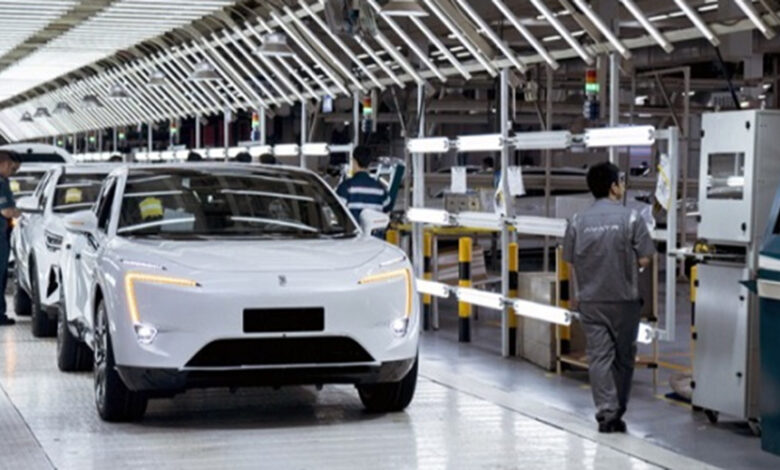
Chinese automaker GAC Motor is exploring plans to establish an electric vehicle (EV) assembly plant in Ghana, a move that could mark a significant shift in West Africa’s automotive and clean energy landscape.
The news follows an announcement by Foreign Affairs Minister Samuel Okudzeto Ablakwa, who revealed on Thursday that GAC had expressed a “favourable indication” of interest during his high-level meetings with company executives at GAC’s headquarters in Panyu, Guangzhou.
Mr. Ablakwa emphasized that Ghana’s emerging lithium reserves—crucial for EV battery production, are playing a key role in attracting Chinese industrial investment.
“Ghana is being seriously considered as a regional hub for electric vehicle manufacturing, and our lithium potential is a strong magnet for these conversations,” he stated in a Facebook post dated June 26.
Ghana has been steadily building momentum in its clean energy transition. The country is seeking to leverage its mineral wealth to boost domestic industrialization, create jobs, and reduce dependency on fossil fuel imports.
In line with this strategy, Energy and Green Transition Minister John Abdulai Jinapor announced in March plans to convert select fuel stations into EV charging centers and confirmed ongoing discussions with Chinese EV giant BYD to introduce ultra-fast charging technology capable of replenishing EVs within five to ten minutes.
A 2024 UNDP–Energy Commission report highlighted the infrastructure gap, noting that Ghana has only seven public EV charging stations, all located in Accra. This underscores the critical need for infrastructure expansion if Ghana is to support local EV manufacturing and adoption.
The proposed GAC plant is expected to create thousands of new jobs spanning the mining, manufacturing, assembly, and maintenance sectors. It aligns with broader government goals to make Ghana a leader in green technology and industrial innovation within West Africa.
“China is ten years ahead of the world in EV technology,” Mr. Ablakwa remarked, adding that Ghana’s strategic position and resource potential give it a unique opportunity to partner with global leaders in sustainable mobility.
While no formal agreement has been signed, GAC’s interest is seen as a strong signal of confidence in Ghana’s investment environment and industrial potential.
Government sources indicate that feasibility studies and infrastructure assessments are likely to follow in the coming months as part of preliminary planning for the proposed EV plant.