

Ghana’s 70% raw commodity exports undermine economic resilience — Prof. Bokpin
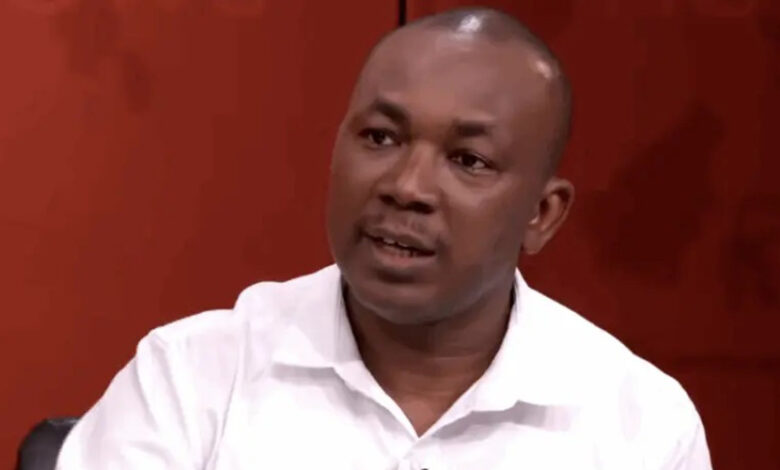
Economist Professor Godfred Bokpin has raised concerns over Ghana’s continued dependence on primary commodities for export earnings, stating that more than 70% of the country’s export revenue still comes from unprocessed raw materials, a trend that has persisted since independence.
Speaking at the Business Economic Forum yesterday, June 25, 2025, Prof. Bokpin lamented the country’s lack of progress in industrialisation and value addition, describing it as a major contributor to Ghana’s weak economic fundamentals and vulnerability to external shocks.
“Since independence, more than 70 percent of our export earnings have been driven by primary commodities. We are still talking about the same percentage now. When we say we have done well, it’s more of the same, so how do you talk about resilience?” he queried.
The forum, ‘themed Ghana at Risk: The Economic Fallout of Distant Conflicts,’ focused on assessing Ghana’s economic preparedness amid growing global uncertainty, particularly in light of conflicts such as the Iran-Israel war, which continue to impact global trade and commodity prices.
Prof. Bokpin noted that although Ghana is currently reaping benefits from strong gold prices, the lack of domestic processing limits the country’s true earning potential.
“Yes, we are seeing gains because gold is doing well, but that’s a stroke of luck. What if the crisis had affected commodities instead? Our economy is not resilient; it’s just benefiting disproportionately from the current global situation,” he observed.
He stressed that Ghana’s economic vulnerabilities stem from decades of failed industrial policy, limited diversification, and an over-reliance on cocoa, gold, and crude oil exports — all of which are exported with little or no value addition.
Calling for a radical structural transformation, Prof. Bokpin urged the government to take bold steps toward industrialisation and economic diversification to build real economic resilience.
“Over the years, decades, in fact, we have not structurally transformed this economy. We haven’t diversified. That’s why we keep going back to the IMF. That’s why every shock throws us off balance,” he stated. He concluded by emphasising that until Ghana breaks its dependence on raw commodity exports and moves toward processing and manufacturing, true economic independence and resilience will remain elusive.



