Cedi trades at ₵10.2449 to US Dollar, continues to show strength
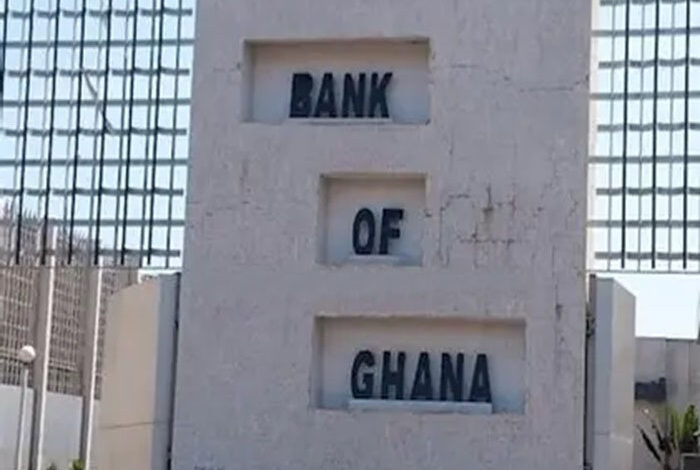
The Ghanaian Cedi continued its recent strong performance against major international currencies on Monday, June 9, 2025, with the Bank of Ghana (BoG) quoting the local currency at a buying rate of GHS 10.2449 and a selling rate of GHS 10.2551 to the US Dollar.
The British Pound was trading at GHS 13.9207 (buying) and GHS 13.9357 (selling), while the Euro stood at GHS 11.7277 (buying) and GHS 11.7383 (selling). This marks a continuation of a trend that has seen the Cedi rebound significantly in recent months.
An economic advisor to the BoG’s Monetary Policy Committee, Dr. John Kwakye, attributed the currency’s improved performance not to direct intervention by the central bank, but rather to favorable external and domestic conditions.
“It’s worth repeating that the recent Cedi appreciation is due to high foreign exchange receipts from remittances, gold and cocoa exports, increased BoG gold reserves, tight monetary policy, coordinated fiscal and monetary policies, and high market confidence. It’s not due to excessive BoG intervention,” Dr. Kwakye posted on X.
This clarification comes amid growing public expectations that the Cedi’s appreciation should translate into lower market prices. However, the Governor of the Bank of Ghana, Dr. Johnson Asiama, explained that such price adjustments take time.
Speaking at the 124th Monetary Policy Committee (MPC) press conference held in Accra on Friday, May 24, Dr. Asiama said: “You can understand that some people stock their goods at a higher exchange rate, and so naturally, even with the appreciation, it takes a while for you to see that adjustment.”
He assured the public that as long as competition exists within the market, consumers should begin to experience a gradual reduction in prices.
Dr. Asiama also addressed the sustainability of the Cedi’s appreciation. According to him, the central bank is closely monitoring developments to ensure that the currency’s appreciation does not undermine Ghana’s export competitiveness in real terms.
“The Cedi appreciation has to be put into proper context. Much as you want to have Cedi stability in nominal terms, the important thing here is to ensure that, in real terms, the Cedi is not appreciating persistently,” Dr. Asiama said.
He added that the observed appreciation is largely market-driven and not the result of reserve depletion by the central bank.
“If you look at the data pack we have put out, you can see that our reserve program is growing. So we are not using our reserves to intervene in the market. Therefore, the appreciation you are seeing is driven by the economic policy stance, monetary policy, and international flows,” he noted.
At the same press conference, Dr. Asiama announced that the MPC had unanimously voted to maintain the policy rate at 28 percent. He cited consistent declines in headline inflation over the first four months of the year as a key factor influencing the Committee’s decision.
“The external sector has continued to improve, with a record provisional current account surplus of USD2.1 billion in the first quarter of 2025. This was driven mainly by higher prices and increased production volumes of gold and cocoa, along with strong remittance inflows,” he said.
He further revealed that the overall balance of payments recorded a surplus of US$1.1 billion, reflecting strong performance that led to significant reserve accumulation. As of April 2025, Ghana’s Gross International Reserves (GIR) stood at USD10.7 billion, equivalent to 4.7 months of import cover.
Dr. Asiama also noted that, as of May 21, 2025, the Cedi had appreciated by 24.1 percent against the US Dollar, 16.2 percent against the British Pound, and 14.1 percent against the Euro.
Looking ahead, the central bank expects inflation to ease faster than previously forecast, potentially reaching its medium-term target by the first quarter of 2026, barring any external shocks.
“The latest forecast points to continued easing of inflationary pressures on the back of a tight monetary policy stance, exchange rate stability, and fiscal consolidation. Despite these positive developments, the Committee observed that the current level of inflation remains high relative to the medium-term target and will require maintaining the tight stance to reinforce the disinflation process,” Dr. Asiama added.