Disney, Universal go all-in on theme parks
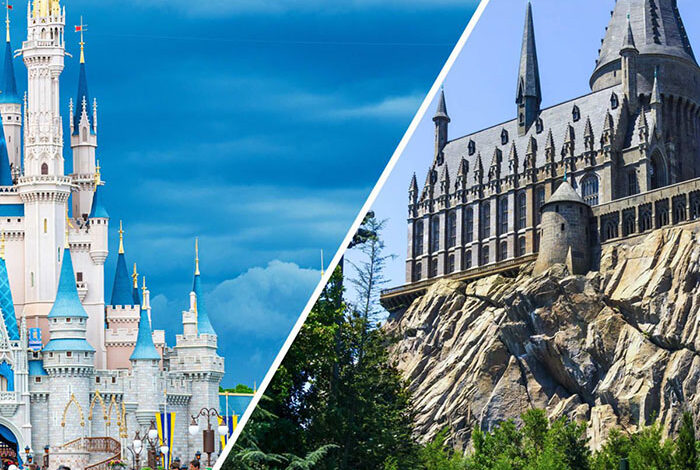
The Walt Disney Company and Universal are making historic investments in their experiences divisions, even as fears of economic slowdown loom.
Universal Orlando Resort has officially opened the gates to Epic Universe, its fourth theme park and one of the most ambitious expansions in company history. With a staggering estimated cost of $7 billion, according to figures from the University of Central Florida (UCF), Epic is not just another theme park, it’s a statement.
“This is the single-largest investment Comcast NBCUniversal has made in its theme park business,” said Comcast CEO and Chairman Brian Roberts.
Karen Irwin, Universal Orlando’s President and COO, added, “It’s so different than anything else that we’ve ever built, but certainly I think it’s different than anything anyone’s ever built.”
Epic’s launch also coincides with the expansion of Universal’s resort offerings. With the addition of three new Loews hotels, the resort now boasts 11 on-site hotels—signaling Universal’s push to turn Orlando into a full-week destination, a status long dominated by its crosstown rival, Walt Disney World.
But the ambitious move comes at a precarious time. Experts warn that rising inflation and concerns about a slowing economy could dampen travel and tourism spending this summer.
“If you’re uncertain how the economy is going to develop, then you’re going to try to be more cautious in your spending,” said Jorge Ridderstaat, an associate professor at UCF’s Rosen College of Hospitality Management.
Yet Universal is not alone in its big bet.
In 2023, Disney unveiled its own mammoth plan to invest $60 billion over the next decade into its experiences segment, which includes theme parks, cruise lines, and consumer products. Half of that—$30 billion—is earmarked specifically for its U.S.-based theme parks: Walt Disney World and Disneyland.
“We’ve got a lion’s share of that investment coming to us. It’s about finding what strikes the best creative intent in the most value-oriented way possible,” said Michael Hundgen, Portfolio Executive Creative Producer at Walt Disney Imagineering. Both companies’ strategic pivot toward theme parks and away from traditional linear TV, where revenues have declined in recent years, reflects a broader industry trend. While streaming and content licensing have introduced new challenges, theme parks have proven to be reliable revenue drivers, especially in the post-COVID tourism surge.