Legalizing multiple jobs key to 24-hour economy success — Analyst
By: Rebecca Okine
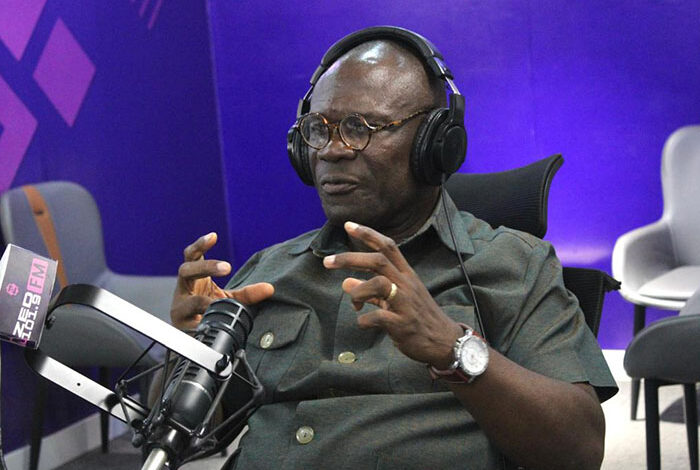
Financial analyst Dr. Kenneth Kwadwo Obeng is calling for the legalization and formal recognition of multiple jobholding in Ghana, to boost productivity under the government’s proposed 24-hour economy initiative.
Speaking on Zed FM’s current affairs program, The Focus, on Saturday, May 31, 2025, Dr. Obeng said the traditional 8 a.m. to 5 p.m. work structure is outdated and no longer fits modern economic and technological realities.
His remarks come as public discussion intensifies around the government’s 24-hour economy policy, which seeks to support selected businesses and institutions to operate around the clock, ideally in three shifts of eight hours each.
Dr. Obeng noted that for the policy to succeed, it must be accompanied by key structural reforms—chief among them the legalization of dual jobholding across both the public and private sectors.
“The time we spend in government work has become too long. But now, time has become a very important productive factor—just like land, labor, and capital,” he said.
He called for shorter public sector working hours, arguing that flexible systems and remote work options now make it possible to do more in less time.
“Even now, people can stay at home and work. Reducing government working hours will create room for other jobs to be done by the same human capital,” he noted.
Dr. Obeng pointed out that many professionals in Ghana already juggle multiple jobs, even if informally.
“People are already working two or more jobs; we just haven’t officialized it,” he explained.
He believes formalizing the practice could legitimize what is already happening while improving overall national productivity and economic resilience.
“A well-structured 24-hour economy requires a labor system that recognizes how work is evolving. We don’t need to spend 8 a.m. to 5 p.m. in the office anymore,” he added.
President John Dramani Mahama’s 24-hour economy initiative is widely viewed as a bold move to revitalize Ghana’s economic landscape. The policy aims to enhance productivity, create employment opportunities, and reduce the country’s dependence on imports by enabling continuous business operations.
However, its success will depend on addressing major challenges, including infrastructure limitations, reliable energy supply, and fair distribution of benefits across both urban and rural communities. While the initiative has received strong support from youth and entrepreneurs, experts say careful planning and public-private collaboration are critical for its effective implementation.