Mahama unveils 8-point plan to reboot Ghana’s economy
By Praisebell Rosemond Larbi
President John Dramani Mahama has outlined a bold eight-point strategy aimed at revitalizing Ghana’s economy, restoring investor confidence, and laying a solid foundation for long-term growth.
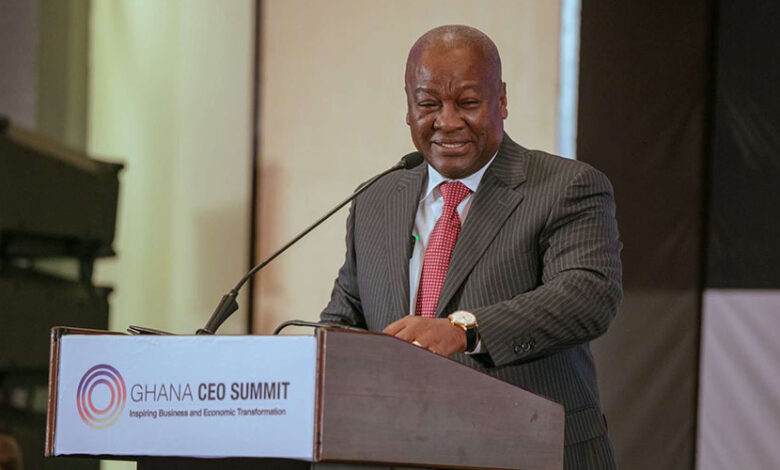
The plan, unveiled at the 9th CEO Summit held at the Kempinski Hotel in Accra yesterday, May 26, 2025, is designed to steer the country onto a sustainable development path while addressing persistent fiscal and structural challenges.
President Mahama expressed optimism that the strategy, if fully implemented, would bring about a dramatic economic turnaround. He cited recent gains in the value of the cedi as a sign of renewed confidence in Ghana’s economic prospects.
The strategy, according to the President, is anchored in fiscal discipline, investment reforms, local economic empowerment, and export revitalization. The key pillars include:
Completing the IMF Programme with Discipline
Mahama reaffirmed his government’s commitment to completing the International Monetary Fund (IMF) Extended Credit Facility programme, with the fourth review expected in June 2025. He emphasized the importance of fiscal discipline, prudent borrowing, and adherence to agreed targets. The plan includes a responsible exit strategy by 2026, followed by continued policy support to ensure macroeconomic stability.
Reopening Domestic and International Capital Markets
The President announced efforts to reopen Ghana’s bond markets with support from the IMF, the Ghana Stock Exchange, and domestic financial institutions. He assured investors that any future borrowing will be tied to self-financing projects by state agencies to guarantee repayment and avoid unsustainable debt accumulation.
Strengthening Sovereign Funds and Local Government Financing
To safeguard the country’s financial future, Mahama said mandatory contributions to Ghana’s sinking and stabilization funds will be enforced. He also pledged to empower Metropolitan, Municipal and District Assemblies (MMDAs) to issue infrastructure bonds to finance development projects such as roads, schools, and water systems.
Clearing Verified Arrears and Rationalising Public Investments
A full audit of government arrears is underway, with Mahama promising to clear all verified debts transparently. Going forward, public investments will be guided by national priorities, the availability of funds, and strategic value to prevent wasteful spending.
Accelerating Public Financial Management Reforms
To enhance transparency and efficiency in government finances, Mahama plans to reactivate key financial reforms. These include the Treasury Single Account (TSA), an integrated tax administration system, and real-time budget monitoring tools—all aimed at curbing waste, plugging leakages, and fighting corruption.
Revitalising Exports Through Ghana Exim Bank
Mahama said the Ghana Exim Bank will be repositioned to support non-traditional exports, agro-processing, light manufacturing, and SMEs. This, he noted, will help improve Ghana’s foreign exchange earnings while creating jobs and expanding the productive base of the economy.
Building Ghana into a Regional Hub for Trade and Investment
The strategy includes plans to position Ghana as the regional leader in trade, transport, and digital services. Investments will focus on modernising ports, enhancing financial and healthcare services, improving education, and developing industrial corridors to integrate into the African Continental Free Trade Area (AfCFTA).
Resuming Infrastructure Development to Stimulate Growth
President Mahama stressed that infrastructure development remains a cornerstone of his growth strategy. His administration will pursue critical projects in roads, energy, water, housing, and urban renewal through innovative financing mechanisms such as the “Big Push” initiative, public-private partnerships (PPPs), and international collaborations.
Looking Ahead
President Mahama called for unity and support from the private sector, development partners, and Ghanaians at large to implement the reset agenda.
“We are on the cusp of a national transformation. With discipline, innovation, and collective resolve, we can build a Ghana that works for everyone,” he said.