Local producers urged to comply with GSA standards to improve product competitiveness
By Selorm GBORBIDZI, Accra
The Acting Director of Standards Directorate of the Ghana Standards Authority (GSA), Joyce Okori, has asked local producers to comply with the standards set by the Authority in order to avoid losses and ensure that their products are competitive.
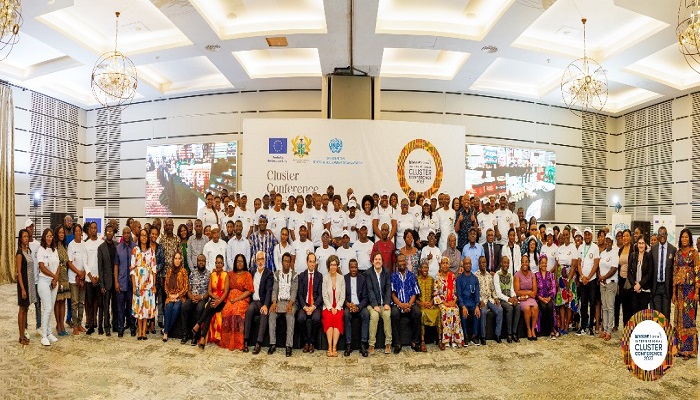
She was speaking during a panel discussion at the second Ghana International Cluster Conference, organised under the EU- funded West Africa Competitive Programme (WACOMP).
Ms sOkori said by not focusing on meeting the standards of the local market, businesses run the risk of having to rework, or recall their products when they are found to be substandard.
She however assured these Micro, Small and Medium-sized Enterprises (MSMEs) that the doors of the GSA are open to helping them navigate the waters to reaching the standards required of them to not just compete at the local level, but also compete in the African Continental Free Trade Area.
“Make use of public institutions. Let’s try and comply with the standards. We are there to support you. You only need to get in touch with the Standards Authority and we will assist you,” she assured.
The United Nations International Development Organsiation (UNIDO) Country Representative in charge of Ghana and Liberia, Stavros Papastavrou, stated that the WACOMP partnerships aligns with the country’s national Development Strategy, and is poised to drive sustainable economic growth in the country.
He indicated that about 43,849 MSMEs have been directly impacted by the programme, while capacity of about 300 entrepreneurs’ built in the The African Continental Free Trade Area (AfCFTA) Rules of Origin, complementing Government effort to make MSMEs take advantage of the One market.
Papastavrou disclosed that under the cooperation between UNIDO and the Government of Ghana on Ghana’s Sustainable Industrial Development, and the joint commitment to the 2030 Agenda for the SDGs and also Agenda 2063, over 240 entrepreneurs from the “One District, One Factory” programme had had their capacities in ISO 22000 and 9001 food safety standards enhanced.
He indicated that the next phase of the WACOMP will be implemented by the ECOWAS commission using the same models implemented by the Government of Ghana and UNIDO, noting that this is a feather in Ghana’s cap.
Team Lead of Macro-Economic and Trade Section of the EU, Timothy Dolan, said the GH¢100 million project was focused on improvement in the competitiveness of three major value chains: cassava and its derivatives, fruits (mangoes and pineapples) and cosmetics, particularly shea-based cosmetics.
He stated that the project was aimed at enhancing value addition and creating conditions for low carbon and sustainable production and processing.
He was hopeful that the participants will exchange information that will help them enhance their competitiveness, and also improve their export readiness, especially to the European Union.
An Industrial Development Expert with UNIDO, Ebe Muschialli, explained that the Cluster Programme has so far been successful in achieving its objectives.
Under the Programme, participating businesses have been able to develop and innovate to create new products, while others have been able to improve their efficiency.
She stressed that participating firms have been encouraged to cooperate and partner either among themselves, or with technical and educational institutions to develop new products.
Due to the programme, many of these firms have been able to expand their reach to sell in other regions around the continent.
In addition to improving their products, Muschialli, said that these companies have received training in how to brand and market their products.
She said, “once the product is good, the product responds to the needs and standards of the market, it can enter the market and be attractive for consumers and compete with local products.”