Why don’t Europeans buy more American cars?
Donald Trump is threatening to introduce big tariffs on EU car imports, unhappy that Europeans don’t buy more American vehicles. But why are US cars, with the notable exception of Tesla, not more popular in Europe?
Italy’s ancient towns and cities, with their narrow, cobbled streets, offer an obvious explanation why, in the words of US President Donald Trump, Europeans “don’t take our cars”.
Or as car industry analyst Hampus Engellau puts it: “Try to go around Italy in a big SUV. I’ve done it, and it’s very difficult”.
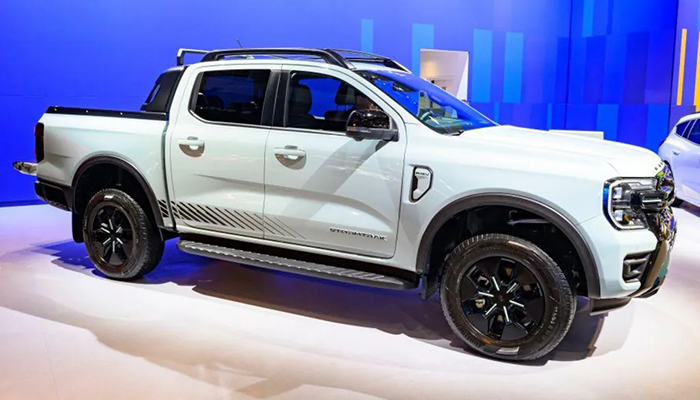
Add cost to the question, and it becomes obviously why you don’t see too many American pick-up trucks on European roads, observes Mike Hawes, CEO of The Society of Motor Manufacturers & Traders, which represents the industry in the UK.
“We tend to have higher fuel prices than the Americans, so we prefer smaller, more fuel-efficient vehicles, while they generally prefer larger vehicles.”
Mr Engellau, who works for Swedish investment bank Handelsbanken Capital Markets, also highlights petrol prices being substantially cheaper in the US. “They pay per gallon what we pay per litre,” he says. There are 3.8 litres to one US gallon.
Yet these differences have done little to deter European carmakers from gaining market share in the US. Again, in the words of Mr Trump, the US has “millions of cars coming in – BMW, Mercedes, Volkswagen and many others”.
In 2022, 692,334 new EU-made cars were exported to the US, worth €36bn ($37bn; £30bn). While only 116,207 new US-made cars went in the opposite direction, for €5.2bn.
This imbalance is caused by unfair trading rules and needs correcting, according to Mr Trump.
“Mr Trump is concerned because the terms of trade are not really equal,” explains Mr Engellau, pointing out that the EU’s 10% tariffs on cars imported from the US far exceeds the 2.5% tariffs the US – currently – charges on cars imported from the EU.
These disparities have prompted Trump to say he wants to raise US tariffs on European automotive imports. He has already announced 25% import tariffs on steel and aluminium imports, two metals crucial for carmakers.
Trump’s move appears to have prompted EU officials to consider reducing their own tariffs in order to protect Europe’s automotive industry from a potential trade war.
Trump’s intervention has not impressed Jim Farley, the boss of US carmaker Ford. “So far what we’ve been seeing is a lot of cost and a lot of chaos,” NBC News recently reported him as saying.
In fact, the very focus on trade is perhaps misplaced, according to automotive industry veteran Andy Palmer, formerly the chief operating officer of Nissan and CEO of Aston Martin, and currently a consultant. “If you can help it, you don’t want to ship cars around the world. They’re big boxes of expensive air,” he says.
The automotive industry is global, adds the SMMT’s Mr Hawes, so carmakers generally want to “manufacture close to where the customer is based”.
As such, several European carmakers, most notably marques such as BMW, Mercedes and Audi, are making some of their largest cars in North America, and some of these vehicles are exported back to Europe.
BBC