Emergency summit for DRC
By: Olive Gibbon
African leaders including those of Rwanda, the Democratic Republic of Congo, Uganda, and Burundi have met at an emergency summit committed to securing peace in the DRC. The summit was hosted by both the East African Community and the South African Development Community, seeking to ease divisions between the two communities to aid the permanent establishment of peace in the DRC.
The summit saw government leaders convene to terminate the conflict within the DRC that exists between the M23 group and Congolese forces. With some of the richest stores of critical minerals in the world, the DR Congo has witnessed excessive violence and thousands of deaths this year.
This summit follows the militant group M23’s capture of Goma, vowing to protect Tutsi ethnic interests in the DR Congo.
In Rwanda, 1994 saw 800,000 minority Tutsi ethnic people killed, with millions of refugees fleeing to the DR Congo. The United Nations and the Congolese President claim that Rwanda has provided support to the M23, which both M23 and Rwanda President Kagame deny. But Kagame says his continued priority is to destroy Hutu ethnic armed groups.
The relationship between Congolese President Tshisekedi and Rwandan leader Kagame is continually strained by this. The summit has seen them convene, however, to push for a lasting solution.
The M23 group is named to reflect the 23rd March 2009 peace accord, and their accusations that the DR Congo government has failed to implement the peace deal – of integrating Tutsi interests. The group vows to protect Tutsi ethnic interests against Hutu militias.
While Uganda is not directly involved, the United Nations reports that it has allowed M23 to use Ugandan territory as a rear base and supply route.
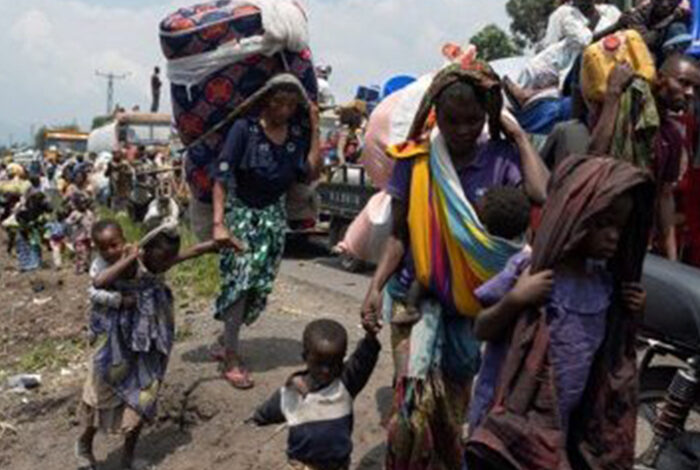
Speaking at the summit, President of Kenya and the Chairperson of the East African Community William Ruto called for M23 to halt advancement, and DRC forces to cease all retaliatory measures. “An immediate ceasefire is the only way”, he stated, “such a conflict cannot be resolved through military means”. He stressed the humanitarian cost of the conflict – including displacement of millions of citizens, lives threatened by violence, sexual and gender-based violence against women and children, and the recruitment of children to partake in combat.
Chairperson of the South African Development Community and President of Zimbabwe Emmerson Mnangagwa urged that “we must remain as solidly united as we were during the struggle for complete emancipation and independence of Africa from colonialism”.
South African President Ramaphosa did not attend the summit, and was instead represented by the South Africa Minister of Foreign Affairs Ronald Lamola.
South Africa, with troops fighting alongside the Congolese army, have recently partially blamed the deaths of thirteen of their troops on the Rwanda Defence Force, and warned Rwanda that firing on South African troops would be seen as a declaration of war. This escalated into a social media blast between South Africa’s Ramaphosa and Rwanda’s Kagame, with Kagame accusing Ramaphosa of “engaging in offensive combat operations to help the DRC government fight against its own people”.
At the summit, President of Tanzania Samia Suluhu Hassan urged that “as regional leaders, history will judge us harshly if we remain still and watch the situation worsen day by day”. She highlighted “the woven complexity of the matter we are dealing with”, urging that the summit finds concrete proposals and measures to “avoid an impending humanitarian catastrophe”.
Leaders of Somalia, Zambia, and Angola also attended the summit, amongst countless African countries’ representatives. The deliberations of the summit were not accessible to the media.