International leaders warn against Trump’s proposed tariffs
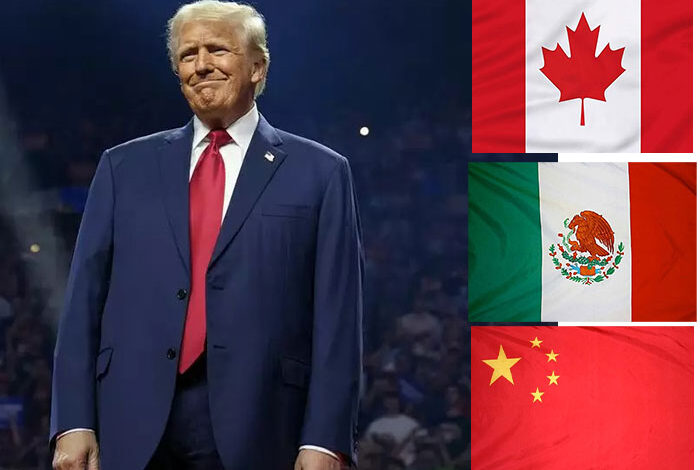
Officials from Canada, Mexico, and China have cautioned that President-elect Donald Trump’s plan to impose sweeping tariffs on the United States’ three largest trading partners could disrupt the economies of all four nations.
Mexico’s President Claudia Sheinbaum warned that retaliatory tariffs could escalate, jeopardizing shared businesses and economic stability. Trump announced plans to impose 25% tariffs on goods from Mexico and Canada and an additional 10% on imports from China, framing the measures as an effort to curb illegal immigration and drug trafficking.
Canadian Prime Minister Justin Trudeau responded by discussing the matter with Trump and scheduling a meeting with provincial leaders to formulate Canada’s response. Trudeau emphasized Canada’s willingness to maintain a constructive relationship with the U.S., noting that cross-border migration issues differ significantly between the two nations.
China also expressed its opposition, with embassy spokesperson Liu Pengyu rejecting the notion of a trade war as unwinnable. He disputed accusations that China facilitates the smuggling of chemicals used in the production of fentanyl, a major concern in the U.S.
Mexico’s Sheinbaum criticized Trump’s tariff proposal, stating that neither threats nor punitive measures would address the root causes of migration or drug consumption in the U.S. She highlighted Mexico’s efforts to manage migration flows and argued that the issue of drugs is largely a public health challenge within American society.
Sheinbaum also noted the interdependence of U.S. and Mexican manufacturing industries, warning that increased tariffs would harm companies like General Motors, which relies on supply chains spanning both countries. She reiterated that Mexico would retaliate with its own tariffs on U.S. goods if Trump’s plan moves forward.
China’s Liu Pengyu emphasized the mutually beneficial nature of China-U.S. economic cooperation, pointing out that China has responded to U.S. requests to address illegal drug trafficking concerns. He refuted allegations that China deliberately allows fentanyl precursors to reach the U.S.
The proposed tariffs come as Trump outlines his priorities for his first day in office on January 20, including addressing trade imbalances and border security. His spokesperson, Steven Cheung, claimed that global leaders are seeking closer ties with Trump, viewing him as a proponent of peace and stability. However, the pushback from Canada, Mexico, and China underscores the potential fallout from aggressive trade policies. With the majority of goods traded between the U.S. and China already subject to tariffs, any further escalation could deepen economic tensions and strain international relationships.