Economy to Achieve 4 to 4.5% Growth In GDP
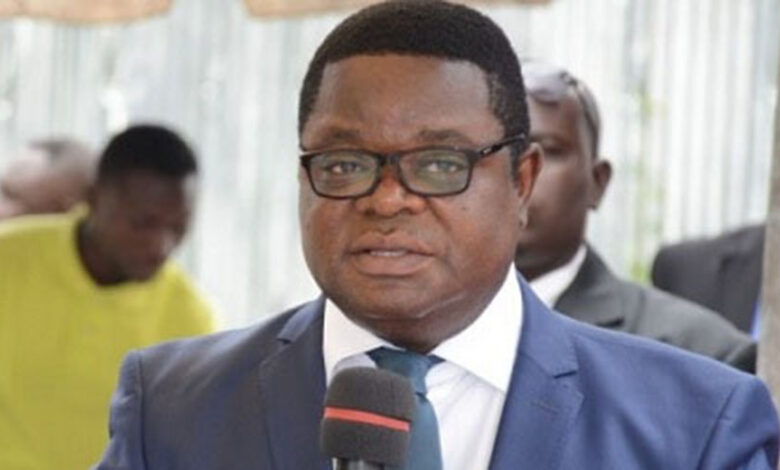
– By year-end, Prof Quartey projects
Story: Isaac AIDOO, Accra
DIRECTOR of the Institute of Statistical, Social and Economic Research (ISSER), Professor Peter Quartey, has projected that Ghana’s economy could achieve between 4% and 4.5% growth in GDP by year-end.
While the International Monetary Fund (IMF) has estimated a 4% growth rate, Prof Quartey expressed cautious optimism that actual performance might surpass this figure, citing favourable growth in the first half of 2024 and the potential for accelerated expansion in the latter part of the year.
Prof Quartey emphasized the importance of bolstering investments in agriculture and manufacturing, noting that these sectors are labour-intensive and crucial for job creation and equitable income distribution.
“If we don’t invest in the right sectors, the impact of growth will not be felt across the economy,” he explained, underscoring the necessity of targeted policies that directly address these areas.
On the issue of transitioning to a 24-hour economy, Quartey pointed out the challenges Ghana would face, such as energy supply, security, and sufficient demand to justify such a move.
He recommended that a 24-hour economy be integrated into a broader, long-term development plan. “While it’s a good idea, implementing it prematurely could strain existing resources,” he noted, advocating for a comprehensive national development framework that could guide strategic initiatives over time.
Addressing fiscal policy, Quartey cautioned against excessive government spending, especially in the lead-up to the 2024 elections. He recommended the establishment of a debt ceiling through legislation to prevent unsustainable borrowing, emphasizing the need for fiscal responsibility to avoid repeating past financial challenges.
“Fiscal discipline is very key, and we admonish the government to avoid overspending in 2024,” he stated, adding that rationalizing expenditure —particularly in areas like procurement and compensation — would help Ghana maintain budgetary balance.
Quartey also spoke on the burden of high lending rates on businesses, suggesting that the government’s SME Go program, which aims to offer loans to small businesses at a 10% interest rate, could help ease financing challenges if implemented effectively.
He stressed that the initiative must focus on supporting credible businesses with strong business plans, rather than favoring political affiliations.
In discussing inflation and exchange rate stability, he urged support for the value chain within the agricultural sector to combat rising food prices. Moreover, Quartey highlighted environmental sustainability, especially regarding Ghana’s gold exports, which comprise half of the nation’s export revenue.
“We need to address environmental concerns to ensure sustainable mining and agricultural practices,” he said, noting that the country’s food security and tourism industry could suffer if environmental issues are neglected.
On taxation, Quartey advocated for the continued implementation of the “betting tax,” likening it to taxes on tobacco and alcohol designed to regulate behaviour.
He urged careful consideration of the economic consequences should Ghana consider scrapping certain taxes, such as the e-levy and COVID-19 taxes, emphasizing the importance of finding sustainable alternatives to make up for revenue shortfalls under Ghana’s IMF program.
In closing, Quartey shared his hope that 2024’s promising economic indicators would persist, providing a foundation for a stronger economy by 2025, but warned that failure to implement these reforms could lead to financial turbulence. “The true state of the economy will be evident by 2025, especially if we manage to avoid an election-driven spending surge. If we fail to learn from past mistakes, we should brace ourselves for challenging times ahead,” he concluded.