

40th Farmers’ Day on Nov 8
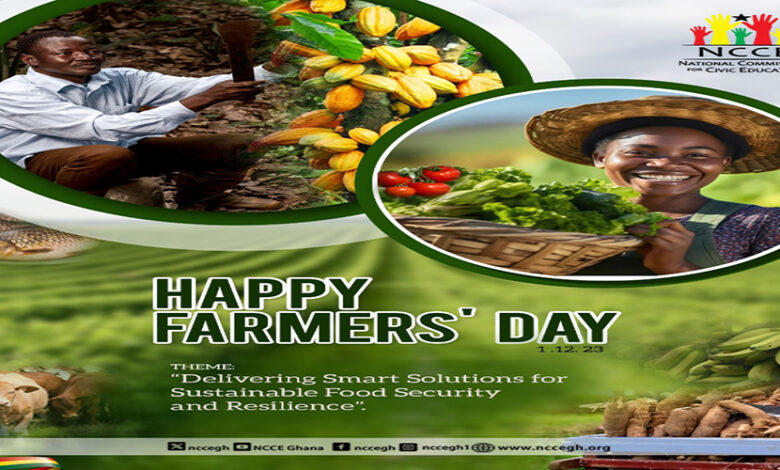
THE Ministry of Food and Agriculture has announced the 40th edition of National Farmers’ Day, scheduled for Friday, November 8, 2024, in the Greater Accra Region.
This milestone event will be celebrated under the theme, “Building Climate-Resilient Agriculture for Sustainable Food Security,” highlighting Ghana’s strategic efforts to strengthen its agricultural sector in the face of increasing climate change challenges.
As part of the festivities, Agrifest Ghana 2024, a five-day National Agricultural Fair, will be held from November 4 to 8. The fair will offer a vibrant platform for showcasing Ghana’s agricultural innovations and heritage, as well as promoting knowledge exchange between farmers, agribusinesses, and industry stakeholders.
The event will also spotlight the critical role agriculture plays in the country’s economy, which employs over 30% of the population and contributes significantly to Ghana’s GDP.
The National Farmers’ Day celebration will culminate in an Awards Night Ceremony on November 8, where President Nana Addo Dankwa Akufo-Addo will recognize the exceptional achievements of farmers from across the country.
Awards will be presented in 16 categories, including the prestigious Overall National Best Farmer, National Best Livestock Farmer, National Best Female Farmer, and National Best Physically Challenged Farmer.
These awards honour the invaluable contributions of farmers to Ghana’s agricultural growth and food security, providing both financial rewards and recognition for their resilience, innovation, and dedication.
Significance of National Farmers’ Day and its Impact
National Farmers’ Day, introduced in 1985, has grown to become a key event in Ghana’s agricultural calendar. The celebration was initially established to honor the tireless efforts of farmers and fisherfolk who sustained the country through a severe drought and famine in 1983.
Over the past 39 years, the event has evolved into a platform that not only celebrates Ghana’s hardworking farmers but also drives innovation and policy dialogue aimed at transforming the agricultural sector.
Boosting Agricultural Output and Food Security: Past Farmers’ Day celebrations have contributed significantly to increasing agricultural output and food security in Ghana.
The event serves as an annual opportunity to reward excellence, thereby motivating farmers to adopt modern agricultural practices and improve productivity.
This recognition has led to a surge in the adoption of technology, mechanization, and climate-smart agricultural techniques, all of which have had a lasting positive impact on food production.
Economic Growth and Development: The broader economic impact of National Farmers’ Day cannot be overstated. Agriculture remains a cornerstone of Ghana’s economy, contributing around 20% of the nation’s GDP.
The celebration encourages investment in the sector, attracting both local and foreign investors to opportunities in agribusiness, from crop production and livestock to agro-processing.
The event’s emphasis on climate-resilient agriculture is timely, as it aligns with global efforts to make food systems more sustainable and resilient to climate shocks, which are increasingly affecting yields and livelihoods.
Empowerment of Marginalized Groups: National Farmers’ Day has also been instrumental in promoting inclusivity within the agricultural sector.
Over the years, special categories such as the National Best Female Farmer and the National Best Physically Challenged Farmer have highlighted the contributions of women and individuals with disabilities, who play critical roles in food production and rural development.
These awards have empowered marginalized groups, encouraging greater participation in agriculture and ensuring that everyone has a stake in the nation’s food security.
Innovation and Knowledge Exchange: Agricultural fairs such as Agrifest Ghana, organized as part of the National Farmers’ Day celebrations, have created avenues for knowledge sharing and the exchange of ideas on best practices, new technologies, and sustainable farming methods.
These fairs attract stakeholders from across the value chain, including farmers, researchers, policymakers, and agribusinesses, fostering collaboration and innovation.
Looking Ahead: Building Climate Resilience for the Future
This year’s theme, “Building Climate-Resilient Agriculture for Sustainable Food Security,” underscores the urgency of adapting Ghana’s agricultural practices to withstand the growing threat of climate change. Rising temperatures, unpredictable rainfall patterns, and frequent droughts are putting immense pressure on food production, threatening the livelihoods of millions of farmers and the nation’s ability to feed its growing population.



