2024 Kenya Travel Expo attracts over 4,000 delegates
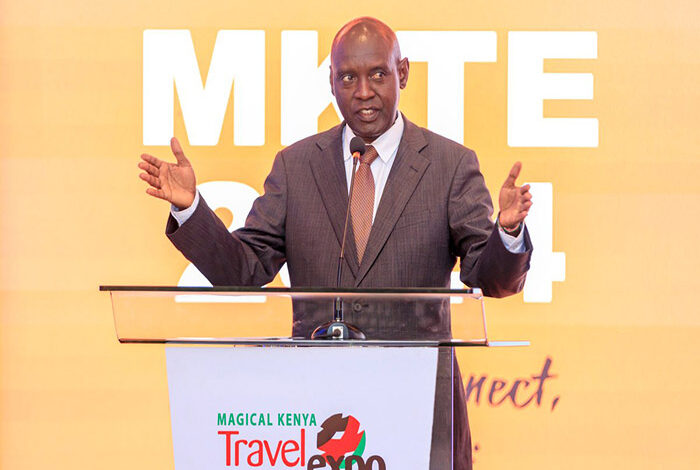
THE Kenya Tourism Board (KTB) is set to host its annual Magical Kenya Travel Expo (MKTE) 2024 at Uhuru Gardens National Monument & Museum on Lang’ata Road, Nairobi from Wednesday, October 2 to Friday, October 4, 2024.
The highly anticipated event will bring together key travel agents from Kenya’s major tourism source markets (Buyers) to network with Kenya’s industry stakeholders. H.E. Dr. William Samoei Ruto, C.G.H., the President of Kenya, will grace the occasion as the Chief Guest, officially opening the event on Wednesday.
Speaking ahead of the event, June Chepkemei, CEO of KTB, highlighted the significance of this year’s expo, stating,
“This year’s expo will feature participation from 6 tourism boards, 9 county governments, and 180 international buyers — 75 from Africa, 37 from North America, 26 from Europe, and 42 from Asia and the Middle East.”
The Magical Kenya Travel Expo is widely recognized as the leading travel trade show in East and Central Africa, with over 4,000 delegates registered to participate this year.
This premier event will showcase the diverse range of Kenya’s tourism products, from its world-renowned wildlife safaris and breathtaking beaches to its rich cultural heritage and vibrant urban experiences.
International buyers began arriving in the country on Thursday, 26th September 2024 and were sent to various tourism circuits to explore Kenya’s diverse offerings firsthand. This immersive experience will enable them to better market Kenya’s unique attractions to global travellers.
This year’s expo also incorporates academia, focusing on the critical role of research and knowledge sharing in driving the growth of the tourism sector. A total of 17 universities will participate, with 9 academic papers lined up for presentation.
Kenya promises an unparalleled mix of adventures, cultural immersions, and natural splendours that are yet to be fully discovered. Visitors to this vibrant destination will find more than they expected.
How Should Chancellor Rachel Reeves Find £20bn in Extra Tax Revenue?
As Chancellor Rachel Reeves prepares for the crucial first Budget on October 30, one of her biggest challenges is finding £20bn in extra tax revenue. The need for this comes from an unplanned £22bn overspend discovered since she took office in July. While there is debate over whether this overspend is new, Reeves has ruled out borrowing to fund day-to-day expenses, meaning that raising taxes is a likely route to cover this gap.
With a target of £20bn, the question remains: how should she raise the necessary revenue?
The obvious option would be to increase the rates of the big four taxes—income tax, VAT, National Insurance, and corporation tax—which make up two-thirds of government income. However, Reeves has already ruled out tax hikes in these areas, a stance solidified during the election campaign. This eliminates one of the easiest ways to fill the gap, particularly since the previous government’s cut to National Insurance already reduced taxes by £20bn.
But there are other possible solutions, such as increasing capital gains tax or inheritance tax. While these taxes could raise a few billion, they likely won’t generate the full £20bn needed. Currently, both taxes contribute less than £25bn annually, and boosting them would require a significant jump.
One of the more promising areas for revenue generation lies in pensions. The current tax relief system for pension contributions costs the government around £50bn a year, with most of the benefit going to higher earners. Reforming this system, either by reducing tax relief or tightening employer contributions, could yield significant revenue.
Two broad strategies are available to the Chancellor: an expedient approach that looks for easy money in hidden corners or an economic approach that aims for a more logically structured tax system. The pension system, with its current inconsistencies—such as offering 40% tax relief on contributions while taxing the resulting income at 20%—is ripe for reform, no matter which approach Reeves chooses.
The question now is how quickly and how deeply Reeves will act. She could aim for immediate revenue or focus on slower reforms that build over time. Other potential measures, such as a tax on land values, have also been suggested, but it remains to be seen whether these will feature in the upcoming Budget. Though a £20bn tax rise is significant, it’s not revolutionary—it’s roughly £6 per week for every person in the country or £25 per week for a family of four. Still, the decision on how to raise this money will shape public finances and policy for years to come. The nation will find out on October 30 which path Rachel Reeves chooses to take.