

IFRC commits $1m to local-led climate actions in Ghana
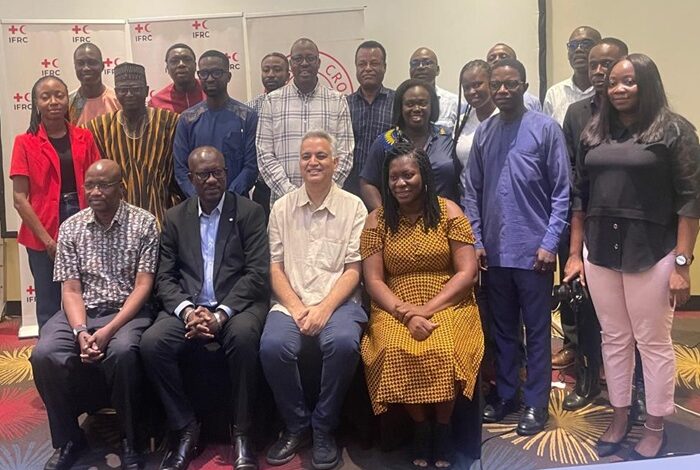
The International Federation of Red Cross and Red Crescent Societies (IFRC) with support from the USAID has allocated a $1 million to support local led climate change actions in Ghana over a six year period that ends in 2027.
The project ia aimed at strengthening national societies in leading a local-led approach in ensuring transformative changes across targeted Societies and institutional set-ups in scaling up climate change adaptation and resilience efforts in Africa.
The funds will support communities to undertake their climate risk assessments, develop a multi-year climate strategy and develop their own climate action plan priotising them on a matrix on what needs to be done at any given period and place.
In an interview on the side-lines of a stakeholder’s engagement on the IFRC’s local-led adaptation and humanitarian response to climate change in Accra on Thursday, June 6, Mr Patrick Twala, Regional Coordinator Climate Change reiterated the risks of climate change in every facet of society especially in Africa and the need to adopt a bottom-up approach in mitigating its effect.
He said it was critical to note that Africa is at the highest risk of climate change than ever before and the need to speed up progammes that ensure localised adaptations and resilience. He made reference to the heat waves, and flooding which has caused devastations in various parts of the African Continent.
“A few weeks ago South Sudan closed schools because of heat waves , we have experienced a lot of flooding around Malawi , prolong droughts in the northern horn of Africa and the flooding in Kenya where about 300 lives were lost .So in terms of the climate risk, Africa is bearing the greatest brunt”, he stressed.
He explained that the IFRC’s local-led approach to climate change actions is to introduce a new holistic and more strategic approach to ensure transformative changes across targeted societies and institutional setups to become truly climate smart and scale up adaptation efforts.
“We want to engage from a bottom up angle. We want communities to be leaders of their own action. We want them to prioritize their action plans and climate risk actions to be undertaken and we want to appreciate their local governance and traditional knowledge mechanism on how they adapt to climate change. We want all these actions to inform global decision from the village perspective”.
The IFRC he said is thus on a project to strengthen the capacity of the national societies to that perspective
“This is just a pipeline project to open up further more opportunities for Ghana”
He said the IFRC is working on five countries in Africa including Kenya , Malawi , nigeria , Burkina Faso and Gambia and looking up to two more new countries to appreciate the blue economy countries on how the dynamism of climate change affect the continent.
“In the future we are going to do more resource mobilization and partnerships as well as strengthening our partnerships with governments to compliment what we are already doing”
The funds will support communities to undertake their climate risk assessments, develop a multi-year climate strategy and develop their own climate action plan priotising them on a matrix on what needs to be done at any given period and place.
“ this is just to inform their action and to inform the policy context at the national level in Ghana so that as we go into a larger expansion ,the government will appreciate , the communities will appreciate other sectors will appreciate, especially the private sector and multilateral like the UN who has a big presence here in Ghana to learn and appreciate that locally-led action is the way to go”
Its global climate resilence programme is targeted at reducing current and future humanitarian impacts of climate change and support people homegrown adaptation mechanisms, increase understanding of the climate crisis and mobile positive action.
Africa is at the highest risk of change than ever before, be it climate heat waves, flooding, drought and all that .



