

Russia Pledges Continued Military Support to Sahel Alliance
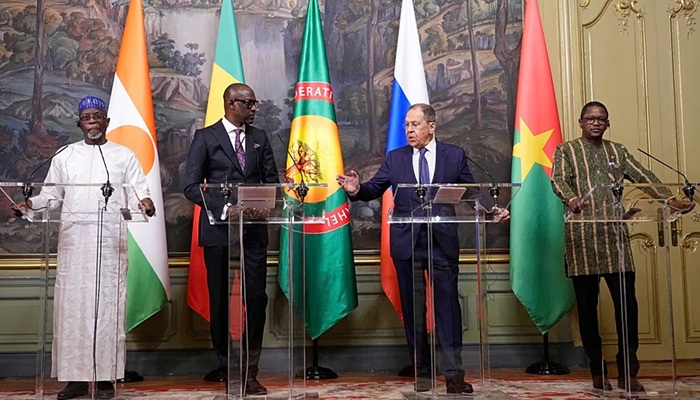
Russia has promised to continue providing military backing to the junta led governments of Burkina Faso, Mali, and Niger, three West African nations that have formed a breakaway regional alliance known as the Alliance of Sahel States (AES).
The announcement was made in Niamey, Niger, during a visit by Russian Foreign Minister Sergei Lavrov. He attended a high level meeting with the foreign ministers of the three countries, following up on a similar meeting held in Moscow in April 2025. In a joint statement, Russia and the AES said Moscow would “continue its support for strengthening the operational capacities of AES member states’ armed forces.”
The three countries are currently ruled by military regimes that came to power through coups between 2020 and 2023. Since then, they have distanced themselves from former colonial power France and drawn closer to Russia. This shift has strained relations with Western nations, who have criticized the military governments for undermining democratic processes.
Russia’s involvement in the region has grown steadily. Its Africa Corps paramilitary units are helping AES countries fight jihadist groups that have killed tens of thousands of people across large parts of the Sahel. These extremist groups, linked to Al Qaeda and the Islamic State, continue to destabilize communities and threaten regional security.
Beyond military cooperation, Moscow is also seeking closer ties with the AES in the energy and mining sectors. Analysts say Russia is positioning itself as a strategic partner, offering both security assistance and economic collaboration at a time when the three countries are increasingly isolated from Western support.
Lavrov’s visit underscores Russia’s commitment to deepening its presence in West Africa. By aligning with the AES, Moscow is expanding its influence in a region where France once held dominant sway. The AES governments, in turn, see Russia as a reliable ally that can provide military hardware, training, and political backing.
However, critics warn that reliance on Russian paramilitaries could deepen instability if not matched with strong governance and inclusive political reforms. Human rights groups have raised concerns about abuses linked to foreign fighters operating in the region.
For now, the AES and Russia remain united in their message: military cooperation will continue, and economic ties will grow. The joint statement signals that the alliance is determined to pursue its own path, even if it means further straining relations with the West.
With jihadist violence still rampant and political tensions high, the Sahel’s future will likely be shaped by how this partnership evolves, and whether it can deliver the stability and development that millions of people in Burkina Faso, Mali, and Niger urgently need.



