Is Africa ready for the New Scramble?
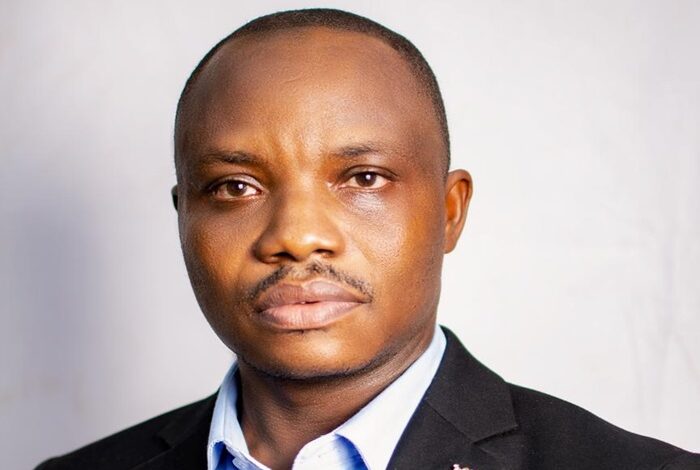
By Ishmael Kwabla Hlovor
We are witnessing seismic shift in global power balance and a struggle to birth a new world order or more precisely a new world leadership.
Years of multilateralism and international cooperation underpinned by US hegemony since the end of the Cold War is nothing more than a nostalgic past for globalist and liberal internationalists.
In place of the fading shadows of multilateralism and liberal internationalism, comes a world of intense global geopolitical competition.
We are witnessing the rise of great power rivalry along old fault lines (East-West divide) with a complicated dynamic of rising Southern states.
There is growing competition for political and diplomatic influence, access to technology, access to markets and access to strategic raw materials among major powers and rising powers. Global markets are becoming fragmented along geopolitical lines and the structures that sustain the neoliberal world order are being underdone by the realpolitik.
In Africa, the manifestation of the ongoing geopolitical rivalry and competition is what is being termed a ‘new scramble’ for Africa. Africa is not new to superpower competition and rivalry.
From around 1884 to 1914, various European powers rivaled one another for colonies in Africa.
This rivalry and subsequent partitioning and colonization of Africa is referred to as the “Scramble for Africa”.
The Berlin conference of 1983/4, which divided Africa among the rival European powers was a means to avoid conflict among the colonializing powers.
The current states and national boundaries of Africa were the products of imperial European rivalry.
Independent African states emerged within the context of the Cold war, which was a global ideological struggle between the US led Western liberal capitalist world against the Soviet led Eastern socialist world.
African nations featured prominently in the geopolitical battle. Both sides in the cold war confrontation through various means including foreign aid and covert military operations sustained and disposed leaders in Africa depending on their interest.
The result of this situation was the keeping in power of many African despots who served the interest of their foreign masters rather than the genuine African development course.
For instance, US support was key in keeping the Mobutu regime in power in Zaire.
The continent paid the price as its political and economic development was constrained by neocolonialist stooges whose ultimate loyalty was with foreign powers.
The ‘New scramble’ for Africa represents the rise of major power competition over African resources and people.
Traditional global powers including US. Britian, France and the likes are engaged in intense geopolitical rivalry with new entrants like China, Brazil, India and resurgent Russia.
The new scramble centered mainly on access to Africa’s rich natural resources, particularly energy resources and diplomatic influence.
The Chinese Strategy
The Chinese have used resource backed loans and huge infrastructure investments as a strategy to win influence across the continent.
The so-called Angola model, which started with petroleum for infrastructure between Angola and China in 2004 has been replicated in many other countries across the continent including Ghana, Guinea and Nigeria among others.
There is hardly an African nation without a major Chinese financed project under the cover of the Belt and Roads Initiative (BRI).
Between 2000 to 2019 some US $ 153 billion in loans flew from China to Africa. At the same time, Chinese investment on the continent is growing.
As at 2021, China’s investment in Africa is recorded to be about US$ 5 billion from just US $ 75 million in 2003.
The ‘non-interference’ and ‘no-string attached policy’ also meant that Chinese loans and investments are preferred by African governments aiming at avoiding conditionalities of western development assistance.
While China’s strategy appears to lean heavily on economic sphere, it has other dimensions.
Increasing number of African students are being trained in China with bilateral scholarship schemes heavily financed by China and sometimes Chinese Scholarship Council sole finance programmes. In addition, various provincial scholarships have allowed African students access to education in China.
There is also a considerable large number of self-financing African students pursuing high demand programmes like medicine in China.
On the continent, China’s educational footprint is seen in the spread in Confucius Institutes financed by China and hosted by tertiary institutions.
China currently have only one military base in Africa hosted by Djibouti. However, there is growing evidence that the Chinese are seeking to expand the military bases across the continent.
Gabon and Equatorial Guinea have been reported as areas for a possible Chinese military bases.
China is contributing more to address issues of insecurity on the continent.
In terms of arms, China has emerged as a major arms supplier to the African continent.
Between 2016 and 2020, China was the second largest supplier of arms to the continent.
As at 2013, China boasted 29 percent of the African arm market although this market share dropped to 18 percent between 2018-2022.
Russian Approach
Russia has a long history in Africa as major actor in the cold war and its associated competition for Africa.
The resurgence of Russia under Vlademir Putin brought Russia back onto the Africa terrain.
Like Beijing, Moscow has adopted the non-interference and no-string attached policy with emphasis on Soviet era relations and memory diplomacy.
Russia’s blueprint appears to be a two-pronged approach of leveraging Soviet era diplomatic relations and low-cost military security provision.
On the diplomatic front, since President Putin’s visit to South Africa in 2006, high level diplomatic visits to Africa have become more regular.
These visits have been used to sign multiple bilateral economic and military agreements with African states. It has also become regular to use these visits to write-off or announce writing off African debts.
The peak of Russia’s diplomatic efforts in Africa was the hosting of the first Russia-African Summit in 2019.
Since the start of the war in Ukraine, Russia has tried to increased its diplomatic engagement with Africa with frequent high-level visits, particularly by the foreign minister, Lavrov.
The second element of Russia’s Africa strategy seems to target weak regimes struggling to provide security for their population. This strategy is a product of Russia’s economic weakness.
Unable to provide the large financing or goods exports like the Chinese, Russia’s competitiveness in Africa is in providing security and military related services.
Thus, military and defense cooperation’s have become the major stock in trade for Russia in Africa.
Since 2014, Russia has entered military and security cooperation agreement with at least 19 African governments.
Although, Russian military bases are yet to be established with Sudan being a preferred host, Russia arm sales and transfers to African nations have been on the increase in recent years. Currently, Russia is the largest supplier of arms to Africa.
The popularity of Russian made weapons is linked to its relatively cheaper price and availability of Soviet era hardware and operational knowledge on the continent.
Data from the Stockholm International Peace Research Institute suggests that some 40 percent of arms imports in Africa between 2018 and 2022 were from Russia.
The value of Russia arm sales and transfer to Africa is estimated to have reached some US$2 billion annually in recent years according the RAND Corporation.
This made Russia the signal largest arms supplier to Africa.
Far from direct involvement with troops, the Kremlin depends on Private Military Companies (PMCs).
The Wagner group is the single largest of these Russian PMCs in Africa. Although outlawed under Russia’s national legislation, the Kremlin has found it increasing more cost effective and diplomatically convenient to use the mercenary group as a foreign policy strategy.
The use of the mercenary group allows the Kremlin to deny responsibility for ills such as human rights violations and other atrocities associated with the group.
At the same time, it allows Russia to provide security without the huge financial outlay that it would have entail with direct Russian military involvement.
In deals similar to the Chinese resource backed loans, Wagner fighters have been deployed in various African countries in exchange for mining rights and other concession.
Wagner provide military and security services for countries facing terrorism and insurgences.
The services include direct protection of political leaders, training, running misinformation campaigns, and direct anti-terrorism and counter insurgency operations.
The Wagner group and its affiliated companies have been linked to at least fourteen Africa countries in which they have or had political, economic or military operations including Mali, Sudan, Burkina Faso, Equatorial Guinea, Cameroon, Central African Republic, Mozambique, Kenya, Zimbabwe, Madagascar, South Africa and Democratic Republic of Congo.
Economically, Russia is interested in increasing its economic footprint in Africa as it aims to have access to some energy resources that would become crucial to transitioning to green economy.
Although, its trade volume falls far behind leading economic powers like the European Union and China.
Through, it partially and fully state own enterprises like Gazprom and Rosatom, it tries to build investment and cooperation mainly in the energy resource sector.
The success of the Russian strategy in Africa hinges on leveraging its Soviet era relations with the continent and deployment of memory diplomacy.
The historical financial and military support the Soviet Union gave African liberation fighters and groups like the ANC of South Africa have become useful tools in Russia current penetration of Africa. In combination with memory diplomacy, which involves capitalizing and wiping up anti-western sentiments mainly through misinformation campaigns, Russia is able to present itself as a more credible and friendly alternative to Western imperialism in Africa.
A strategy which seems to be effective in countries such as Niger, Burkina Faso and Mali, where a strong anti-French sentiment has seen the overthrow of ‘elected’ governments resulting a pro-Russian strongman ascending power.
US and EU Strategy
European has often seen Africa as its backyard and under its influence. After the cold war, Africa’s geostrategic importance to European and United States waned.
Thus, military aid and other forms of assistance to Africa reduced. Both Europe and America proceed to demand political and economic reforms as conditions for aid and in the process indirectly determines policy choices of many African states.
The vacuum created by Western powers were quickly filled by the Chinese who become a major donor and creditor to many African governments who were disenchanted with Western demands for democratic and liberal economic reforms as preconditions for Western aid.
While Europe and US appeared to have the traditional hold on Africa, the period of disengagement allowed the Chinese and Russia to penetrate and make inroads into Africa.
For many observers, the current engagement of the US and to some extent Europe is more of a reaction to the inroads China and Russia have made on the continent.
For the US, there have been increased diplomatic visits to the continent by high level officials including Vice-president Kemala Harris visit last year.
In many of these visits, officials have tried to present the United States as a reliable partner for Africa’s development while less emphasis is placed on issues of human rights and democracy which has been the lynchpin of Western and US policy towards the continent.
Trade and investment have been trumpeted in place of aid as a means to improve the Africa situation.
Africa’s natural resources and huge youthful population is considered an asset, which is driving both the US and other Western interest on the continent.
Although the preference is for democratic regimes, the United States appears to be more pragmatic as it tries to avoid an image of an imperial power.
At the sometime subtle anti-Russian and Chinese rhetoric are propagated by both Western officials and scholars.
Western military bases and troops are dotted across the continent providing security for many nations.
Cooperation in military security remain key to Western interest in Africa although growing frustration among the African population have seen some countries, particularly those recently taken over by the military demand for the removal of such military bases from their countries.
Is Africa ready?
African seems to be at the cross-roads of new opportunities as various powers try to find their feet on the continent.
Yet, the countries face formidable challenges that may undermine their ability to leverage on the new scramble.
Unless these challenges are addressed, the continent is far from being ready to take advantage of the new scramble.
Four key issues undermined Africa’s readiness for the new scramble.
Governance deficit and Democratic backsliding
The last few years have seen many Africa democracies backsliding with leaders undermining the very constitutions that guarantee their rule.
Removal of constitutional term limits and dubious manipulation of electoral outcomes, which are validated through manipulation of judicial processes to prolong their rules have cast doubt on the credibility of many democracies on the continent.
Countries like Togo, Cote d’Ivoire and recently Senegal have undermined the term’s limits through various means.
In more stable democracies including Ghana, the quality of democracy is being undermined by erosion to media freedoms reflecting in harassment and death of journalist.
Similarly, the quality of elections in many of these countries is waning with electoral management bodies which are virtually succumbing to interest of political office holders.
These developments have opened doors for chaotic contestation of political power and the return to the old ways of coups.
The history of coups in Africa have shown that the military solution has not worked for the betterment of the continent.
If anything, they have rather worked to further foreign interest. Take for instance, the recent coups in the region.
Many of the coup leaders simply sought to replace one major power with the other and hardly have any coherent template for cooperation and development.
Lack of accountability of military regimes and lack of avenues for power alteration would further exacerbate the already precarious economic and security situation in Africa.
At the heart of the military problems is the failure of democratic institutions to respond to the genuine aspiration of the people of Africa.
Electoral mandates have been misinterpreted in Africa resulting in policies that enrich leaders and their close circle of friends to the detriment of the people.
At the same time, the pervasiveness of corruption has undermined governance systems and efficiency in public service delivery.
African people are losing trust in the democratic process and are becoming more receptive of alternative governance arrangements.
Strengthening governance institutions to deliver on the aspirations of the population would provide a stable environment to channel the new scramble to further Africa’s development.
Insecurity
From terrorism, insurgency to piracy, Africa countries are facing increasing insecurity situations.
This situation is connected to the governance challenges of the continent.
As large numbers of unemployment youth are driven into frustration due to lack of opportunities, terrorist groups and other criminal organisation contesting state legitimacy found willing recruits in the perpetration of their violence acts.
As seen across the Sahel, countries facing this security situations are more prone to fall victims to superpower influence as they desperately attempt to find solutions to their security quagmire. Addressing these security issues would be important to how Africa manages the new scramble.
The fall of the elected governments of Niger, Mali and Burkina Faso is attributed to the terrorist influence in those countries.
Debt Challenge
The growing debt situation in which many Africa countries found themselves would increasingly undermine their ability to manage the new scramble to their advantage.
Zambia, Ghana, Kenya, and South Sudan among others have had to deal with mounting debts, which constrained their ability to pursue independent development options.
As the case of Ghana and Zambia’s recent IMF programmes have shown, debt distress nations would find their positions being exploited by competing political interest.
Debt trapping itself seems to be at play as part of the geopolitical game with huge loans being linked to strategic national assets.
Growing Fragmentation of Africa
The growing attempt by regional bodies like ECOWAS to address growing coups through economic isolation of military regimes have resulted in political fragmentation of Africa.
While it was well intended, the result is producing a situation of fragmentation, which would make it more difficult to achieve consensus among African states while playing to the advantage of the major powers.
Burkina Faso, Mali and Niger have recently announced their decision to leave ECOWAS as a response to the economic sanctions of the bloc.
This development weakens Africa’s position in the ensuing scramble and makes it vulnerable to manipulations of the major powers. Africa needs one voice to channel the scramble to its own advantage.
Conclusion
The new scramble which has seen various world powers active in Africa present many opportunities for the development of the continent.
However, the present Africa seems ill-prepared to manage this scramble to its own development.
Like the other eras of geopolitical competition for Africa, the continent may not benefit from the current scramble if it doesn’t realign its priorities and develop a comprehensive framework to address its own weaknesses.
Unfortunately, there is little to inspire hope that the leaders of Africa are ready to galvanize the continent to address these challenges.
Elaborate policies on paper are hardly manifesting on the ground. Many policies and institutions including the AU’s operations are dependent on foreign financings.
It seems the eventual outcome of the new scramble would be more of which side of the superpower divide benefited more instead of what Africa achieved.
The current Africa seems to lack agency in its own scramble and may wake up late to a party being organized in its territory and in its name.
The writer is lecturer & expert in International Relations, UEW