Plastic waste crisis: World Bank supports ECOWAS
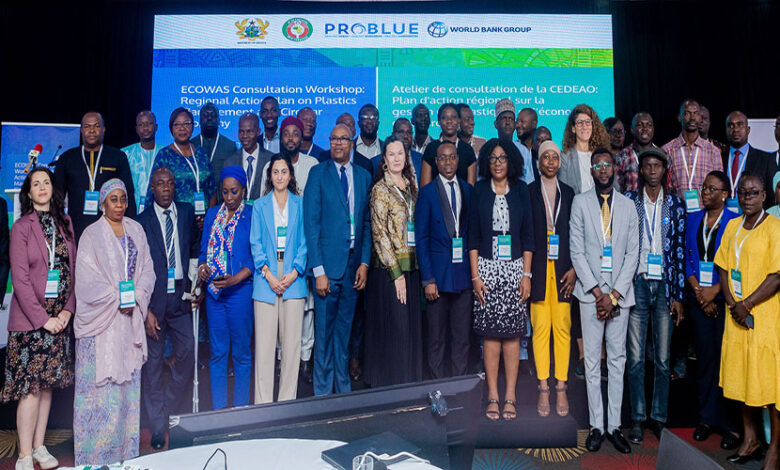
Story: Isaac AIDOO, Accra
THE World Bank is strengthening its commitment to addressing the growing plastic waste crisis in West Africa through its support for ECOWAS in developing a Regional Action Plan on plastics management and the circular economy.
The initiative forms part of the West Africa Blue and Circular Economy PASA, funded by PROBLUE, a multi-donor umbrella trust fund aimed at promoting sustainable use of ocean resources.
As West African economies continue to grow, the surge in plastic waste is becoming an increasing concern, with rivers and coastlines bearing the brunt of plastic pollution. Addressing this issue is critical, as plastic pollution is not only damaging the environment but also severely impacting the region’s economy, lives, and livelihoods. According to the World Bank, the costs associated with plastic waste in West Africa range from US$10,000 to US$33,000 per ton of plastic pollution.
Regional Collaboration to Combat Plastic Pollution
Michelle Keane, Operations Manager at the World Bank Ghana Office, highlighted the importance of regional collaboration in tackling plastic pollution. “Plastic pollution in West Africa poses a severe environmental challenge, exacerbated by rising urbanization, population growth, and economic development,” she stated.
West Africa is expected to become the largest source of mismanaged plastic waste globally by 2060, despite the region generating lower per capita plastic waste compared to more developed regions. This looming crisis calls for collective efforts, with ECOWAS and WAEMU leading the charge in formulating a comprehensive action plan to tackle the issue.
The plan aims to enhance the capacity of member states to manage plastic waste effectively while promoting a circular economy. This aligns with ongoing global environmental initiatives and supports efforts to turn plastic waste into economic opportunities through recycling and other sustainable practices.
Impact on Economies and Livelihoods
Plastic pollution has far-reaching effects on key sectors such as fisheries, aquaculture, marine tourism, and waterfront property. According to the World Bank, these sectors are vulnerable to social damages ranging from US$2,000 to US$7,000 per ton of plastic waste. Fishermen, for instance, have reported that their nets, intended for catching fish, are often filled with plastic debris instead.
Özgül Çalıcıoğlu, an Environmental Engineer at the World Bank, emphasized the need for upstream solutions to reduce the amount of plastic waste reaching rivers, beaches, and oceans. “We are supporting ECOWAS in harmonizing actions that member states, including Ghana, can take to prevent plastic waste from reaching our coastlines. This includes addressing the impacts of plastic pollution on health, such as the risk of malaria from stagnated water in clogged drainage systems,” she said.
World Bank’s Interventions and Future Plans
The World Bank has been instrumental in supporting policy reforms that aim to tax plastic products and hold producers accountable for the life cycle of their items across countries in the region.
In Ghana and Côte d’Ivoire, the World Bank is backing initiatives to establish standards for recycled polyethylene terephthalate (PET). In Liberia, recycling pilots for fishing nets are underway, and Extended Producer Responsibility schemes are being designed in Nigeria, Ghana, and Sierra Leone. These initiatives are expected to lead to cleaner oceans while creating green jobs and improving livelihoods.
At the grassroots level, the World Bank is focused on increasing public awareness and involving citizens in waste management. For example, community-based recycling centers are being piloted as part of the West Africa Coastal Areas Program (WACA) and the Greater Accra Resilient and Integrated Development Project (GARID) in Ghana.
Harmonizing Regional Standards
The development of the West Africa Regional Action Plan on Plastics Management and Circular Economy is aimed at creating a harmonized approach to managing plastic waste. ECOWAS’ contribution to harmonizing standards, such as labeling and producer responsibility, will provide a framework for better coordination among member states.
The plan’s success will also depend on the active participation of private sector players and the enforcement of policies designed to curb plastic production and waste. The World Bank is also involved in mobilizing financing and development partners to support these efforts.
Next Steps
The consultation process for the Regional Action Plan is ongoing, with ECOWAS engaging various stakeholders, including civil society and private sector actors, to identify priority areas for action. Once validated, the plan will provide a clear roadmap for addressing plastic pollution across West Africa.
“Today and tomorrow, consultations are focused on identifying priority areas for ECOWAS member states. Once the plan is validated, we can expect more advancements on the global treaty for plastics pollution, which will have a direct impact on countries like Ghana,” Çalıcıoğlu noted. As the world’s attention turns toward finding solutions to plastic pollution, the World Bank’s efforts in West Africa offer hope for a cleaner and more sustainable future. With coordinated regional efforts and global support, West Africa is poised to turn the tide on plastic waste and unlock the potential of the blue and circular economy.