

PUSAG Calls for Urgent National Dialogue as 2025 WASSCE Results Expose Deep Education Crisis
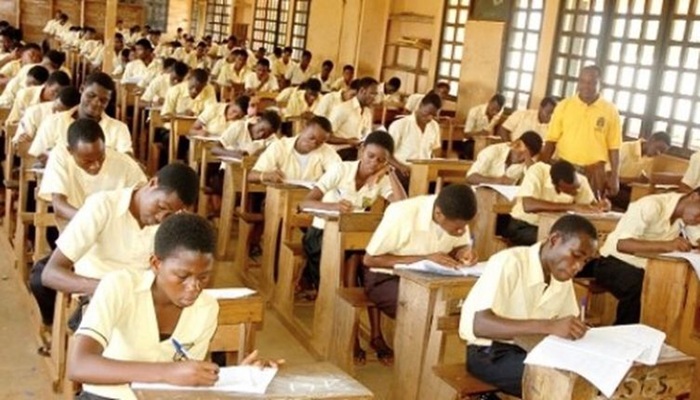
The Private University Students’ Association of Ghana (PUSAG) has warned that Ghana’s pre-tertiary education system is at a “breaking point” and is calling on government to initiate an urgent national dialogue to address what it describes as a systemic collapse laid bare by the disastrous 2025 WASSCE results.
According to PUSAG, the widespread failure, reflected in a drop of more than 96,000 A1–C6 passes, is not the result of “strict invigilation,” as suggested in public discourse. Instead, the association says the outcome signals a “painful admission of long-ignored systemic decay” rooted in years of policy inconsistencies, underinvestment, and institutional neglect.
In a statement issued on Tuesday, December 2, PUSAG President Ibrahim Issah cautioned that the nation is “dangerously close” to an educational collapse. He noted that experts have for years warned of deep-rooted weaknesses within the sector.
The association referenced findings from the National Education Assessment (NEA), the World Bank’s SABER report, and UNESCO data, all of which point to entrenched deficiencies including poor teacher preparedness, inadequate learning resources, weak school management structures, and wide disparities between well-resourced and disadvantaged schools.
PUSAG said the consequences are now evident: underprepared students entering university, widening learning poverty, and graduates who increasingly struggle to compete internationally.
To reverse what it describes as a dangerous trajectory, PUSAG proposed a comprehensive five-point reform agenda, urging government and the Ministry of Education to: Improve teacher development and welfare, Provide sustainable financing for school operations, Modernize laboratories and STEM infrastructure, Expand digital learning tools and access, and Review and strengthen curriculum and assessment systems
The association insists that these interventions are research-backed and essential for restoring stability and raising learning outcomes.
PUSAG concluded by demanding an immediate, non-ceremonial national dialogue to confront the crisis. It stressed that the discussion must move beyond applauding strict invigilation to examining why the education system remains vulnerable to malpractice and mass failure.
The proposed dialogue should involve key stakeholders such as the Ministry of Education, GES, NaCCA, teacher unions, tertiary institutions, both private and public, education researchers, civil society, and students.
“If we fail to act now, the erosion of our pre-tertiary system will continue,” PUSAG warned, adding that the consequences would include weakened human capital, slow economic transformation, and declining global competitiveness. “The time to act is now. The future of Ghana depends on it.”



