‘Lack of credible data hindering dev in tourism sector’
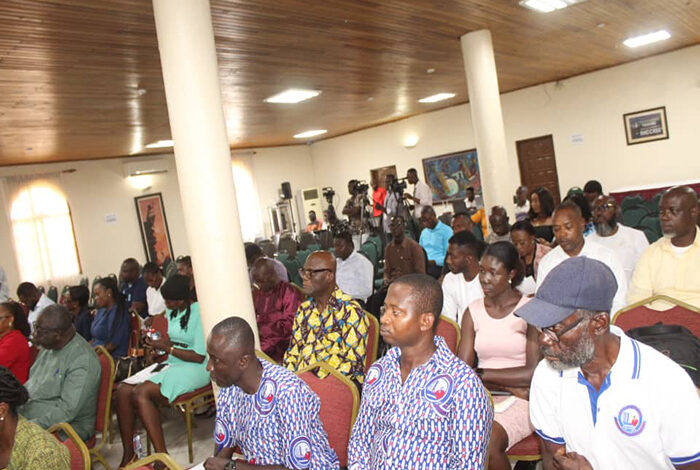
VICE-CHANCELLOR of Cape Coast Technical University and Chairman of the National Technical Advisory Committee (NTAC) for the Tourism Satellite Account (TSA) project, Prof. Kwaku Boakye, has underscored the crucial role of reliable data in driving policy interventions within Ghana’s tourism and hospitality sector.
Speaking at the 2024 Accommodation Unit Survey (AUS) stakeholders’ engagement in Tamale, he emphasized that the absence of credible data has long hindered the sector’s development and its ability to contribute fully to the national economy.
“The tourism sector has immense potential, but its growth has been hindered by a lack of understanding and data. For years, stakeholders have raised concerns about the difficult operating environment, but these have not been adequately addressed due to the absence of concrete data,” Prof. Boakye stated in his address.
He noted that challenges such as multiple taxes, high operational costs, and low profitability continue to plague tourism operators. Without proper data, successive administrations have struggled to appreciate and address these issues effectively.
Prof. Boakye commended the Ghana Statistical Service (GSS) for its bold step in 2022 to spearhead the TSA project, aimed at providing a comprehensive picture of the tourism sector’s size and contribution to Ghana’s economy.
The TSA comprises four key components: the Domestic and Outbound Tourism Survey (DOTS), the Ghana International Travellers’ Survey (GITS), the Accommodation Unit Survey (AUS), and the Tourism Supply Establishment Survey (TSES).
“This is the first time Ghana is conducting such detailed and comprehensive surveys on tourism, and when completed, the results will provide the first-ever objective measure of the sector’s contribution to Gross Domestic Product (GDP),” he noted, adding that the final reports are expected to be published in 2025.
The AUS, which is the focus of the current engagement, aims to gather critical data on Ghana’s accommodation units, including hotels, guest houses, and other establishments. This data will offer insights into the sub-sector’s economic role and help craft better policies to support growth in the tourism and hospitality industry.
Prof. Boakye emphasized the need for collaboration from stakeholders, including representatives from the Ghana Hotels Association, Ghana Progressive Hotels Association, and regional directors from the Ghana Tourism Authority.
He highlighted the importance of their experience and perspectives in ensuring the success of the survey, which seeks to accurately capture the realities of the accommodation industry.
“Your perspectives are crucial, as you bring a wealth of experience and knowledge about the operations in the hospitality sector. We look forward to your contributions, which will be invaluable in ensuring the success of this exercise,” he said.
The AUS marks the third phase of the TSA’s data collection efforts, following the completion of the DOTS and GITS. The comprehensive TSA initiative will offer Ghana its first clear, data-driven assessment of the tourism sector, which Prof. Boakye believes will unlock the sector’s true potential and lead to targeted policies that can elevate tourism as a significant driver of economic growth.
Director of Research, Monitoring, and Evaluation at GTA, Dr. Spencer Doku pointed out that under the Tourism Act 817, which established the GTA, “Section 3 outlines our core functions: to regulate and promote the growth and development of the tourism sector.”
According to Dr Doku, destination development is heavily dependent on the ‘5 A’s’ — Attractions, Amenities, Accessibility, Activities, and Accommodation.
“Among these, accommodation stands out, as it is often perceived by the general public as synonymous with tourism. However, this is a misconception, as all five components work together to create a fulfilling tourist experience.”
The survey focuses on commercial accommodation, both licensed and unlicensed, identified during the recent Integrated Business Establishment Survey (IBES) conducted by GSS.
The accommodation sector, Dr Doku noted plays a pivotal role in the tourism value chain. Globally, the sector contributed significantly to tourism in 2023, reaching an estimated $1.4 trillion, according to the United Nations Tourism.