IT’S A NATIONAL SHAME!
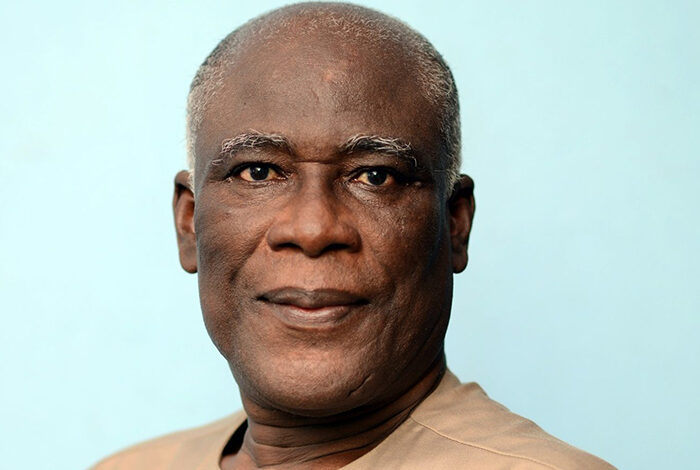
By Enimil Ashon
As Ghana searches for men of vision and courage and nationalism, I feel compelled to propose a few names for consideration in our insatiable appetite for national holidays.
Reading Rex Danquah’s THE MFANTSIPIM DREAM, I came to learn of men who, as far back as 1865, were seized with the vision of using education to establish “an effective machinery for the Gold Coasters to govern themselves, providing a ‘NATIVE GOVERNMENT’ SHOULD THE BRITISH WITHDRAW FROM THEN GOLD COAST” (caps mine).
Dear reader, you cannot read Dr Ako Adjei’s book, ‘LIFE AND WORK OF GEORGE ALFRED GRANT (PAA GRANT’) and not wonder if something has not been wrong with Ghanaians these past 60-plus years. Why there is no NATIONAL monument (note my emphasis) in the name of this man is a regrettable, nay shameful, historical act of omission for which there is no pardon.
I propose Paa Grant (1878-1956) not because he was the Gold Coast African merchant whose employees included 14 Europeans; the first African to buy and own a ship, ‘SS Assini’.
He it was who founded and bankrolled the first national political movement that began the struggle leading to attainment of independence on March 6, 1957. Aidoohene Blay Chinbuah, in his book, GHANA’S PRIDE AND GLORY’ makes a revelation that has so far been missing in the telling of our history. The book recalls that when at the height of the independence struggle, the Big Six were arrested, “Paa Grant paid for the strong legal team who were assembled from both Britain and the Gold Coast to defend them”.
To Paa Grant Ghana owes a greater tribute than a casual footnote and a (largely ignored) statue at Takoradi Roundabout. Is it too much to name either Legon or Cape Vars after him!
Long before Paa Grant, there lived a man named JACOB WILSON SEY (1832-1902) popularly referred to as ‘Kwaabonyi’. Chinbuah’s book records that Kwaabonyi’s wealth “exceeded that of the Gold Coast government by half a penny”. He bought plots of prime lands in Cape Coast putting up and buying lots of massive buildings, some of which were converted to public use, including Aggrey Memorial School and the Kwabotwe Hill on which Mfantsipim School stands today.
In 1896 and 1897, the Legislative Council of the colonial government of the Gold Coast passed the Crown Land Bill and the Land Bills. To become law the bills needed to be signed by the Queen of England.
Opposition to the two land bills led to the formation of the Aborigines Rights Protection Society in May 1897. Jacob Wilson Sey, a founder and its first president, led a delegation to London to meet Queen Victoria to present a petition, praying the Queen not to sign the bills into law. He single-handedly footed the bill for the entire trip – the sea voyage, accommodation and meals – as well as the legal fees of the British lawyers hired In London to assist in the presentation of the petition.
If the Bills had been passed into law, the lands of the Gold Coast would have been vested in the British Crown and the people of the Gold Coast would have been reduced to settlers on their own inherited lands.
My next candidate is JOHN MENSAH SARBAH (1864-1910 described by the author of ‘Ghana’s Pride And Glory’ as “a restless, persistent and consistent advocate and promoter of education for all the youths of the country”. One time lawyer for the Aborigines Rights Protection Society, which he also later led as president, he holds the distinction of being the first ever native Gold Coast barrister at law at the age of 23.
I include him in my Hall of Fame not necessarily because as a member of the Board of Governors of Mfantsipim School, he ensured that the School had students from all parts of the country and paid the fees of those who qualified but could not afford the fees.
I mention him because he was the lawyer retained as counsel by the chiefs of the Central and Western Provinces of the Gold Coast for a fee of 400 guineas to oppose the obnoxious land bills in the Legislative Council. The Africans lost the case.
The author of GHANA’S PRIDE AND GLORY recalls as follows:
“Principled as he was, John Mensah Sarbah returned the retainer’s fee of 400 guineas paid to him and informed the chiefs and the people that in view of his failure to get the bills withdrawn, he felt he did not deserve the fee.”
My third nominee for the Hall of Fame is NANA YAA ASANTEWAA. The history is told that having overran Kumasi, arrested and exiled the Asantehene to the Seychelles, the British governor at the time, Sir Frederick Hudgson, decided to do the unthinkable. He demanded to be given the Asante Golden Stool to sit on it! The Asante rebelled. In April 1900 Yaa Asantewaa, the queenmother of Ejisu, personally led the Asante to besiege the Kumasi fort, holding hostage Governor Hudgson, his wife and other British officials. It took a reinforcement of British expeditionary force to break the siege and release the Governor in July. The humiliated and humbled Governor was recalled to Britain immediately.
My proposal is this: even if we are not minded to erect physical monuments in their honour or create holidays in their names, the GES must commission Ghanaian historians to re-write the history of Ghana.