Israel-Iran conflict disrupts air travel
Air travel across the Middle East has been thrown into disarray as the ongoing conflict between Israel and Iran causes widespread flight cancellations, delays, and rerouting through an already congested region.
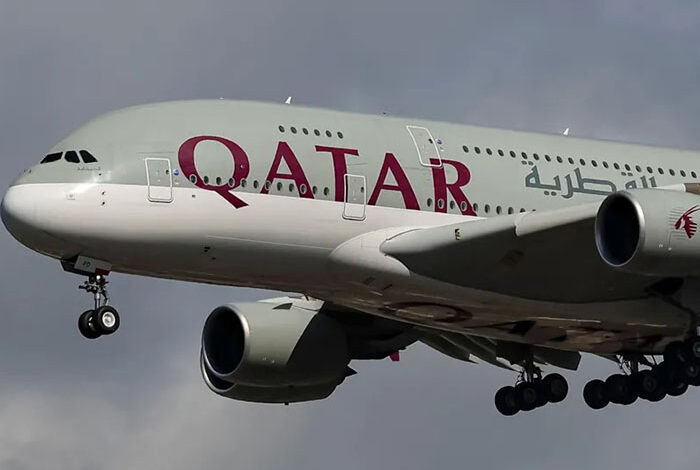
Qatar Airways faced major disruptions on Monday after Doha’s Hamad International Airport, one of the world’s busiest aviation hubs, briefly suspended operations. Dubai International Airport also temporarily paused flights, and authorities warned passengers to brace for ongoing delays and cancellations. Abu Dhabi’s airport reported similar disruptions.
The turbulence follows a dramatic escalation in regional tensions. On Monday, Qatar closed its airspace shortly before Iran launched a missile attack on a U.S. military base within its borders—a move it described as retaliation for American strikes against Iranian nuclear sites over the weekend.
In response to the heightened danger, more than a dozen international airlines canceled or suspended operations in the region. Air India halted all services to the Middle East and suspended transatlantic flights to Europe and the East Coast of North America. Japan Airlines also canceled its route from Tokyo to Doha.
As a key transit zone connecting Europe, Asia, and Australia, the Gulf has seen an exponential rise in air traffic in recent years. On a typical day, Dubai and Doha airports process nearly 400,000 passengers combined, while another 80,000 pass through Abu Dhabi.
That volume has now been severely affected, and passengers have found themselves stranded amid the uncertainty. Rob Liddle, a BBC staff member stuck in Doha en route to Bangladesh, described chaotic scenes as hundreds of passengers lay on airport floors waiting for updates.
“There was fear when the missiles were reported, but afterward, the atmosphere became calm,” he said.
Amid the confusion, hopes for de-escalation briefly surfaced when former U.S. President Donald Trump announced a “complete and total” ceasefire between Israel and Iran via social media. While Israel agreed to the terms, it later accused Iran of violating the truce and launched what it called “intense strikes” on Tehran. Iran has denied firing any missiles and vowed to respond to “any further aggression.”
Aviation experts say the situation has ripple effects far beyond the Middle East.
“There is a fundamental interconnected nature of air travel. When disruption begins, it spreads almost like wildfire,” said consultant Tim Atkinson.
John Strickland, another aviation analyst, said airlines are facing both operational and financial pressures.
“Delays to flights caused by longer alternative routes mean higher fuel consumption. Crew scheduling also becomes complicated because legal rest requirements must be maintained,” he explained.
There are growing concerns over safety, with governments around the world warning citizens against travel to certain parts of the region.
“Some flight decisions may need to be made on a day-by-day basis,” Strickland added.
According to Osprey Flight Solutions, at least six commercial aircraft have been accidentally shot down since 2001, with three other near-misses. The most infamous case occurred in 2014, when Malaysia Airlines Flight MH17 was downed by Russian-backed forces over Ukraine, killing all 298 people aboard.
Airspace over Russia and Ukraine has already been closed to most commercial flights due to the ongoing conflict there, and many airlines had been rerouting through the Middle East. With the current hostilities, critical airspace over Iran, Iraq, Lebanon, Syria, and Jordan has now become off-limits as well.
An estimated 1,400 flights that normally pass through this essential corridor between Europe and Asia must now either detour north over Turkey or south over Saudi Arabia, further stretching capacity and increasing fuel costs.