NDPC DG calls for increased funding for WASH
By Selorm GBORBIDZI, Accra
Director General of the National Development Planning Commission, Dr. Kodjo Mensah-Abrampa, is calling for an increase in funding for the Water, Sanitation, and Health (WASH) sector to help accelerate national development.
He lamented the paltry allocations made to this crucial sector.
According to him, the allocations made to the sector are woefully inadequate if the nation is to achieve its developmental objectives.
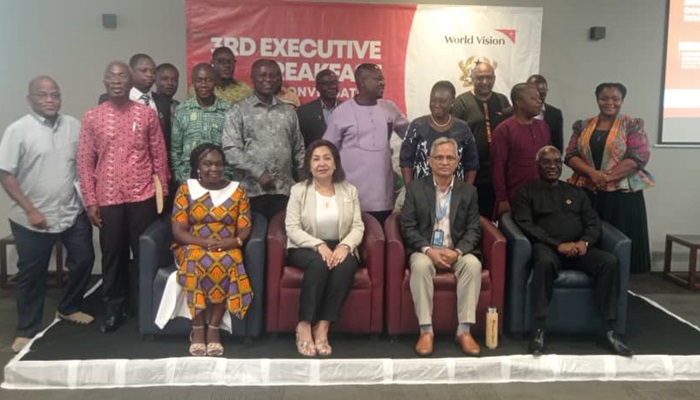
Addressing participants at the 3rd Executive Breakfast Conversation organized by World Vision Ghana in Accra, Dr. Mensah-Abrampa said, “In spite of all these efforts, you’ll look at the data and find that just around one percent of our national cake is going into water, sanitation, and hygiene. That’s something that we have established as fundamental to our development. So we need to look at where we put our resources, our finances,” he stressed.
He also advocated for a more holistic approach to addressing issues in the WASH sector.
The Director General emphasized that waste collection could not be considered without accounting for how the collected waste will be disposed of.
He also noted that the WASH sector is fundamental to the nation’s long-term developmental objectives, saying, “If we want to put ourselves out as a developed nation as we’ve projected by 2057, then we need to look at this sector because it underpins all our possibilities and push.”
The National Director of World Vision Ghana, Laura Cristina Del Valle, on her part, stated the importance of collaboration and partnership in the sector.
According to her, this partnership is crucial to providing the quality of life and services that all people, particularly children, deserve.
She said there is a need to discuss how to enable the catalytic role of water and sanitation for accelerated growth in socio-economic development.
Madam Del Valle said, “We recognize that nothing can be more important to the well-being of children, and there is a lot more governments, development partners, and all of us can do to facilitate sustainable access to safe water, improved sanitation, and hygiene if we work together.”
The Minister-Designate for Sanitation and Water Resources, Lydia Seyram Alhassan, said there is a need to recognize the pivotal role of water in national development.
She observed that water and sanitation are connected to all the Sustainable Development Goals (SDGs) and other internationally agreed goals.
Alhassan stated that no strategy for poverty reduction can ignore people’s requirements for safe drinking water and sanitation.
She said research conducted by the NDPC had shown that the lack of access to sanitation services is the highest contributor to multidimensional poverty among children—a situation which, when addressed, will trigger significant achievement of the top priority targets.