GRA Launches Modified Taxation Scheme To Expand Tax Net
By Praisebell Rosemond Larbi
The Ghana Revenue Authority (GRA) has launched a nationwide tax education campaign and a new simplified Modified Taxation Scheme aimed at boosting voluntary compliance, widening the tax net, and reducing Ghana’s reliance on foreign aid and external borrowing to fund national development.
The campaign, launched in Accra on Wednesday, forms part of GRA’s broader strategy to deepen public understanding of tax obligations and to make compliance easier, especially for players in the informal sector.
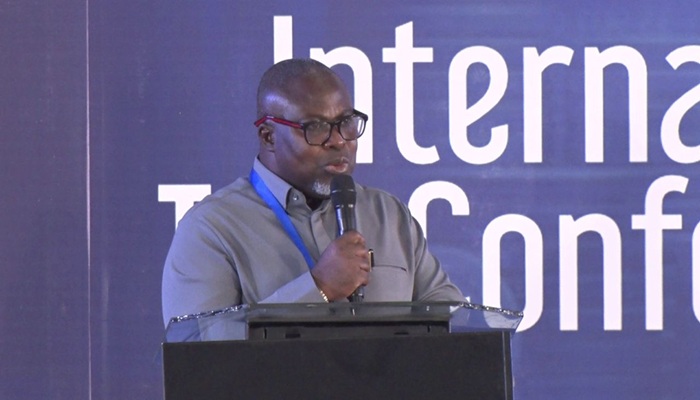
Commissioner-General of the GRA, Anthony Sarpong, said the time has come for Ghanaians to take full ownership of the country’s development by paying their fair share of taxes. He stressed that the path to building a stronger and self-reliant Ghana lies in effective domestic revenue mobilization, not dependence on foreign assistance.
“Our progress as a nation depends not on external aid but on our collective commitment to contribute faithfully to raise domestic revenue for our common good. A stronger and safer Ghana can only happen if everyone, big businesses, small shops, artisans, market women, and young professionals, plays their part,” he declared.
Mr. Sarpong said paying taxes should not be seen as a burden or punishment, but as a patriotic contribution toward building the roads, hospitals, schools, and public infrastructure that serve all citizens.
“Every cedi we pay in tax goes toward something we all use. That is how we build the roads we drive on, the schools for our children, and the hospitals we rely on. Paying tax is how we keep our country moving,” he added.
The first major initiative under the new drive is the National Tax Education Program, a three-year campaign designed to demystify the tax system and promote a culture of compliance. GRA teams will embark on outreach visits to schools, universities, markets, churches, mosques, business associations, and media platforms, including radio and social media, to explain tax laws in simple, relatable language.
The Commissioner-General explained that many Ghanaians avoid or delay paying taxes simply because they do not understand how the system works. “We want to remove confusion, replace fear with knowledge, and help people understand their rights and responsibilities. When people understand taxes, they are more willing to do the right thing,” he said.
The second initiative is the introduction of a Modified Taxation Scheme (MTS), a simplified and technology-driven system to make tax payment easier for small businesses, self-employed individuals, and informal sector operators.
Under the new scheme, businesses with annual turnover of up to GH¢500,000 will now pay a flat rate of 3 percent on their income. The simplified structure eliminates the need for complicated forms and long calculations that often discourage compliance.
Mr. Sarpong explained with examples: “If you earn GH¢200,000 in a year, your tax is GH¢6,000 for the whole year. If you make GH¢25,000, you pay GH¢750. Simple, straightforward, and affordable.”
To enhance convenience, the GRA has launched a new MTS mobile application, now available on both Google Play Store and Apple App Store, enabling taxpayers to calculate, file, and pay taxes from their phones.
The Commissioner-General said the move aligns with the GRA’s digital transformation agenda, which seeks to modernize tax administration, enhance transparency, and improve efficiency.
He acknowledged Ghana’s international partners, including development agencies that have supported the country’s fiscal reforms over the years, but noted that “the ultimate responsibility for our nation’s progress rests with us.”
“This is our country. If we want Ghana to change, we must help make that change. We must know our taxes, pay our taxes, and help build Ghana together,” he reminded.
The GRA believes the combination of education, simplification, and digital innovation will not only expand the tax base but also foster a more transparent and citizen-friendly tax culture that underpins Ghana’s long-term economic independence.