

Gov’t revokes 55 small-scale mining licenses
By Rebecca Okine
The Chairperson of the Public Accounts Committee (PAC), Abena Osei-Asare, has called for immediate scrutiny into the reported GHS138.91 billion overstatement in Ghana’s public debt, as revealed in the 2024 Audit Report by the Auditor-General.
The comments were made during the Government Accountability Series in Accra yesterday, July 23, 2025.
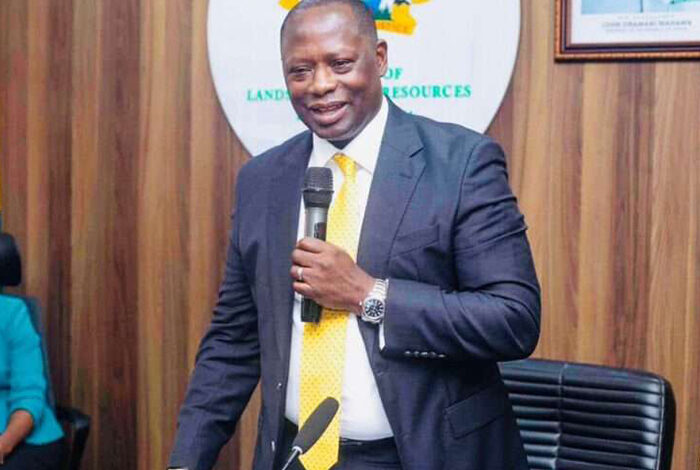
Speaking during the briefing, Mr. Buah said the move follows findings by the Small-Scale Mining Review Committee, chaired by his deputy, which uncovered widespread irregularities in the issuance and operations of these licenses.
“In the fight against galamsey, it must be noted that 55 small-scale mining licenses issued during the transitional period were revoked at the beginning of the year. Additionally, 907 out of 1,278 small-scale licenses are now under review,” he said.
Mr. Buah disclosed that large-scale mining licenses are also under similar scrutiny as part of a broader strategy to sanitize the sector and promote sustainable practices.
“These measures are all aimed at restoring integrity and transparency in Ghana’s mining sector,” the Lands Minister emphasized.
Highlighting enforcement efforts, Mr. Buah revealed that 425 excavators and other mining equipment had been seized, while 1,345 individuals have been arrested across the country.
“Prosecutions are steadily progressing,” he stated, assuring that the Attorney General would provide further updates later.
In outlining key policy reforms, Mr. Buah said the government intends to drastically reduce the number of years for which mining leases are held, shifting away from long-term or indefinite durations.
“We are reducing the upper limit for the grant of a mining lease from 30 years to a shorter, defined period,” he revealed.
The Lands Minister also announced plans to abolish existing development agreements in favor of enforcing community development agreements.
Under the new arrangement, a percentage of gross mineral revenue will be allocated to local development initiatives in mining communities.
“We all know how impoverished some of our mining communities remain. These transformational changes will help correct that and bring real development to these areas,” Mr. Buah stressed.
Another significant reform includes the introduction of a three-tier mineral rights regime.
“Currently, we have only small- and large-scale licenses. The new law will introduce a medium-scale category,” he disclosed.
Stability agreements, which currently last up to 15 years, are also being reviewed.
“We aim to either reduce the duration, restrict them only to large capital investments, or possibly abolish them altogether,” the Lands Minister emphasized.
He reiterated the government’s commitment under President John Dramani Mahama’s leadership to ensure a fair, transparent, and community-centered mining sector.
“With broad stakeholder consultations, including traditional leaders, civil society and academia, we are determined to fix the imbalances of the past and secure a brighter future,” Mr. Buah assured.



