

Regional Alignment Key to Unlocking West Africa’s Shea Potential – AAK”
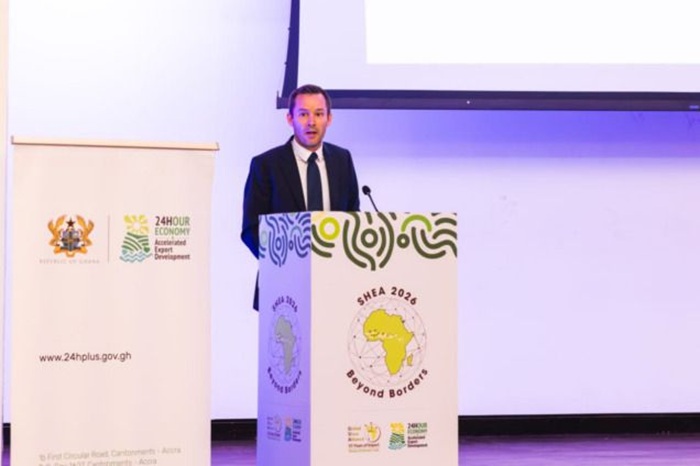
AAK has called for stronger regional coordination and policy alignment across West Africa’s shea industry, warning that fragmented systems continue to limit the sector’s ability to deliver full economic value.
The company made the call at the 18th Annual Conference of the Global Shea Alliance, held in Accra under the theme Shea 2026: Beyond Borders, which brought together policymakers, investors, development partners and industry leaders from across the region.
The conference highlighted growing consensus that West Africa, home to the world’s shea belt must transition from largely fragmented national value chains to a more integrated regional ecosystem capable of supporting large-scale processing, trade and industrial use.
In her opening remarks, Vice President Jane Naana Opoku-Agyemang underscored structural challenges within the sector, particularly the imbalance in value distribution.
“Women dominate the shea value chain from nut collection to primary processing, while supporting families and communities. Women need to benefit more from the value they create,” she stated, noting that addressing this imbalance is critical to improving productivity and ensuring long-term sustainability.
Participants also emphasised the importance of strengthening intra-African trade through frameworks such as the African Continental Free Trade Area, arguing that deeper regional integration could help scale processing capacity, improve competitiveness and retain more value within the continent.
AAK, a major global buyer and processor of shea-derived ingredients, contributed to discussions on supply chain traceability, evolving global demand and long-term industry outlook. The company noted that international markets are increasingly prioritising reliability, quality, consistency and sustainability, factors that require coordinated regional systems to deliver effectively.
According to AAK, the future competitiveness of the shea industry will depend on how quickly West Africa can move toward a cross-border value chain supported by harmonised policies, efficient logistics and stronger collaboration between governments and the private sector.
Lasse Skaksen, Vice President and Head of AAK West Africa, stressed that transformation of the sector must be driven by shared responsibility.
“Governments must create a stable and predictable environment, while the private sector continues to invest. Together, we must advance a shared agenda that strengthens trust in shea and reinforces its global competitiveness,” he said.
He added that the sector faces increasing competition from alternative vegetable oils, making it imperative to strengthen resilience and long-term positioning in global markets.
AAK also highlighted the importance of investing at the base of the value chain, particularly in women who form its backbone. Through its Kolo Nafaso programme, the company works with over 275,000 women across the region, providing training, supporting responsible sourcing practices and improving access to markets.
Stakeholders at the conference called for intensified collaboration among governments, industry players and development partners to accelerate investment, improve regulatory alignment and scale value-added processing.
The meeting concluded with a renewed push to reposition West Africa not just as a supplier of raw shea nuts, but as a global hub for processed, high-value shea products, an outcome seen as critical to unlocking jobs, incomes and sustainable growth across the region.



