IPC declares famine in Gaza as humanitarian crisis deepens
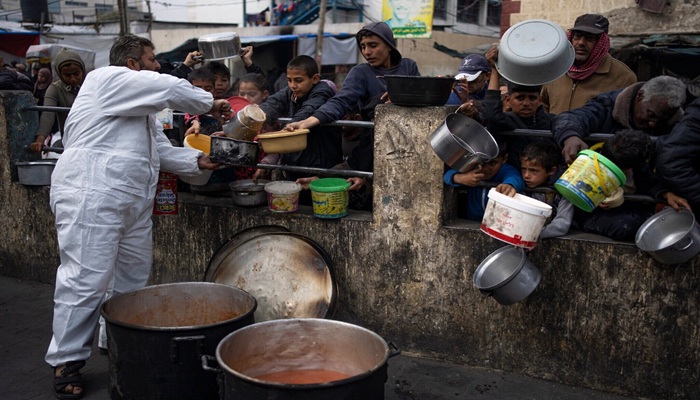
The Integrated Food Security Phase Classification (IPC) has officially declared famine conditions in Gaza City and surrounding areas, warning that the humanitarian catastrophe is likely to spread rapidly across the Palestinian enclave unless urgent action is taken.
The IPC, a globally recognised hunger monitoring body comprising UN agencies and humanitarian organisations, reported that 514,000 people, nearly a quarter of Gaza’s population, are experiencing famine, with projections showing the number could rise to 641,000 by the end of September.
This marks the first-ever famine classification outside Africa and a chilling new milestone in the nearly two-year conflict between Israel and Hamas.
The hardest-hit area is Gaza governorate, which includes Gaza City, where 280,000 people are confirmed to be living in famine conditions. Central and southern regions, including Deir al-Balah and Khan Younis, are expected to reach similar levels in the coming weeks.
UN Secretary-General Antonio Guterres condemned the situation as a “man-made disaster”, calling it “a moral indictment and a failure of humanity itself”.
He reiterated calls for an immediate ceasefire, the release of hostages held by Hamas, and unimpeded humanitarian access into the besieged territory.
UN Human Rights Chief Volker Türk warned that deaths from starvation could amount to war crimes, further deepening international scrutiny on Israel’s role in the blockade and distribution of aid.
Israeli Prime Minister Benjamin Netanyahu rejected the IPC’s findings, calling the report an “outright lie” and accusing the organisation of relying on biased and incomplete data allegedly provided by Hamas.
He insisted that Israel does not have a policy of starvation and pointed to the 2 million tonnes of aid allowed into Gaza since the start of the war.
Israel’s COGAT, the military body responsible for coordinating aid, echoed the government’s denial, stating that the IPC assessment ignored Israeli-supplied data and served as part of a “propaganda campaign by Hamas”.
While U.S. President Donald Trump previously acknowledged that “many people there were starving”, Washington has stopped short of backing the IPC’s conclusions.
A U.S. State Department spokesperson said the situation was being politicised and accused Hamas of “systematically promoting a false narrative” for political gain.
In Europe, the response has been more direct. Britain, describing the IPC’s report as “utterly horrifying”, demanded unhindered delivery of food, fuel, and medicine into Gaza. Canada, Australia, and several European nations also criticised the growing humanitarian toll, calling it “unimaginable”.
According to the IPC’s criteria, a famine classification requires that at least 20 percent of households face extreme food shortages, at least 30 percent of children are acutely malnourished, and at least two in every 10,000 people die daily from starvation or from diseases linked to malnutrition.
The IPC says it was unable to classify North Gaza governorate due to access restrictions but suspects the situation there could be even more dire than in Gaza City. The southern Rafah region was excluded from the assessment due to its current uninhabited status following mass evacuations.
The UN and aid agencies have repeatedly blamed Israeli restrictions and lawlessness on the ground for the inability to distribute life-saving supplies. Israel, meanwhile, claims the UN operation is mismanaged and alleges that Hamas diverts aid, an accusation the group denies.
Kate Phillips-Barrasso, Vice President of Global Policy at Mercy Corps, said: “We have photos, we have data, and now we have this assessment, yet it still hasn’t translated into the urgent action needed to stop people from starving.”
The Gaza war began on October 7, 2023, when Hamas militants killed 1,200 people in southern Israel and took around 250 hostages, according to Israeli figures.
Since then, Israel’s military response has killed over 62,000 Palestinians, according to Gaza’s health authorities. Entire neighbourhoods have been flattened, infrastructure destroyed, and the population plunged into what the UN now calls “one of the worst humanitarian crises of our time”.