Address peace, security concerns through inclusive approach – KAIPTC
Story: Abdulai SAAKA, Accra
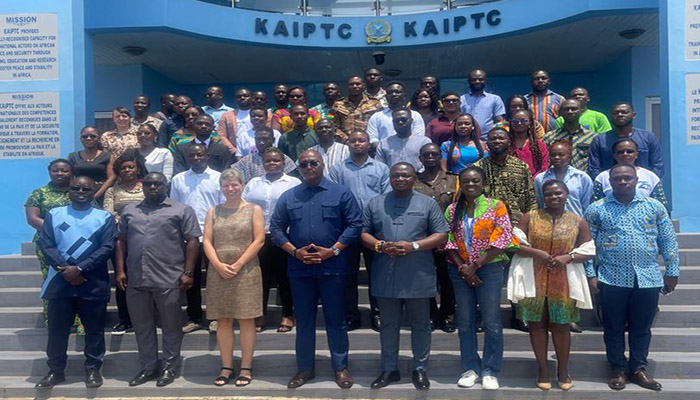
THE Kofi Annan International Peacekeeping Training Centre (KAIPTC) has called on key stakeholders in Ghana’s peace and security sectors to play an active role in formulating the National Action Plan (NAP) for Youth, Peace, and Security.
Speaking at a dissemination workshop organized by the NAP’s working group, Assistant Commandant of the KAIPTC, Air Commodore David Anetey Akron, emphasized the importance of a collaborative and inclusive approach in addressing the nation’s peace and security concerns.
Addressing the audience, which included representatives from government, civil society organizations, youth groups, development partners, and the security sector, Air Commodore Akron highlighted that the success of the NAP would depend on the active participation of all stakeholders.
“This multi-stakeholder engagement is vital because the development of the NAP will require concerted efforts from all sectors of society,” he said. “Your perspectives and expertise will help ensure that the NAP is both comprehensive and actionable.”
He urged stakeholders to remain guided by the principles of inclusivity, collaboration, and commitment. “The NAP is not just a document. It is a roadmap for action, a blueprint for sustainable peace, and a testament to our collective responsibility to support and empower the youth of this nation,” Akron added.
A key aspect of his speech focused on the role of young people in peace-building. Air Commodore Akron stressed that the youth should not be seen merely as beneficiaries of peace but as active agents of change and innovation.
“The development of the NAP is a critical mechanism to harness this potential, providing a framework that empowers youth, promotes inclusivity, and ensures their involvement in decision-making at every level,” he said.
Drawing attention to recent youth-led movements in Nigeria and Kenya, Air Commodore Akron cautioned that sidelining the youth in decision-making processes could have serious repercussions.
“If you don’t bring the youth to the table, they will not only come to the table; they will come and take the table away,” he warned.
He concluded by urging stakeholders to acknowledge the valuable contributions young people can make, as they will inherit the nation’s future and must be involved in shaping it. The workshop marked a significant step in Ghana’s efforts to develop a robust action plan aimed at fostering peace and security, with a focus on empowering the youth to take on leadership roles in the nation’s peace-building processes.