Agribusiness, Ghana’s New Engine of Industrial Growth
By Praisebell Rosemond Larbi
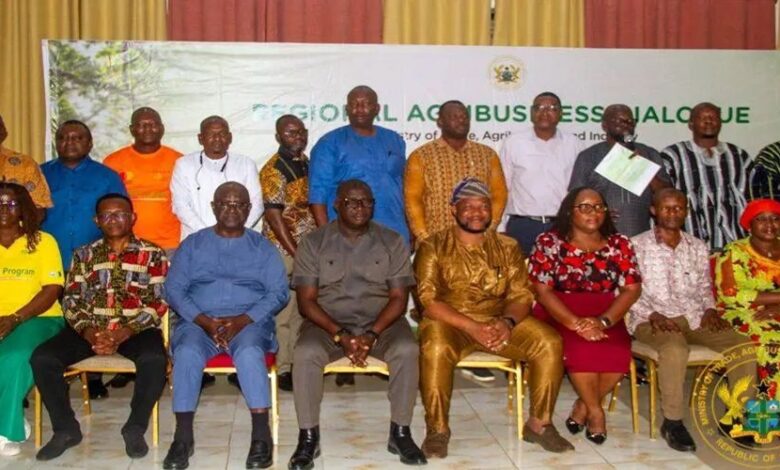
Government says Ghana must strategically position itself to benefit from the rapidly expanding global agribusiness market, currently valued between US$3.4 trillion and US$3.5 trillion and projected to reach as high as US$5.8 trillion by 2033. The call was made by Deputy Minister for Trade, Agribusiness and Industry, Sampson Ahi, in a speech delivered on his behalf during a regional policy dialogue in Tamale as part of ongoing nationwide consultations toward a new National Agribusiness Policy.
Ahi, whose remarks were delivered by George Owusu Ansah Amoah, Director of Research, Statistics and Information Management at the Ministry, stressed that Ghana must urgently strengthen the integration between agriculture and industry if it is to drive the government’s broader industrialisation agenda and the proposed 24-hour economy. He noted that several local factories continue to operate significantly below capacity, in some cases at just 30 to 40 percent, largely due to weak supply chains, inconsistent access to raw materials, and persistent post-harvest losses across the agricultural value chain.
According to him, agribusiness has the potential to reverse these challenges by becoming a key engine of industrial growth, export expansion and job creation. “We have a unique opportunity to tap into this expanding market through innovation, value addition, contract farming and sustainable agribusiness practices,” he said, adding that the newly restructured Ministry reflects a deliberate policy shift to strengthen synergies between farming, processing, manufacturing and export competitiveness.
To accelerate this transformation, the government is rolling out three major initiatives: the Feed the Industry Program, the Rapid Industrialization Program and the Accelerated Export Development Program. Ahi explained that the Feed the Industry Program is specifically designed to raise factory capacity utilisation to between 70 and 80 percent by linking farmers and processors more effectively. The initiative will rely on a structured hub-and-spoke contract farming model and is anchored on four components, commercial farmer development, the expansion of post-harvest and processing infrastructure, stronger industrial market linkages, and institutional development to support sustainability.
Another major intervention targets access to agricultural machinery. Ahi disclosed that government will immediately waive taxes on agro-processing machinery to reduce early investment burdens and encourage private investment in processing. Over the medium to long term, domestic production of agro-processing equipment will be expanded through renewed support for the GRATIS Foundation under the Rural Enterprise Program, in partnership with IFAD. This, he said, will build local capacity to manufacture key machinery required by agribusinesses across the country.
Ahi reaffirmed that the development of a National Agribusiness Policy will serve as a comprehensive roadmap for transforming Ghana’s agricultural and industrial landscape. He emphasised the importance of stakeholder involvement, saying, “If we work together, we can unlock the full potential of agribusiness, create jobs, boost exports, and secure a prosperous future for Ghana.”
Northern Regional Minister Ali Adolf John, in remarks read on his behalf, underscored the importance of agribusiness in the region’s social and economic stability. “In the Northern Region, our agribusiness sector is not only a source of livelihood for thousands but also plays a crucial role in food security and national growth,” he said.
Group CEO of Agri Impact Limited, Daniel Acquaye, called for strong stakeholder commitment to ensure the new policy framework is sustainable, inclusive and transformative. He stressed the need for strategic investment in agricultural and agribusiness infrastructure, arguing that enhanced productivity, efficient value chains and improved value retention are necessary for the sector to unlock its full potential.
The Tamale dialogue forms part of a broader nationwide engagement process involving industry, academia, farmer groups, processors and development partners. The consultations aim to gather regional perspectives on market access, trade linkages and structural reforms required to reposition agribusiness as a powerful driver of Ghana’s industrial expansion and long-term economic competitiveness.