After U.S. Health Aid Rejection: Can Ghana’s Healthcare System Survive on Its Own?
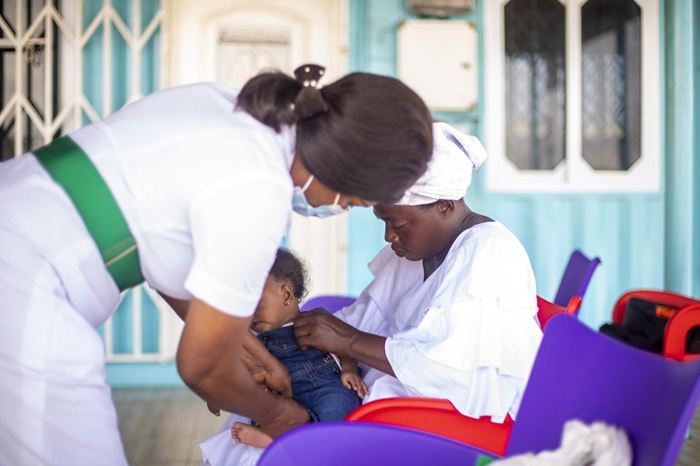
The reported rejection or withdrawal of major United States health aid to Ghana has reignited a difficult but necessary national conversation: how dependent is Ghana’s healthcare system on foreign support, and what happens when that support disappears?
For years, international donor assistance, particularly from the United States and other development partners has played a critical role in supporting Ghana’s healthcare sector. From HIV/AIDS treatment and malaria interventions to maternal health programmes and vaccination campaigns, foreign aid has helped bridge funding gaps that domestic resources alone could not fully cover.
Now, with uncertainty surrounding portions of US health assistance, Ghana faces an uncomfortable reality: can the country sustain its healthcare ambitions without heavy donor dependence?
Ghana’s health sector has made undeniable progress over the years. Child mortality rates have declined, immunization coverage has improved, and awareness around diseases such as HIV/AIDS and malaria has expanded significantly.
Yet behind these gains lies a deeper structural issue, many critical health programmes are heavily supported by donor funding. In some cases, donor support finances:
• Essential medicines
• Disease prevention programmes
• Medical equipment
• Community health initiatives
• Health worker training
• Public health campaigns
This means any sudden reduction or rejection of aid creates immediate pressure on the system.
The question is no longer whether aid is useful. It clearly is. The real question is whether Ghana has become too dependent on external assistance to sustain core healthcare services. If significant health aid support declines, the impact could ripple across several areas:
• Reduced access to life-saving medications
• Pressure on vaccination and disease-control programmes
• Funding shortfalls for rural healthcare delivery
• Increased burden on already stretched hospitals and clinics
• Higher out-of-pocket costs for patients
For vulnerable populations, particularly low-income households, the consequences could be severe.
This is especially concerning at a time when Ghana is still grappling with broader economic pressures, inflationary challenges, and fiscal consolidation efforts.
The situation may also serve as a critical wake-up call for Ghana to rethink how healthcare is financed.
For years, conversations around healthcare have focused heavily on infrastructure, building hospitals, expanding facilities, and increasing access. While these are important, sustainable healthcare ultimately depends on reliable domestic financing.
The truth is simple: no country can fully guarantee long-term health security while depending heavily on external funding for essential services.
The development also places renewed focus on the National Health Insurance Scheme and broader healthcare financing reforms.
The NHIS was introduced to reduce the financial burden on patients and move Ghana closer to universal health coverage. However, challenges such as delayed reimbursements, funding gaps, and operational inefficiencies have persisted over the years.
If external aid reduces, pressure on the NHIS and government health spending will intensify.
This raises another difficult question: is Ghana’s healthcare financing structure strong enough to absorb the shock? Healthcare is not just a social issue, it is an economic one. A weak healthcare system affects:
• Worker productivity
• National labour output
• Educational outcomes
• Poverty levels
• Long-term economic growth
When healthcare deteriorates, the economy eventually pays the price through reduced productivity and increased social costs.
Conversely, investing in resilient healthcare systems strengthens human capital, which is one of the foundations of sustainable economic growth. Paradoxically, the reduction or rejection of foreign health aid could also create an opportunity.
It may force Ghana to:
• Increase domestic investment in healthcare
• Improve efficiency in health spending
• Expand local pharmaceutical production
• Strengthen preventive healthcare systems
• Reduce wastage and corruption in procurement
In many ways, this moment could become a turning point from dependency toward greater self-reliance.
However, that transition will not be easy. One of the biggest risks is allowing healthcare financing debates to become overly politicized. Health systems require long-term planning that goes beyond political cycles.
Whether donor support returns or not, Ghana must confront a hard truth: health security cannot depend entirely on external goodwill. If Ghana wants to avoid future vulnerabilities, several priorities become urgent:
• Increase budgetary allocation to healthcare
• Strengthen the NHIS financially and operationally
• Expand local production of medicines and medical supplies
• Improve transparency and accountability in health spending
• Invest more heavily in primary healthcare and prevention
These reforms are not optional, they are essential for long-term resilience. The uncertainty surrounding US health aid should not only be viewed as a diplomatic or financial issue. It is a deeper test of Ghana’s healthcare independence and economic resilience.
For years, donor support has helped sustain critical programmes. However, this moment exposes the risks of relying too heavily on external assistance for essential national services.
The challenge now is whether Ghana can turn this setback into an opportunity to build a stronger, more self-reliant healthcare system.
Because in the end, the health of a nation should never depend entirely on the decisions of another nation.