Govt Spending Right – GSS
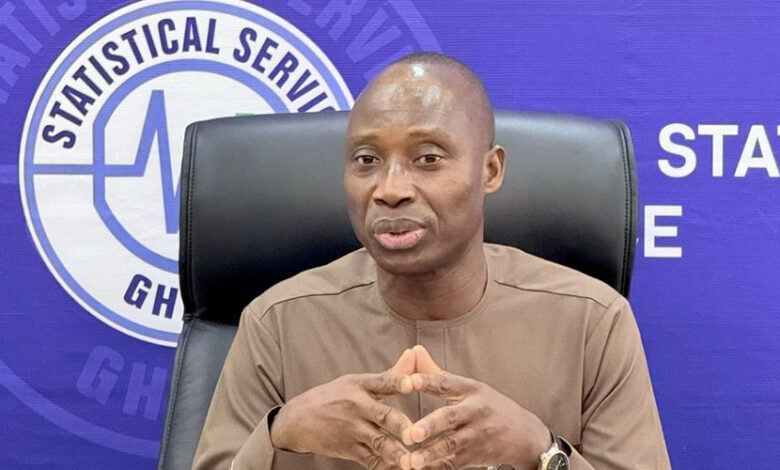
New data from the Ghana Statistical Service (GSS) indicates that Ghana’s economy gained significant momentum in the first quarter of 2026, driven by strong domestic demand, rising household consumption and a sharp increase in investment activity.
The provisional GDP expenditure estimates show that Gross Domestic Expenditure expanded by 6.4 percent year-on-year, slightly above the 6.2 percent recorded in the same period in 2025.
Domestic demand strengthens sharply
According to the data, Domestic Demand recorded a robust 10.4 percent real growth in Q1 2026, more than double the 5.0 percent growth posted in Q1 2025. The figures suggest a broad-based increase in economic activity across households, businesses and investment channels.
Total consumption expenditure grew by 6.3 percent, compared to 4.9 percent a year earlier, reflecting stronger spending patterns within the economy.
Household consumption was a key driver, rising by 7.5 percent, indicating increased consumer activity across goods and services sectors.
Investment surges as key growth driver
The most notable development was a sharp rise in investment activity. Gross Capital Formation grew by 36.1 percent in Q1 2026, a substantial increase from the 6.2 percent recorded in the same period last year.
Analysts say the surge in investment suggests stronger capital expenditure across both public and private sectors, potentially reflecting infrastructure expansion, industrial activity and renewed business confidence amid macroeconomic stabilisation efforts.
Consumption dominates economic structure
The report further highlights the dominant role of consumption in Ghana’s economic structure, accounting for 84.3 percent of total expenditure and contributing about 85 percent to overall GDP growth during the quarter.
This underscores the continued importance of household and government spending in driving short-term economic performance, even as investment activity gains momentum.
Interpretation of spending trends
While public debate has raised questions about the pace of government spending, the GSS data suggests that aggregate expenditure in the economy remains strong, with both consumption and investment expanding significantly compared to the previous year.
The surge in domestic demand and investment activity points to an economy that is experiencing increased liquidity flows and stronger economic engagement across key sectors.
However, economists caution that expenditure growth alone does not fully indicate the efficiency or sectoral allocation of spending, noting that the composition of investment and consumption remains critical in assessing long-term economic sustainability.
Outlook
Overall, the Q1 2026 figures suggest sustained economic momentum, supported by rising household spending, stronger investment inflows and resilient domestic demand.
While interpretations may differ, the data points to an economy that remains active and expanding, with growth increasingly anchored in both consumption and capital formation as Ghana continues its broader economic recovery trajectory.